REVIEW · SIEM REAP
Angkor Wat Sunrise Small-Group 1-Day Tour from Siem Reap
Book on Viator →Operated by Vamos Camboja · Bookable on Viator
Waking up before 5 a.m. sounds tough until it isn’t. This small-group Angkor Wat sunrise day packs the big sights—Angkor Wat, Ta Prohm, Angkor Thom, Bayon—with an English-speaking guide who keeps things moving but still gives you time to look around. I especially liked having a guide who was punctual and patient at the start and who explained what you’re seeing in plain, story-driven ways. The one drawback to plan for: the Angkor entrance ticket is not included in the tour price, so your total spend is higher than $35.
You’ll get a tight, well-run route with cold water, pickup and drop-off, and transport that matches your group size. Guides such as Nun, Mr T, and Buth Veasna were repeatedly praised for clear English, good photo help, and making the day feel organized rather than rushed. If you’re hoping for a slow, flexible day with lots of extra breaks, you may prefer the private option—or just plan your own downtime at the quieter spots.
In This Review
- Key points before you set your alarm
- Sunrise at Angkor Wat: why that 5:00 a.m. departure pays off
- Small-group pace (max 6) and the feel of a more personal day
- What you’ll see at Angkor Wat during the sunrise block
- Ta Prohm: the jungle temple stop that slows the day in a good way
- Angkor Thom and the Victory Gate: big carvings, walled-city feel, and stairs
- Baphuon and Bayon: climbing for views, then the smiling faces
- Guide support that actually changes the day (Nun, Mr T, Buth Veasna)
- Price and value: what $35 really means after you add the ticket
- Timing, effort, and planning your day after 12:30
- Who should book this sunrise small-group tour
- Should you book the Angkor Wat Sunrise small-group day?
- FAQ
- Is the Angkor entrance ticket included in the $35 tour price?
- What time do you get picked up, and when do you return?
- How long is the tour?
- What temples are included in the route?
- What transport do I use from Siem Reap?
- What dress code do I need for the temples?
Key points before you set your alarm
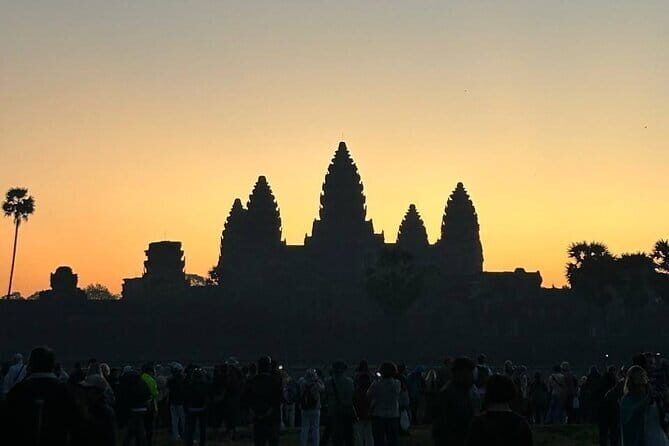
- Sunrise logistics are handled for you: hotel pickup runs 4:10–4:30 a.m., and you depart at 5:00 a.m.
- Guide quality matters here: people highlight guides like Nun for photo tips and calm, useful explanations.
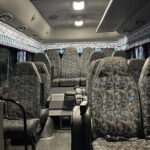
- Transport stays practical: tuk-tuk for 1–2 people, and an air-conditioned van/minibus for 3–6.
- You must budget entrance fees: Angkor Archaeological Park ticket is not included and must be bought separately.
- Dress code is strict at Angkor Wat: shoulders and knees must be covered, and miniskirts/shorts/tank tops aren’t allowed.
Sunrise at Angkor Wat: why that 5:00 a.m. departure pays off
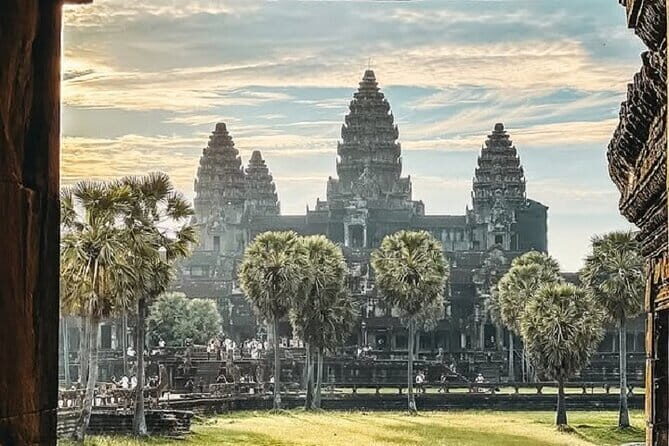
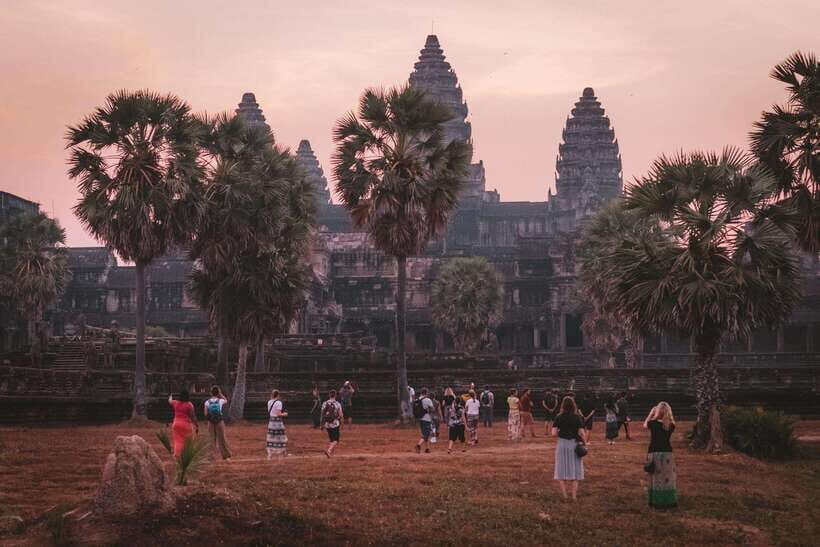
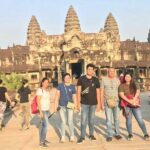
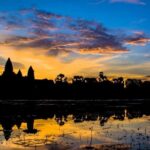
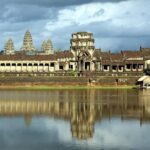
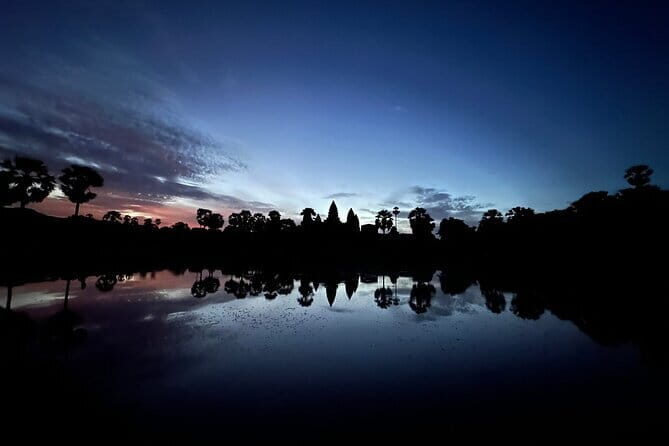
Angkor Wat at sunrise is the main event, and the early start is what makes the whole day work. The tour is timed so you arrive before the light really hits the temple, when the sky is still changing fast and the grounds feel calmer than later in the morning. You’ll be looking for that moment when the first golden light shows up across stone, not just in photos.
One smart detail is that the tour specifically directs you to the best viewing areas around the temple, including spots near the reflective pools. That matters because sunrise photos at Angkor Wat can be a pain if you end up somewhere inconvenient. The best guides help you get into the right position quickly, then give you enough time to enjoy the view and take pictures without feeling like you’re on a factory line.
How long you spend here is also part of the value. You get about 3 hours at Angkor Wat, which is usually enough time to watch sunrise, wander the main areas you can access, and still have time to reset before moving on. If you’re someone who likes to move at a steady pace, this timing feels fair. If you’re sensitive to stairs or heat, plan to take it slow as you go.
Other Angkor Wat sunrise tours we've reviewed in Siem Reap
Small-group pace (max 6) and the feel of a more personal day
This is sold as a small-group experience. The small-group option is described as max 6 travelers, and the activity information also notes a maximum of 12 for the overall tour listing. Either way, the intent is the same: fewer people means less waiting around, easier photo stops, and a guide who can actually talk to you instead of only directing a crowd.
In practice, the group size affects two big things:
- How fast you move between temples. Smaller groups typically mean fewer bottlenecks at gates and stairs.
- How much attention the guide can give you. In the feedback, people praised guides for being patient and responsive, and that’s easiest to do when the group is small.
You’ll also feel this in transport. If you’re traveling with a partner (1–2 people), you go by tuk-tuk. If you’re a small group of 3–6, you’ll ride in an air-conditioned van/minibus. That air-conditioning is not a luxury you notice at 5 a.m., but you’ll appreciate it later as the day warms up.
Cold water is included, which sounds minor until you’re out there early, walking, climbing, and then dealing with Cambodian sun. It helps you stay comfortable enough to enjoy the temples instead of thinking about hydration constantly.
What you’ll see at Angkor Wat during the sunrise block
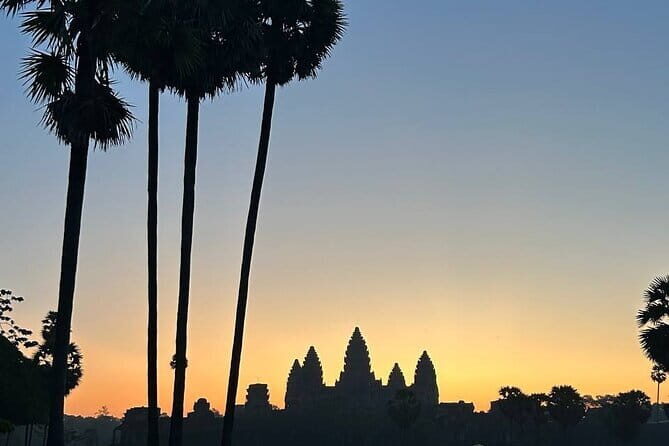
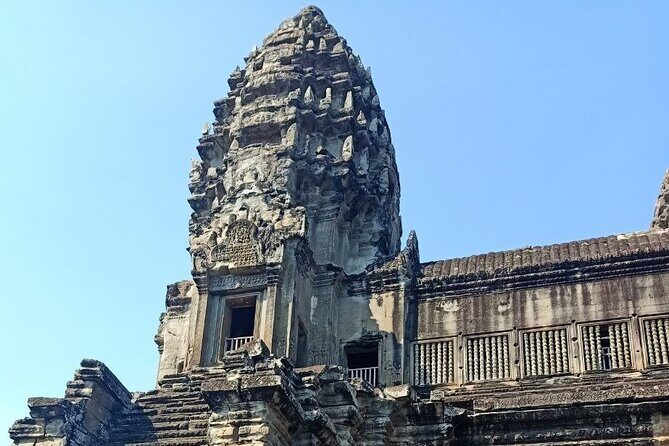
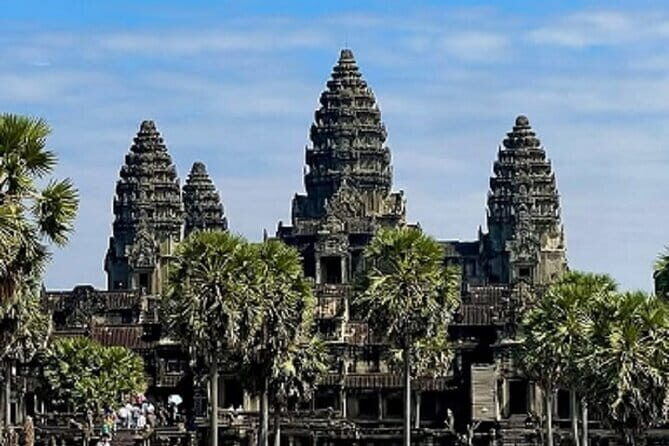
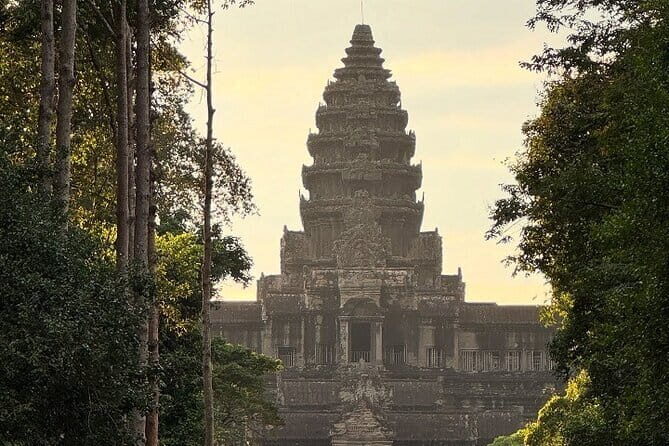
At Angkor Wat, the temple is your first and biggest focus. This complex is the largest religious monument in the world, and the tour is built around that idea: witness sunrise here first, then explore the temple after the light show starts.
What I like about the way the day is structured is that sunrise doesn’t feel like a quick photo stop. You arrive in time to find a spot near the reflective pools, and you’re given enough time to watch the changing light and then walk at a relaxed pace.
Two practical notes you should take seriously:
- Entrance ticket is separate. The tour price is $35, but the Angkor Archaeological Park ticket is $37 per person and is required.
- Dress code is mandatory at Angkor Wat. You must wear pants or a skirt that covers your knees, and a shirt that covers your shoulders. Miniskirts, shorts, tank tops, and other revealing clothing are not allowed.
If you’re unsure what counts as acceptable coverage, bring something you already trust. A light long-sleeve shirt and long pants usually solve the problem instantly.
Ta Prohm: the jungle temple stop that slows the day in a good way
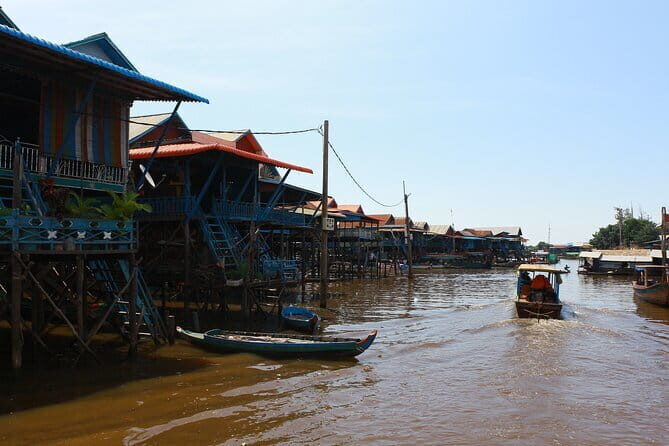
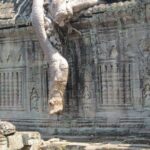
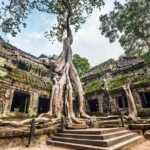
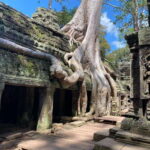
After Angkor Wat, you head to Ta Prohm, famous for the giant tree roots wrapping around temple structures. This is one of those stops where the atmosphere changes the minute you arrive. Stone and nature look like they’re sharing the same frame, and you feel the age in a different way than at the more formal-looking sections of Angkor.
The tour keeps this segment to about 1 hour. That’s a good length because it gives you time to walk through the main areas without turning it into a long slog. Ta Prohm is visually intense, and you’ll likely want to stop often, take photos, and compare how the roots interact with the carvings.
The only real consideration here is physical. Even without any technical “climb,” you’re still moving over uneven stone paths and into sun. If you’re not used to walking on temple floors, take breaks when you need them and don’t rush the best photo angles. A strong guide helps you pace it, and several guide mentions in the feedback point to that exact skill: making sure you have a workable rhythm instead of being herded.
Angkor Thom and the Victory Gate: big carvings, walled-city feel, and stairs
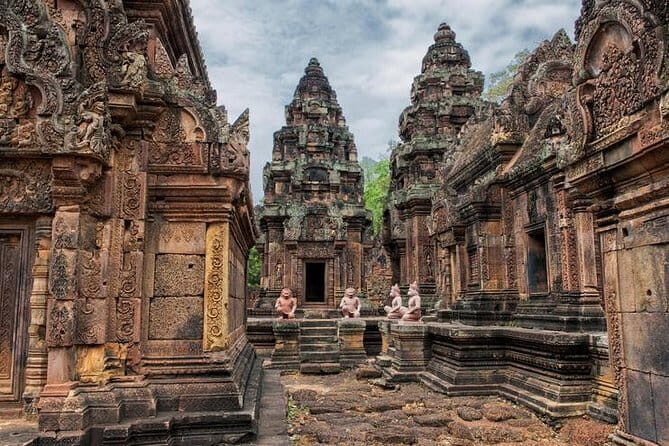
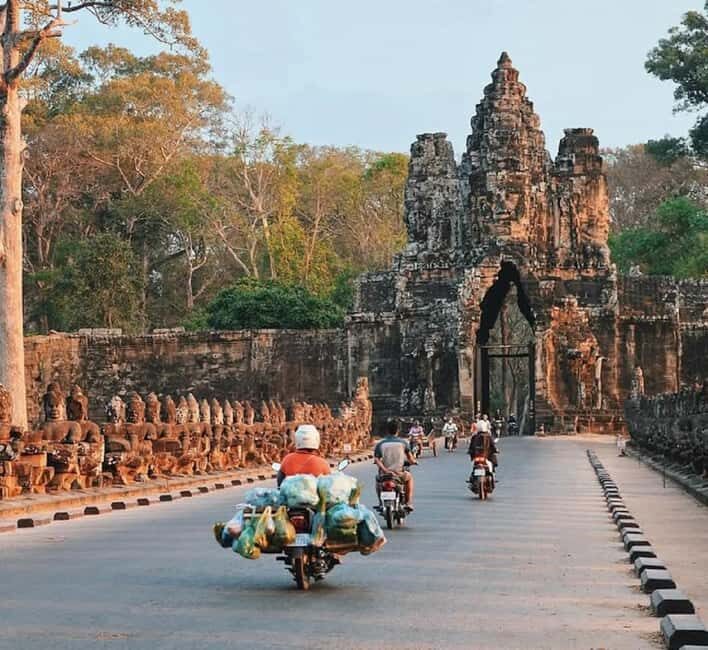
Next comes Angkor Thom, the walled city area. You’ll enter through the Victory Gate, which is guarded by massive stone carvings of gods and demons. The scale here can hit you quickly. It feels less like wandering ruins and more like walking into a designed space.
This stop includes time to explore key points such as the Terrace of the Leper King. You’re not meant to rush through the carvings. Even when your time is limited, the guide’s explanations can make the symbols feel less random and more meaningful.
You’ll get roughly 30 minutes at this section, so think of it as your “overview + landmark photos” block. If you want longer, you’ll probably want to come back later on a different day or add a private extension where you can linger.
Other Angkor Wat temple tours we've reviewed in Siem Reap
Baphuon and Bayon: climbing for views, then the smiling faces
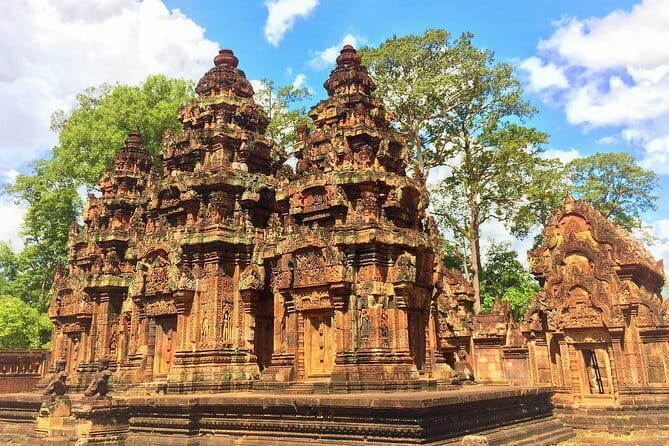
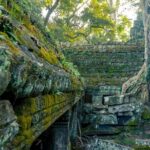
After Angkor Thom, the tour moves to Baphuon Temple, described as a three-tiered pyramid temple. You’ll spend about 30 minutes here, and yes, it includes a climb—steep steps that reward you with the kind of higher vantage point you can’t get at ground level.
If you’re traveling with older knees or you want to minimize the strain, wear shoes with good grip and plan to take the climb in short steps. This is exactly where a good guide helps: they’ll encourage a steady pace and give you time to look while you’re still fresh.
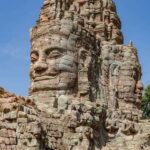
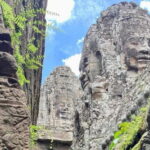
Then you finish at Bayon Temple, famous for its 54 towers and 216 giant stone faces. This is the emotional ending to the day: instead of one main gate or one sunrise view, you get repeating faces from many angles, and the expression (friendly, serious, mysterious) changes as you walk around.
Bayon gets about 1 hour, which is a comfortable amount of time. It’s long enough to circle portions of the temple and still sit for a moment when your legs start asking for mercy.
Guide support that actually changes the day (Nun, Mr T, Buth Veasna)
A lot of sunrise tours sound similar on paper, but the guide experience is where this one earns strong scores. People highlighted guides like Nun and Buth Veasna, and also mentioned Mr T and a driver named T2, praising punctual pickup and helpful, calm communication.
Here’s what that looks like for you:
- Clear explanations at each site. The goal is to help you understand what you’re looking at without lecturing.
- Good sunrise positioning. Nun was praised for recommending the best sunrise spots, which is huge because the “perfect” spot is not always obvious when you arrive in the dark.
- Photo support. Several comments mention guides taking good photos or helping you get the right angle. That reduces stress, especially when you’re traveling with someone who might not be comfortable playing photographer for hours.
This kind of guidance also affects timing. You’ll get breaks when you need them, so you can recover without losing the thread of the route.
Price and value: what $35 really means after you add the ticket
The tour is listed at $35 per person, but don’t forget the required Angkor Archaeological Park entrance ticket: $37 per person. So your realistic baseline is $35 + $37 = $72, before any extras like snacks or drinks you choose to buy.
Now, here’s why it can still feel good value:
- You’re getting hotel pickup and drop-off, not just a meeting point.
- You’re getting an English-speaking professional guide for the day.
- You’re covered for transport in a tuk-tuk or air-conditioned van/minibus depending on group size.
- You also get cold water and a planned route that hits the biggest temple highlights in one morning-to-lunch window.
If you were to do it independently, you’d still need to coordinate transport, find a way to manage sunrise timing, and pay for a guide (or accept that you’ll miss a lot of context). Paying for guidance is how you turn “I saw temples” into “I understood what I saw.”
Timing, effort, and planning your day after 12:30
This tour runs about 8 hours. The pickup is early—between 4:10 and 4:30 a.m.—and the tour departs around 5:00 a.m. You’re dropped back at your hotel around 12:30 p.m.
That mid-day finish is a big deal. You won’t spend your whole day exhausted. You’ll likely still have energy to explore Siem Reap afterward, grab lunch, and maybe see something lighter in the afternoon.
Effort-wise, expect walking, stairs, and warm air later. The route is intense but not all-day intense. Sunrise sets you up for a structured day, and the last temple stop wraps things up before late afternoon heat becomes your main enemy.
One more practical detail: breakfast and drinks aren’t included in what’s listed. If you care about starting fueled, plan to eat something before pickup (or make sure you have something simple ready, if your hotel offers it early).
Who should book this sunrise small-group tour
This fits best if you want:
- A well-run sunrise at Angkor Wat without stress
- Major temple highlights in one shot
- English-speaking guidance that helps you understand what you’re seeing
- A small-group feel that’s closer to a private experience than a big bus tour
It’s also a good choice for solo travelers, couples, and families who want organized transport and don’t mind an early start.
A key limitation: children under 12 aren’t eligible for this shared tour. If you’re traveling with younger kids, you’ll need to look at other options.
If you want maximum control over pacing, extra breaks, or a quieter experience with only your party, the private option is an alternative. The tour description lists a private option with a guide and a larger party cap (up to 12) and a more exclusive feel.
Should you book the Angkor Wat Sunrise small-group day?
I’d book this if sunrise is your priority and you want a day plan that doesn’t collapse under the weight of logistics. The biggest reasons are simple: the early timing is set up correctly, the guide quality is consistently praised (especially for punctual pickup, strong English, and good photo help), and the route hits the core temple names people come for.
I’d think twice if you hate early mornings, or if you expect the $35 price to cover your full Angkor temple spend. Once you add the $37 entrance ticket, your budget needs to be closer to $72, and you’ll want to be sure you’re comfortable with the dress code requirements at Angkor Wat.
If that fits your travel style, this is a strong, cost-conscious way to do the temples in a single day without turning it into an endurance test.
FAQ
Is the Angkor entrance ticket included in the $35 tour price?
No. The Angkor Archaeological Park entrance ticket is not included and must be purchased separately for $37 per person.
What time do you get picked up, and when do you return?
Your guide picks you up from the hotel reception between 4:10 and 4:30 a.m., and the tour departs at 5:00 a.m. The drop-off back to the hotel is around 12:30 p.m.
How long is the tour?
The tour is listed as about 8 hours.
What temples are included in the route?
The day includes Angkor Wat (sunrise), Ta Prohm, Angkor Thom (including Victory Gate and the Royal Terraces area), Baphuon, and Bayon.
What transport do I use from Siem Reap?
Transport depends on group size: 1–2 people travel by tuk-tuk, and 3–6 people travel by an air-conditioned van/minibus.
What dress code do I need for the temples?
You may use a scarf to cover your knees and shoulders for most temples, but Angkor Wat requires clothing that covers your knees and shoulders. Miniskirts, shorts, tank tops, or revealing clothing aren’t allowed.