REVIEW · SIEM REAP
Day in a Life Authentic Village Experience in Siem Reap
Book on Viator →Operated by beyond. unique escapes · Bookable on Viator
You get a front-row seat on how Cambodian rural life actually works. I love that you’re not going to a theme park village. You spend time with a Type 1 poor host family and do hands-on tasks like rice work, roof repairs with palm leaves, and other seasonal village chores.
I also like that the day ends with a fresh Khmer lunch cooked away from the tourist pipeline, plus your visit supports the village through the HUSK Cambodia responsible tourism model. One drawback to know up front: this is a working village. Plans can shift due to ceremonies or events, so you need a flexible mindset.
In This Review
- Key things to know before you go
- First pickup, then straight into real village life
- Meeting your host family: the heart of the day
- What you might do: hands-on farming and home repair
- Village life stops: pagoda, school, and customs
- Ox cart ride: fun, but also grounded
- Lunch in the village: what’s included and why it matters
- How responsible tourism funding fits into your day
- The practical side: who this fits and who might want to skip it
- What you’ll walk away with
- Should you book this Day in a Life village experience?
- FAQ
- How long is the village day experience?
- What time does the tour start in Siem Reap?
- How far is the village from Siem Reap?
- Is this a real village or a staged tourist set-up?
- What kind of activities will I do?
- Is lunch included, and what will I eat?
- Can children join the tour?
- What should I wear?
- Are donations or handouts allowed in the village?
- What’s included in the price?
Key things to know before you go
- It is a real village, not a replica, so the schedule can change day to day
- You work with one host family, typically a Type 1 Poor Family with urgent needs
- Activities depend on the season and the family’s needs (rice planting, harvesting, weaving, tree planting, and more)
- Ox cart riding is part of the day, as long as conditions allow
- Lunch is prepared for you in Siem Reap ingredients, because village sanitation and electricity limits sourcing
- Handouts and gifts are forbidden, so the best help is through the project funding and staff guidance
First pickup, then straight into real village life
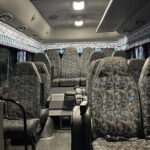
The day starts in Siem Reap around 8:00 am, with hotel pickup and transport in an air-conditioned minivan. The drive is short—about 16 km—but it feels like a switch flips as you leave the city routines behind.
Once you reach the village area, you’re not ushered through staged stops. You’re welcomed into daily life with a local host family and a guide who keeps things respectful. The vibe is practical. You’ll be doing real tasks rather than watching from a safe distance.
A detail I appreciate for comfort and timing: bottled water and cold towels are included. In Siem Reap, heat and sun are not just scenery. They affect how you feel when you’re outside.
Other Siem Reap city and countryside tours we've reviewed in Siem Reap

Meeting your host family: the heart of the day
This tour works with one host family per group. The host family is described as a Type 1 Poor Family, meaning they may have no reliable income and limited savings, and they can struggle to meet basic needs. That’s not a marketing line. It’s why the program has a donation component tied to the responsible tourism initiative.
You’ll likely share the rhythm of the day—how they work, how they manage chores, and what their household needs look like. The most important thing to remember: you’re a helper, not a customer. This kind of visit works best when you stay calm, listen, and follow your guide’s lead on what’s appropriate.
Also, a heads-up on social dynamics. The tour specifically discourages bringing gifts or handouts. The reason is practical: it can trigger jealousy and can create a begging cycle that hurts the village long term. If you feel the urge to bring something, ask the staff what to do instead.
What you might do: hands-on farming and home repair
Your actual activities vary by time of year and by what the family needs on that day. That flexibility is part of the value, because it reflects real rural work rather than a fixed checklist.
Here are some of the most likely tasks you’ll be asked to help with:
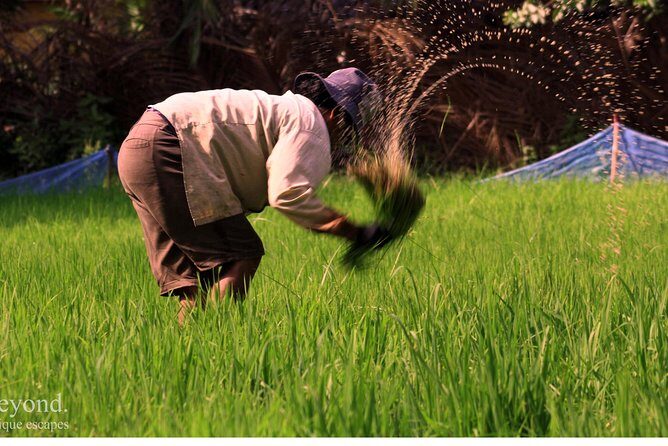
Rice work (planting, transplanting, or harvesting)
Depending on season, you may help with rice planting, transplanting, or harvesting. Even if you only do a small portion, you’ll get a feel for how time-sensitive and physical rice farming is.
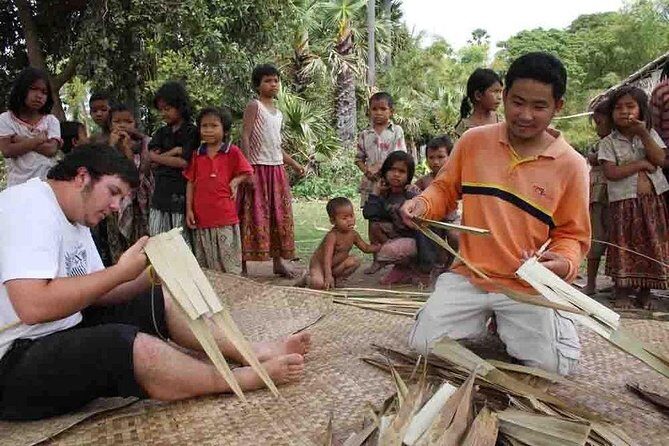
Weaving and thatch roof repair
You might help with stitching palm leaves for repairs or with weaving thatched materials for roofs. In practice, this is detailed work. Your hands learn faster than your brain at first—then suddenly you get it.
Vegetable planting and tree planting
You may help plant vegetables, and you’ll also have an opportunity to plant a fruit tree for your host family. That’s a big deal in a practical way: it’s not just a photo, it’s a future food source and a potential income boost later.
Learning food traditions: prahoc or rice wine
Some days include making prahoc (fermented fish paste) or rice wine as part of the cultural work surrounding daily life. If you’re curious about food culture beyond the Angkor souvenir shop, this is where you’ll get it.
Weaving wall panels or roof materials
Depending on what the household needs, you might learn other weaving or panel-making tasks used around the home.
I like how this approach is distributed. You don’t just do one activity for 10 minutes. You actually participate enough to feel the effort involved—and that makes the lunch afterward more meaningful.
Village life stops: pagoda, school, and customs
You’ll also get time to learn about village life beyond farming. The tour mentions visiting the local pagoda and the school if possible. Sometimes community schedules don’t line up, so don’t count on every stop every day.
What you’re really picking up here is context: village customs, daily routines, and how the community organizes life around religious and school calendars. It’s also the moment where a guide’s explanations matter most. Simple answers like why someone does a task a certain way can change how you see the entire day.
You should expect curiosity from the people you meet. Keep your tone friendly and your behavior low-key. If you’re unsure, watch what others do and copy that rhythm.
Ox cart ride: fun, but also grounded
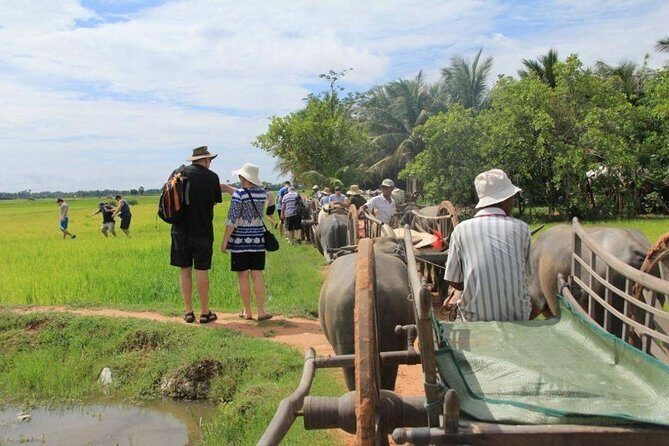
An ox cart ride is included, and it’s one of those experiences that sounds simple but feels real once you’re on it. You’re moving at a village pace, not a tourist pace.
Because conditions vary, it’s worth knowing you might not get a long ride every day. But even a short one gives you an honest sense of transportation and the way land looks outside the city.
Bring patience. Some parts of rural travel involve slow moments. That’s part of the bargain you make for authenticity.






Lunch in the village: what’s included and why it matters
After your morning and early afternoon activities, you’ll be served a fresh Khmer hot lunch. It’s described as a meal with a starter, main course, and fresh fruit for dessert, with ingredients prepared by the catering partner in Siem Reap.
This tour also makes an important point: due to lack of electricity and proper sanitation, they cannot source food from inside the village. That’s not a disappointment. It’s a safety and sustainability choice. You can eat comfortably without the tour compromising basic health needs.
Lunch is normally shared with the host family. Sometimes they prefer to eat alone, and the tour asks you not to take offense. In village settings, privacy and household boundaries can be normal. If that happens, you’ll still eat the same meal and continue the day respectfully.
If you’re the type who remembers meals from trips, this one may stick. Not because it’s fancy, but because you understand the day that leads up to it.
How responsible tourism funding fits into your day
This experience is part of a responsible tourism initiative tied to HUSK Cambodia. Your participation directly supports the Type 1 village family, and the tour also sets aside funding for additional projects in the village.
I like this model because it doesn’t rely on you handing out stuff in the moment. It channels support through structured funding, which is usually more sustainable and less disruptive for the people you’re visiting.
For your own peace of mind, the guide and staff are the right people to ask if you’re wondering where your money goes or how to help in a respectful way. The rules about no handouts are there for a reason.
The practical side: who this fits and who might want to skip it
This is best for you if you want more than sightseeing and you’re okay with a day that runs on local time. It suits people who enjoy hands-on work, learning small cultural details, and seeing how everyday life functions outside Angkor’s shadow.
You should also be comfortable with basic village conditions. The tour is built to be respectful and safe, but it’s still rural Cambodia. Wear what the tour asks for: covered knees, covered shoulders, and chest, plus sturdy footwear. The ground can be uneven, and your feet will thank you.
Most travelers can participate. The tour also notes that children ages 12 to 18 must be accompanied by an adult.
The group size is small: a maximum of 8 travelers. That matters. You get more personal connection with the host family and less crowding in tight village spaces.
What you’ll walk away with
By the time you head back to Siem Reap, you’re not just carrying photos. You’ll have a clearer idea of how rural work cycles shape daily life: rice schedules, home maintenance, food traditions, and the practical ways families build resilience.
If you like travel that feels useful, not extractive, this delivers. You helped with tasks, learned village customs, ate a meal connected to the day, and supported a program designed to help rather than disrupt.
And yes, it’s also fun in a grounded way—roof material work, learning by doing, and that ox cart ride all give the day movement.
Should you book this Day in a Life village experience?
Book it if you want an authentic Cambodian day that’s hands-on, socially responsible, and structured around one real family rather than a staged performance. The price can look “not cheap” at first glance, but compared with what you get—pickup, small group size, an English-speaking guide, multiple included activities, ox cart ride, lunch, cold towels, and donations tied to HUSK Cambodia—it’s strong value.
Skip it (or rethink it) if you need a perfectly scripted itinerary, or if you dislike rural conditions and outdoor work. Since the tour adapts to ceremonies and village events, flexibility isn’t optional here—it’s the point.
FAQ
How long is the village day experience?
It runs for about 7 hours.
What time does the tour start in Siem Reap?
The start time is 8:00 am.
How far is the village from Siem Reap?
The village is described as being around 16 km from Siem Reap.
Is this a real village or a staged tourist set-up?
It’s a real village, not a replica set up for tourists, so ceremonies and events may affect the flow of the day.
What kind of activities will I do?
Activities can include planting or harvesting rice, weaving thatch or wall panels, planting vegetable crops, tree planting, and making prahoc or rice wine. The exact mix depends on the season and the family’s needs.
Is lunch included, and what will I eat?
Yes. You’ll have a freshly prepared Khmer hot lunch with starter, main, and fresh fruit for dessert. The tour also notes they use ingredients prepared by a catering partner in Siem Reap due to village limitations.
Can children join the tour?
Children 12–18 must be accompanied by an adult.
What should I wear?
The dress code asks for covered knees, covered shoulders and chest, plus sturdy footwear.
Are donations or handouts allowed in the village?
No. Donations and handouts in the village are strictly forbidden. If you want to help, discuss options with the tour staff.
What’s included in the price?
Included items are English-speaking guide, air-conditioned transport, ox cart ride and activities, lunch, donation to HUSK Cambodia, bottled water and cold towels, and transport by private vehicle, with pickup from hotels and drop-off at a centrally located office.