REVIEW · SIEM REAP
1-Day private Angkor Temple Tour by Tuk Tuk from Siem Reap
Book on Viator →Operated by Journey2 Angkor · Bookable on Viator
Angkor is big, so planning matters. This private tuk tuk tour gives you expert guidance all day without feeling like you’re stuck in a bus crowd. You’ll hit the major wow-temples plus a couple of short surprises, with flexibility built in so the pace fits your group.
I really like two things here: first, the way you tackle Angkor Wat with a guide’s explanations and a less-obvious entry route; second, the day stays human-sized with included bottled water, photo time, and a lunch stop with cold drinks. One thing to watch: the Angkor Wat entrance fee is not included, so you’ll want to budget for that separate e-ticket.
The tuk tuk approach is the secret sauce. You still do plenty of walking, but you get quick repositioning between sites and you’re not overheating while you wait for the next stop.
In This Review
- Key points before you go
- Why this private tuk tuk format works in Siem Reap
- Angkor Wat: starting smart at the eastern side
- Angkor Thom South Gate: quick entry into a fortified royal city
- Bayon and Baphuon: faces, tiers, and royal palace clues
- The brief secret stops: why you’ll like the mystery
- Phimeanakas and the Royal Palace enclosure: temple inside a palace world
- Terraces with stories: Leper King and Elephants
- Ta Prohm at the jungle-ruins moment
- Lunch with cold drinks: a real break, not a rushed pit stop
- Price and value: what $30 per person really buys
- What to wear and how to walk: small rules that save time
- Who this tour suits best
- Should you book this private Angkor day?
- FAQ
- Is pickup and drop-off included?
- How long is the Angkor temple tour?
- Is this tour private or shared?
- What’s included in the tour price?
- Are temple entrance fees included?
- What should I wear to visit the temples?
- What kind of shoes should I bring?
- Is the tour flexible to my needs?
- What is the cancellation policy?
Key points before you go
- Private by design: only your group, and your schedule stays flexible.
- Guide-led context: stone bas-reliefs, myths, and Khmer royal palace details are explained as you go.
- Angkor Wat entry from the eastern side: a smarter way to start.
- Crowd and heat management: multiple major stops, but with short, focused time blocks.
- Ta Prohm in the right mood: jungle ruins and big photo moments.
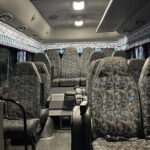
- Comfort extras: bottled water, and a very clean, well-run tuk tuk setup (including cold towels mentioned by a past passenger).
Why this private tuk tuk format works in Siem Reap
Angkor can feel like a “run and hope” kind of day. This is the opposite. You’re not fighting a bus schedule, and you’re not stuck waiting for everyone to return from a bathroom break. A private vehicle means you can actually move—then pause when something is worth your attention.
The tuk tuk also helps with one of Angkor’s hardest realities: the heat and the sheer scale. Even when you’re only at each temple for 20 to 60 minutes, you’re not wasting time on slow transfers. You get walking where it counts (like the Angkor Wat temple circuit areas and the central chambers), then quick repositioning to stay comfortable.
You’ll also benefit from a guide who talks through what you’re seeing. That matters at Angkor more than at most places because the carvings, religious symbolism, and royal-city layout are not obvious at a glance. If your guide happens to be Sim (that name comes up in passenger praise), you can expect especially strong on-the-ground explanations and a smooth day.
Other multi-temple archeological tours we've reviewed in Siem Reap

Angkor Wat: starting smart at the eastern side
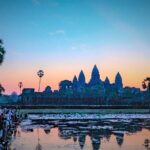
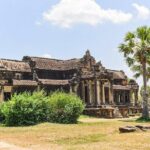
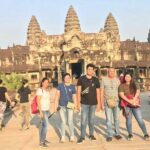
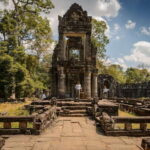
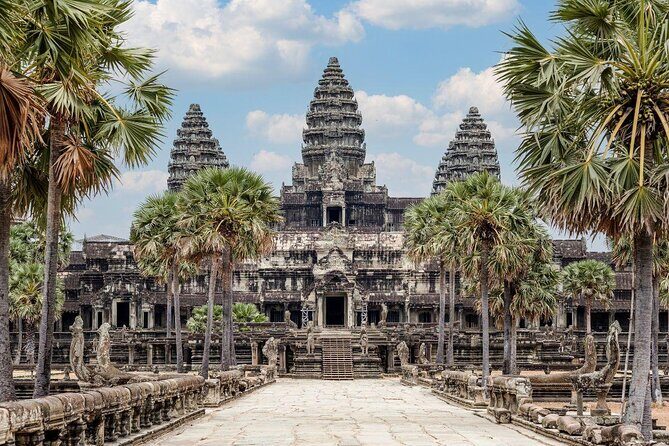
Angkor Wat is the headliner for a reason. It’s the largest religious complex in the world, built in the early 12th century, and it’s the best-preserved temple at Angkor that continued functioning as a major religious center after it was founded.
What I like about this route is that you enter from the eastern side. That’s not just a trivia detail—it helps you start the day with more momentum and less of that feeling you’re repeating the same photos everyone takes from the same angles. From there, you’ll walk on foot through a jungle path toward the North ancient library pool. That short stretch gives the place texture before you hit the big stone views.
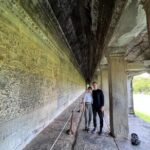
Inside, your guide focuses on history, myths, and the stories carved into the stone bas-reliefs—described here as the longest continuous stretch of bas-relief carvings in the world. You won’t just look at the carvings; you’ll understand what you’re looking at, which makes the temple feel less like a set and more like a message meant to be read.
Practical note: the Angkor Wat time window is about 2 hours, and admission is not included. You’ll want your e-ticket handled ahead of time so you can walk in and get moving.
Angkor Thom South Gate: quick entry into a fortified royal city
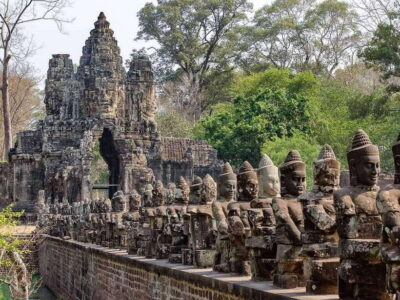
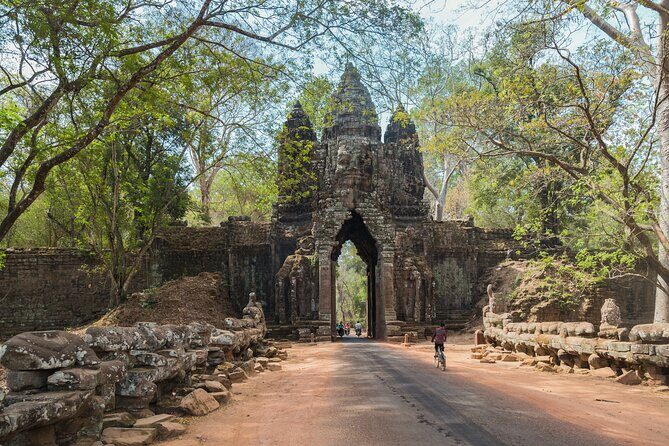
After Angkor Wat, you shift to Angkor Thom, the fortified capital city of the Khmer Empire. The South Gate is one of five gates, and it’s flanked by a line of 54 stone figures on each side. Even with a short visit (about 20 minutes), this stop acts like a reset button. You go from a temple-world to a city-world.
This is also one of the busier areas in the overall Angkor circuit. The advantage of doing it within a private format is that you can keep the stop efficient: you get the key visuals, the gate symbolism, and the layout context without spending your day fighting for space.
Think of this as the day’s orientation. Once you’ve seen how Angkor Thom funnels people through its gates, the rest of the circuit makes more sense.
Bayon and Baphuon: faces, tiers, and royal palace clues
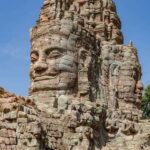
Bayon is where Angkor starts to look like a living sculpture. Built in the 13th century as the state temple of King Jayavarman VII, it sits at the center of Jayavarman’s capital. The signature feature is the multitude of smiling faces—over 200 enormous stone faces—clustered around the central peak.
Your time here is about 50 minutes, which is just enough to do two useful things: take in the faces from multiple towers/angles, and then slow down for the bas-reliefs. The description includes two sets of bas-reliefs featuring mythological, historical, and day-to-day scenes. When you get guided explanations, those scenes go from random figures to meaningful storytelling.
Next is Baphuon, about 40 minutes, located in Angkor Thom northwest of Bayon. It’s a three-tiered temple mountain built as a state temple, connected to the southern enclosure of the Royal Palace. This is a great contrast stop: Bayon’s faces are visually loud; Baphuon’s structure is about scale, tiers, and the feeling of a royal statement.
One neat detail included in the tour notes: a Mongol envoy associated with Temür Khan’s era visited in the late 1290s and compared Bayon to a Tower of Gold and Baphuon to a Tower of Bronze. Even if you don’t memorize the names and numbers, that comparison helps you clock why these temples were so carefully designed.
The brief secret stops: why you’ll like the mystery
Between the major named temples, your guide includes short “secret” stops. One is described as a place most tourists have never seen, and another is a place that sets the tone for the day’s next adventure.
You don’t need to know what they are in advance. The real value is what this does to your day: it breaks up the standard checklist route and adds a bit of that I’m-here-for-a-reason feeling. Also, these short stops can help you avoid the exact same crowds at the exact same times because you’re not pinned to one rigid circuit.
Other tuk-tuk tours we've reviewed in Siem Reap


Phimeanakas and the Royal Palace enclosure: temple inside a palace world
Phimeanakas (also written as Vimeanakas) brings you back into the royal enclosure story. It’s described as a celestial temple, originally built at the end of the 10th century during Rajendravarman’s reign, then completed by Suryavarman I with a three-tier pyramid form.
The top had a tower, and galleries ring the edge of the upper platform. The big practical takeaway for you is that this isn’t just another standalone structure—it’s inside the walled enclosure of the Royal Palace at Angkor Thom. Your guide’s job here is to connect the dots: how a royal complex used religious architecture to reinforce power, belief, and order.
This stop is about 35 minutes. That’s enough time to absorb the architecture without turning it into a rushed sprint.
Terraces with stories: Leper King and Elephants
Two famous terraces anchor the middle and late part of the day: the Terrace of the Leper King and the Terrace of Elephants.
The Terrace of the Leper King is U-shaped and built in the 13th century under Jayavarman VII. The modern name comes from a 15th-century sculpture discovered at the site depicting the Hindu god Yama, god of death. The tour also notes the structure is thought by some to have been used as a royal cremation site. Even if you don’t take every theory as fact, you’ll still get a strong sense of how this place fits into royal ritual and symbolism.
Time here is about 30 minutes, which works because you can focus on the structure and relief details while the light is still decent.
Then you move to the Terrace of Elephants: a 350-meter-long reviewing stand for public ceremonies and the base for the king’s grand audience. The notes include that local Khmer residents call it the Ancient Khmer Stadium, which is a fun way to remember what it was for—crowd viewing, ceremony, and spectacle. Also built in the 13th century under Jayavarman VII, it’s one more reminder that Angkor wasn’t only temples for worship; it was also a stage for governance and public life.
Ta Prohm at the jungle-ruins moment
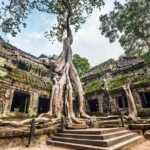
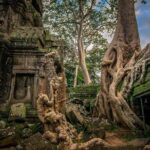
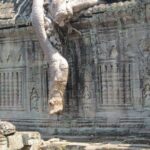
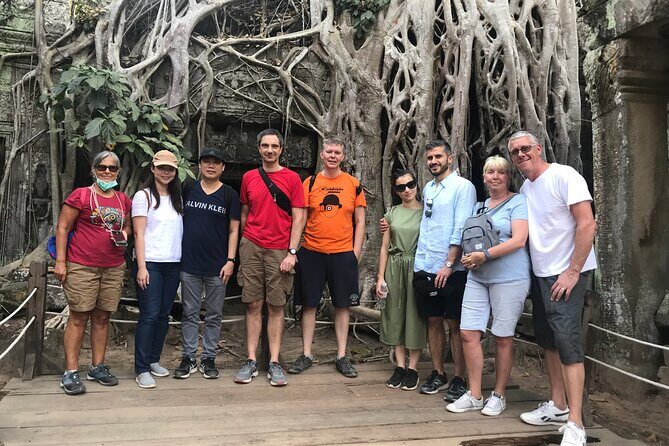
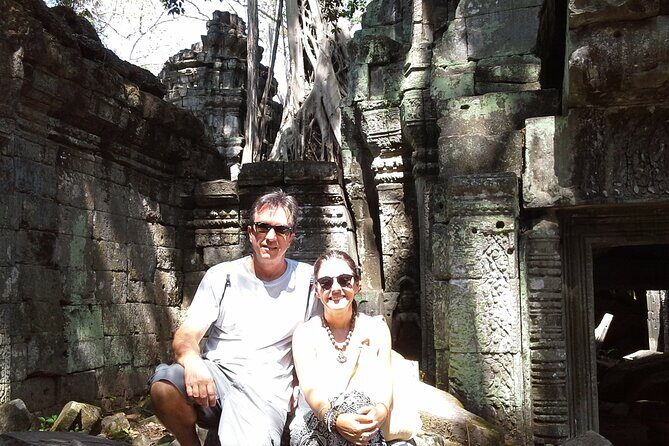
Ta Prohm is the emotional closer for a lot of people, and for good reason. It’s described as jungle-enveloped, one of Angkor’s most atmospheric temples, and it retains much of the condition in which it was found. The combination of trees growing out of ruins and the surrounding jungle makes it instantly photogenic.
This stop is about 1 hour, with admission free. UNESCO inscribed Ta Prohm on the World Heritage List in 1992, and the tour notes it was also a religious temple within the Ancient Khmer University during the 12th and 13th centuries.
Here’s how to enjoy it beyond photos: take a few minutes and watch how the structure disappears into roots and branches. In many temples, you can read the design as a clean geometric statement. Ta Prohm reads like the landscape is writing over human effort. That contrast is why it feels so memorable.
Lunch with cold drinks: a real break, not a rushed pit stop
You’ll enjoy lunch with cold drinks in a local restaurant at the 12th-century temple complex. That matters because Angkor days are often all momentum, no reset. A proper break helps your feet recover, and it keeps the afternoon from turning into a cranky museum marathon.
I also like that the tour includes bottled water from the start. It’s a small thing, but it prevents the classic problem of spending the day thirsty while you hunt for a convenience store.
Price and value: what $30 per person really buys
At $30 per person, this tour is priced for a full day with a private tuk tuk, English-speaking guide, pickup and drop-off, bottled water, and a planned route through major Angkor sights.
The main catch is the Angkor Wat entrance fee, which is not included. Your guide will send you a link to purchase the temple entrance e-ticket days in advance, so you’re not stuck buying at the last minute. Practically, that means your total cost is really a two-part budget: the tour fee plus the Angkor Wat ticket.
Good news: the itinerary lists admission tickets as free for the other stops (South Gate, Bayon, Baphuon, Phimeanakas, terraces, and Ta Prohm). So once you handle Angkor Wat, most of the day’s major sites don’t add more entrance ticket costs.
If you’re splitting the day with friends or family, ask the operator about group discounts since they’re listed for this experience. Even without that, $30 for eight hours of private transport and guided explanation is strong value in Siem Reap.
What to wear and how to walk: small rules that save time
Angkor has a dress code you’ll want to respect. To enter some temples, you have to wear clothes that cover your knees and shoulders. Casual clothing is fine if it meets that requirement—just plan ahead so you’re not improvising in the heat.
Shoes matter more than you’d think. The tour recommends flat shoes that are comfortable for walking. You’re doing enough on foot that supportive, flat footwear will keep you moving instead of slowing you down.
Also, bring a simple strategy for photos: you’ll have photo opportunities built into the day, but the best shots usually happen when you slow down for 30 seconds and let other people pass.
Who this tour suits best
This is a great fit if you:
- Want a private schedule instead of a group bus routine
- Appreciate explanations, not just checkmarks
- Prefer tuk tuk agility to reduce wasted time between stops
- Have limited daylight and need an efficient route that still feels paced
It’s also a solid choice for people who like photography and atmospheric ruins—Ta Prohm is the obvious reason, but Angkor Wat and Bayon will also reward your attention.
If you’re the type who wants to spend half the day at one single structure with no movement, this might feel a bit structured. But if you want a complete Angkor day with guidance and smart timing, this hits the sweet spot.
Should you book this private Angkor day?
Yes, if your goal is a full, organized Angkor experience with room to breathe. The tour’s value comes from the private tuk tuk setup, an English-speaking guide, and a route that mixes big-ticket highlights (Angkor Wat, Bayon, Ta Prohm) with palace and terrace stops that help you understand what you’re seeing.
The main reason to hesitate is the separate Angkor Wat admission fee, plus the fact that you should plan your clothing and shoes for temple entry and walking. If you handle those two details, you’ll likely feel like you got a lot of Angkor in one well-run day.
FAQ
Is pickup and drop-off included?
Yes. The tour includes hotel pick up and drop off in Siem Reap.
How long is the Angkor temple tour?
It runs about 8 hours (approx.).
Is this tour private or shared?
It’s private. Only your group participates.
What’s included in the tour price?
Included are an English speaking tour guide, a private vehicle (tuk tuk), hotel pick up and drop off, and bottled water.
Are temple entrance fees included?
Angkor Wat entrance fee is not included. The guide will send you a link to purchase the temple entrance e-ticket days in advance. Other listed stops show admission ticket free.
What should I wear to visit the temples?
For some temples, you need clothes that cover your knees and shoulders. Casual clothing is fine if it meets that rule.
What kind of shoes should I bring?
Wear flat shoes that are comfortable for walking.
Is the tour flexible to my needs?
Yes. It’s described as a private tour with everything flexible to your needs.
What is the cancellation policy?
Free cancellation is available up to 24 hours in advance for a full refund. If you cancel less than 24 hours before the experience starts, the amount paid is not refunded.