REVIEW · SIEM REAP
Angkor Wat: Full-Day Guided Sunset Tour
Book on GetYourGuide →Operated by Angkor Wat Travel Tour · Bookable on GetYourGuide
Sunset at Angkor is a game-changer. I love how this tour keeps things structured but not rushed, and how the English-speaking guide turns each ruin into a story with real local context. One thing to plan for: entry tickets and meals aren’t included, so you’ll want to budget those separately.
This is an 8-hour day that hits the Angkor classics—Angkor Wat, Ta Prohm, Bayon, and more—then ends where the view can feel almost unfair: Phnom Bakheng at sunset. The added comfort details matter too: cold water, cold towels, and a smooth pickup/drop-off make the long temple day feel doable.
A possible drawback? The climb and crowds at Phnom Bakheng can be intense near sunset, and it’s not suitable for wheelchair users. If you’re okay with lots of walking and sun, the payoff is huge.
In This Review
- Key things I’d plan for before you go
- From hotel pickup to first temple: how the day is paced
- Why this pacing is good value
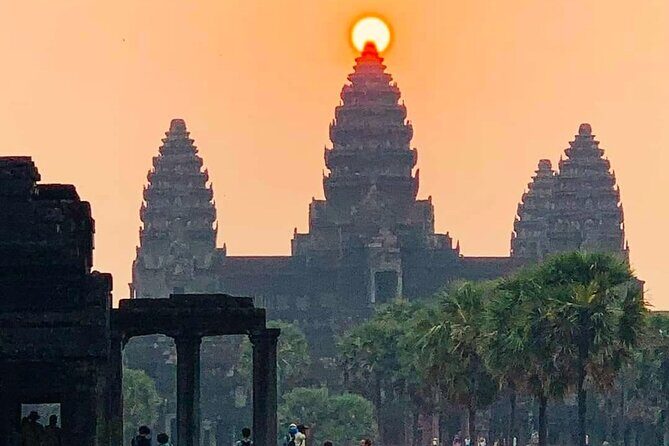
- Angkor Wat: the Vishnu temple that sets the tone
- What makes Angkor Wat worth your attention
- A small strategy tip for photos
- Potential drawback
- Banteay Kdei: monastic calm with a similar architectural vibe
- Why I like Banteay Kdei on a same-day route
- What to watch for
- Ta Prohm: the roots-and-stone scene you can’t fake
- Why Ta Prohm hits differently
- Small reality check
- Lunch and a reset: refuel the right way between temples
- What to do during the break
- Bayon and Angkor Thom: hundreds of faces and the meaning behind them
- Why Bayon works so well after Ta Prohm
- The main drawback
- Phnom Bakheng for sunset: the hardest steps and the best payoff
- What to expect at sunset
- A practical warning
- What the included guide and transport add (and why $16 feels fair)
- Who this tour suits best
- Quick checklist: what to bring for a day that starts early and ends late
- Should you book this Angkor Wat full-day sunset tour?
- FAQ
- How long is the Angkor Wat full-day sunset tour?
- What time do they pick me up from my hotel?
- Is hotel pickup and drop-off included?
- Are entry tickets included in the price?
- Is lunch included?
- Which temples are visited during the day?
- What language is the guide?
- Is the tour wheelchair accessible?
Key things I’d plan for before you go
- Pick-up timing is morning-flexible: you’ll be collected from your Siem Reap hotel between 8:30 AM and 9:00 AM.
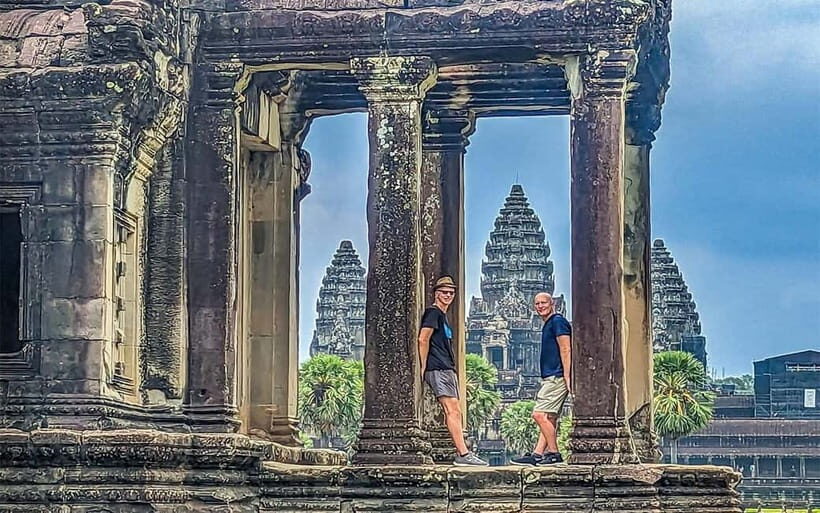
- You’ll see both Hindu and Buddhist Angkor: Angkor Wat (Vishnu) then Bayon (Buddhist face symbolism).
- Ta Prohm is the photo moment: giant fig trees with roots wrapped around stone structures.
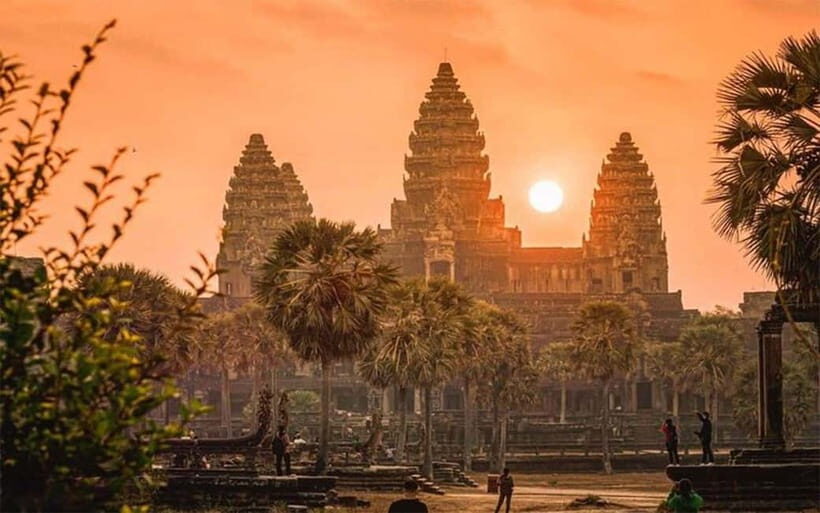
- Your sunset viewpoint is Phnom Bakheng: you’ll head up the temple mountain for the golden-hour effect.
- Comfort help is real: cold water and cold towels are included, which helps in Siem Reap heat.
From hotel pickup to first temple: how the day is paced
The tour starts with a friendly hotel pickup in Krong Siem Reap, usually between 8:30 AM and 9:00 AM. The driver will be waiting in the lobby holding a sign with your last name. That small detail saves time and stress—especially when you’re still figuring out where everything is in town.
Once you’re on the road, you’ll do a comfortable transfer (about 40 minutes) before your first major stop. This pacing is smart. Angkor can feel overwhelming if you arrive late, so starting in the morning helps you get your bearings and gives you energy for the walking ahead.
Other Angkor Wat sunset tours we've reviewed in Siem Reap
Why this pacing is good value
At $16 per person, the real value isn’t just the temples. It’s the fact that you’re not spending your day on logistics: you get pickup, drop-off, and a live English guide included. You also get practical comfort support with cold water and a cold towel during the tour.
You’ll still want to think like a temple tourist: wear shoes you can trust, expect heat and humidity, and plan on a lot of steps. If you’re looking for a relaxed cultural day rather than a sprint, this format usually fits well.
Angkor Wat: the Vishnu temple that sets the tone
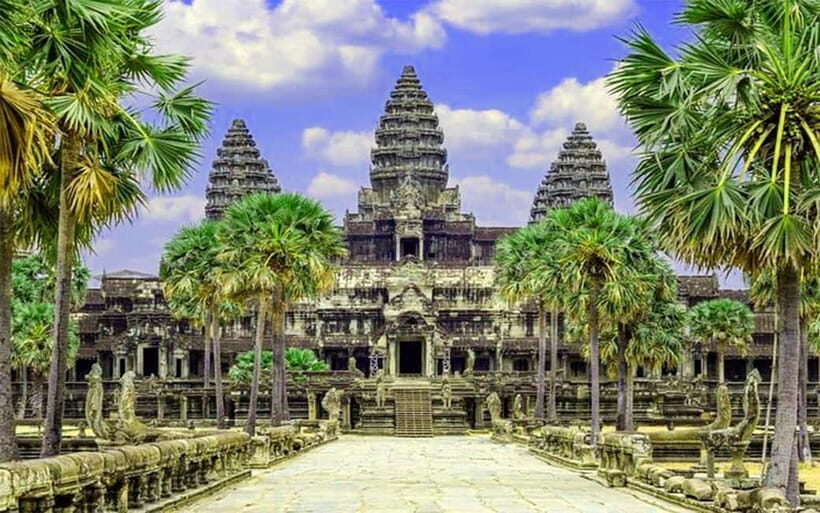
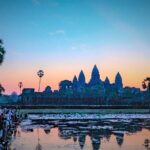
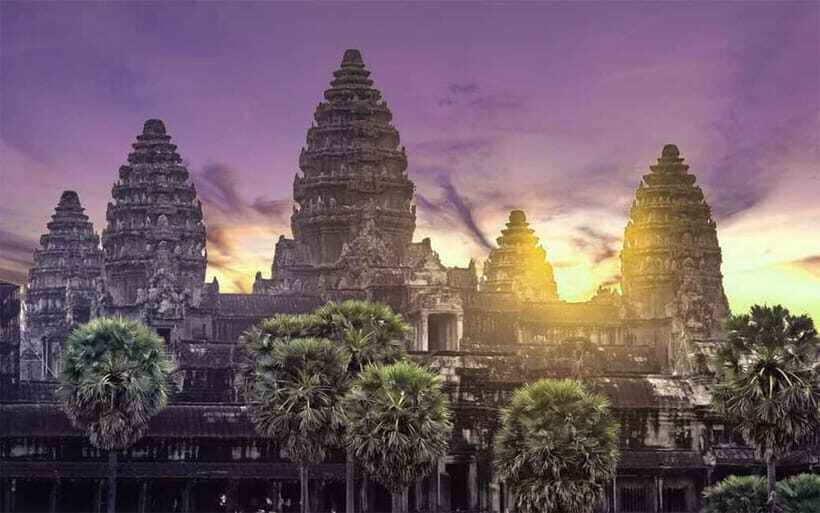
Angkor Wat is where the whole day earns its name. You’ll spend about two hours here, including a photo stop plus a guided visit and sightseeing time.
What makes Angkor Wat worth your attention
This is the big one—built in the early 12th century by Khmer King Suryavarman II, and dedicated to Vishnu. That detail matters because the architecture isn’t random. You’re looking at a worldview carved into stone: symmetry, religious symbolism, and a layout designed to move you through meaning, not just scenery.
As you walk with your guide, you’ll likely get practical context such as:
- what you’re seeing structurally (causeways, courtyards, towers)
- how the Hindu dedication shapes the temple’s design language
- why Angkor Wat is often treated as a spiritual and cultural reference point
A small strategy tip for photos
The guide’s job is also timing. You’ll have designated photo moments, but don’t be afraid to take your own time too. If you like photos, this is where you’ll want your camera ready and your patience set to low—because Angkor Wat is visual on every angle.
Other Angkor Wat temple tours we've reviewed in Siem Reap
Potential drawback
The earlier you go, the better it tends to feel. If you’re stuck behind buses later in the day, it can get harder to breathe and photograph comfortably. That’s one reason the morning stop is such a benefit.
Banteay Kdei: monastic calm with a similar architectural vibe
Next up is Banteay Kdei, roughly a 45-minute stop with photo time and a guided tour. This temple is tied to Khmer King Jayavarman VII (late 12th century) and is often described as a monastic complex.
Why I like Banteay Kdei on a same-day route
Banteay Kdei can feel like a breather between the biggest wow moments. It’s expansive, and it’s largely unrenovated, so you get a more rugged sense of how these sites exist beyond the postcard version.
It also connects stylistically to Ta Prohm, meaning it helps you read what you’ll see later. When your guide points out the similarities in how stone and structure relate to the surrounding setting, Ta Prohm becomes easier to understand instead of just looking like a jungle miracle.
What to watch for
Bring attention to the layout. This isn’t just about one hero structure. It’s about how the space works, how you move through it, and how the temple’s role as a monastic site can shape what you notice.
Ta Prohm: the roots-and-stone scene you can’t fake
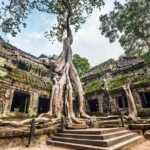
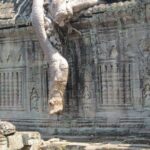
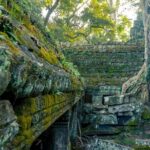
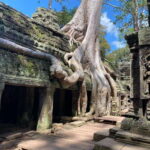
Ta Prohm takes the spotlight, with about 1.5 hours allocated for guided exploration and sightseeing. This is the temple wrapped in giant fig trees, where roots cling to structures and create that unforgettable tangle of stone and nature.
Why Ta Prohm hits differently
Ta Prohm is remarkably preserved in its original state, and that’s exactly what makes it special. The intertwining roots aren’t a decorative effect—they’re part of what happened over time, and they give you a sense of endurance rather than just destruction or restoration.
When your guide shares the temple’s story through a cultural and historical lens, the experience feels more grounded. Instead of only thinking about Instagram angles, you start noticing patterns:
- where trees appear to “claim” certain sections
- how the stone looks altered by time
- how the site’s myth-and-religion layers show up in the ruins
Small reality check
Ta Prohm is photogenic, which means you’ll want to move carefully. Paths can get crowded, and you’ll be walking under uneven terrain. Comfortable shoes aren’t optional here—they’re your best friend.
Lunch and a reset: refuel the right way between temples
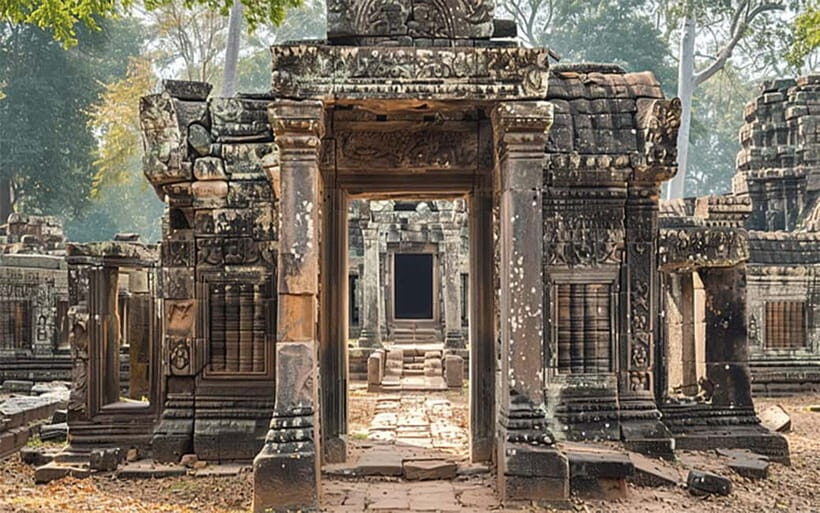
After Ta Prohm, you’ll break for lunch at a local restaurant. Then you’ll have time for coffee and local snacks (the tour schedules this as about a 45-minute break).
This is one of those details that quietly makes the whole itinerary work. Angkor days are long, and it’s easy to underestimate how quickly you run out of steam. A proper lunch break helps you stay present for the afternoon temples instead of getting cranky at Bayon or missing your sunset climb.
What to do during the break
Use it to do three practical things:
- drink water
- cool down
- check your camera battery and your sunscreen situation
If you skip lunch, your energy can lag exactly when you need it most for the final stretch.
Bayon and Angkor Thom: hundreds of faces and the meaning behind them
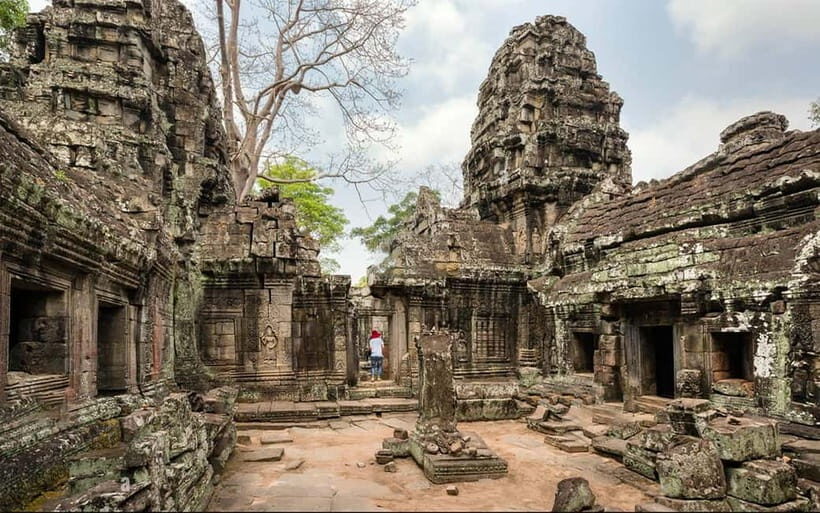
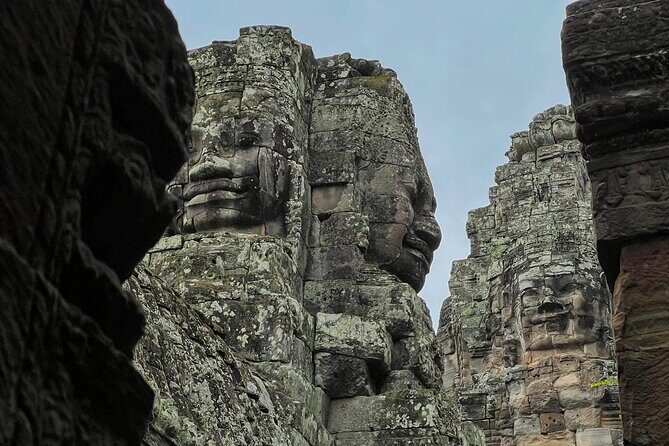
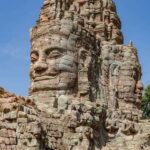
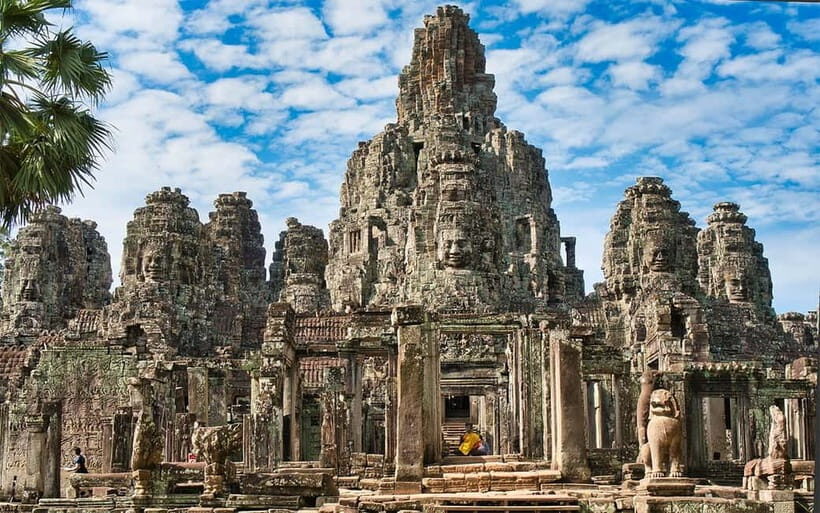
Bayon Temple comes next, with about one hour for photo stop, guided tour, and sightseeing. Bayon is known for its Buddhist architecture and the famous stone faces—hundreds of them.
Why Bayon works so well after Ta Prohm
By the time you reach Bayon, your brain has already been trained to “read” temple shapes and symbolic design. So Bayon isn’t just a bunch of carvings. It feels like a shift—different religious framing, different mood, and a different way of seeing the complex.
Your guide will help connect the dots between:
- the temple’s Buddhist identity
- what those faces are doing within the design
- why this part of Angkor feels like a living symbol rather than a static ruin
The main drawback
Bayon is a popular stop. If you’re the kind of person who needs wide-open space to photograph, you may feel a little boxed in at peak moments. The good news: the guided format helps you find workable angles and keep moving at a comfortable pace.
Phnom Bakheng for sunset: the hardest steps and the best payoff
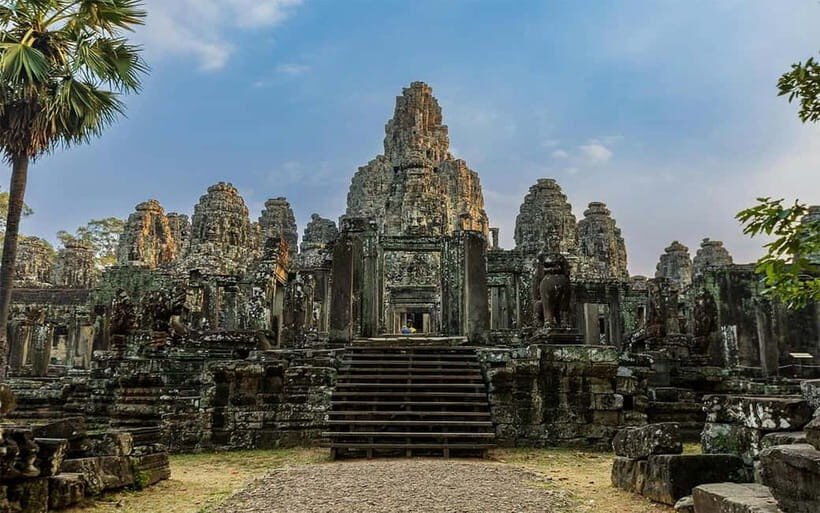
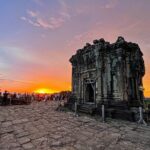
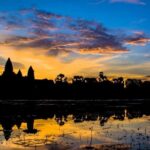
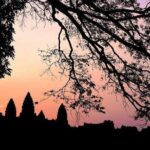
The final stop is Phnom Bakheng, and yes, this is where the day becomes a memory-maker. You’ll spend about an hour here, including guided sightseeing and the sunset viewpoint.
Phnom Bakheng is described as the state temple of the first Khmer capital, and the climb up to it is part of the experience—physically and emotionally. Near sunset, the view can be breathtaking in a way that makes the earlier walking feel worth it.
What to expect at sunset
- You’ll ascend the steps to reach the temple mountain.
- The timing is built for sunset viewing, not just “late-afternoon photos.”
- Weather matters. If rain rolls in, the sky can shift fast, and you’ll have to accept conditions you can’t control.
Even when the weather isn’t perfect, you’ll still get the sense of arriving at Angkor’s spiritual high point—because everyone’s there for the same reason.
A practical warning
If you’re sensitive to heat, know that the final climb can feel intense. Also, this tour is not suitable for wheelchair users. If stairs are a problem for you, you should rethink this route.
What the included guide and transport add (and why $16 feels fair)
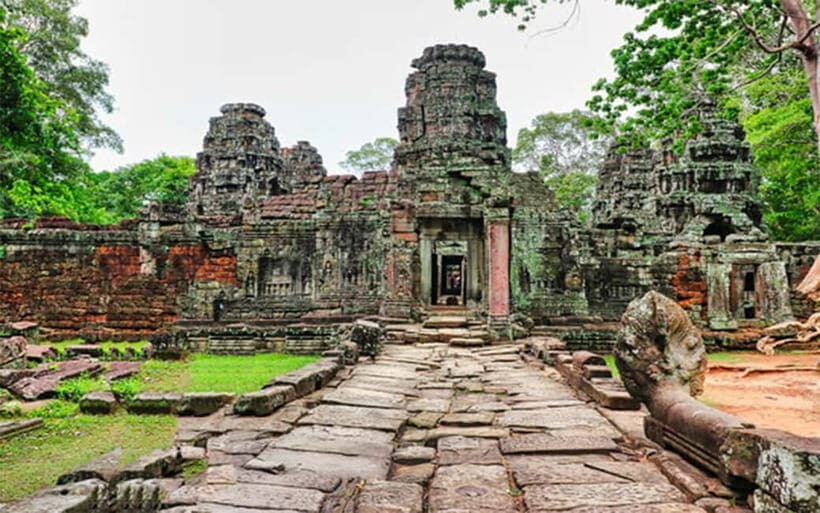
Let’s talk value, because Angkor can get pricey once entry tickets and extras pile up.
At $16 per person, what you’re really paying for is:
- hotel pickup and drop-off
- an English live guide
- cold water and cold towel support
- a full-day structure that gets you to the right sites
And the guide quality is a major theme in what you’ll experience. Names like David, Rith, Mare, Rey, and Chong show up often, and several guides are praised for being funny and story-driven—so the day doesn’t turn into a silent museum walk. They’ll explain history and culture in a way that helps you understand why Angkor Wat is more than a pretty temple.
Transport matters too. The vehicle experience is heavily rated, with 98% of ratings at the perfect score level. That lines up with what you want on a long day: smooth transfers, comfort support, and a driver who keeps things moving in busy conditions.
Who this tour suits best
This Angkor sunset tour is best for you if:
- you want a guided day with real context, not just ticking off temples
- you prefer hotel pickup over sorting transport on your own
- you want to end with a sunset view at Phnom Bakheng
- you like having some built-in structure (photo stops, guided timings, lunch break)
It’s less ideal if:
- you need wheelchair accessibility (the tour isn’t suitable)
- you can’t handle significant walking and stairs near the end
- you’re traveling with unaccompanied minors (unaccompanied minors aren’t allowed)
For couples, solo travelers, and small groups, it tends to feel like the sweet spot between independence and convenience.
Quick checklist: what to bring for a day that starts early and ends late
The tour guidance is simple, and it’s right:
- Comfortable shoes
- Camera
- Comfortable clothes
I’d also add practical mindset items that match what the day demands: sunscreen, a hat, and water discipline. You’ll get cold water and cold towels, but you’ll still sweat. Plan to dress like the heat is part of the itinerary.
Should you book this Angkor Wat full-day sunset tour?
If you want the Angkor highlights with a guide who can connect architecture to culture, I think this is a strong yes—especially at this price level. The mix is good: Angkor Wat for the foundation, Banteay Kdei for monastic texture, Ta Prohm for the roots-and-stone drama, Bayon for the face symbolism, then Phnom Bakheng for sunset.
Just book with clear expectations: entry tickets and meals are extra, the day involves lots of walking and steps, and Phnom Bakheng is weather-dependent. If you can handle that, you’ll likely come away with that rare combo—beautiful sights plus an explanation you actually remember.
FAQ
How long is the Angkor Wat full-day sunset tour?
The tour duration is 8 hours.
What time do they pick me up from my hotel?
Pickup is typically between 8:30 AM and 9:00 AM.
Is hotel pickup and drop-off included?
Yes. Hotel pickup and drop-off are included, with the driver holding a sign with your last name.
Are entry tickets included in the price?
No. Entry ticket fees are not included.
Is lunch included?
Meals are not included. The schedule includes a lunch stop, but you should plan to pay for it separately.
Which temples are visited during the day?
You’ll visit Angkor Wat, Banteay Kdei, Ta Prohm, Bayon, Angkor Thom (as part of the route), and Banteay Kdei again as listed, plus Phnom Bakheng for sunset.
What language is the guide?
The tour guide is available in English.
Is the tour wheelchair accessible?
No. It is not suitable for wheelchair users.