REVIEW · SIEM REAP
Angkor Wat Small Circuit & Sunset Tour
Book on Viator →Operated by Angkor Doors · Bookable on Viator
Temples can feel like a marathon, but this one doesn’t. This small-circuit day pairs classic sights with a no-sunrise start, plus an Angkor Thom sunset that gives your whole day a payoff. I love the mix of air-conditioned comfort and clear guide narration that turns carved stones into actual stories, and I also love that you end with big views instead of just “one more temple.” One thing to consider: you’ll need to budget time for heat, walking, and the shoulders-and-knees dress code before you step inside.
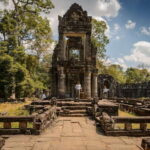
For about 8 to 9 hours, you’ll cover Angkor Wat, Banteay Kdei, Ta Prohm, Ta Keo, and Angkor Thom (UNESCO World Heritage Site), with bottled cold water included. Guides like Vanna and Pal Chen get mentioned for a reason: they explain what you’re seeing in a way that sticks, not just a quick rundown. The possible drawback is the entrance fees—your tour price is solid, but the one-day Angkor Pass is an extra cost.
In This Review
- Key Things I’d Call Out Before You Go
- Why This Angkor Day Feels Easier Than Sunrise Tours
- Price and Value: What $54 Buys (and What You Still Pay)
- Getting Ready: The Dress Code and the Comfort Stuff That Matters
- First Stop: Angkor Wat Without the Sunrise Rush
- Banteay Kdei: The Peaceful Break from the Main Hype
- Ta Prohm: Trees Growing Through Stone (and Why You’ll Want Time)
- Ta Keo: A Short Climb With Worthwhile Views
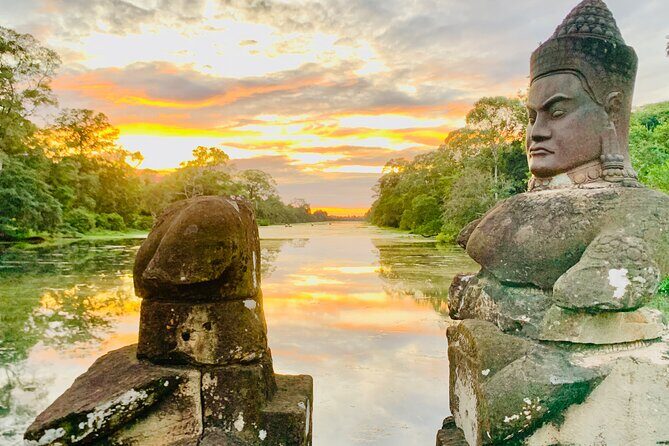
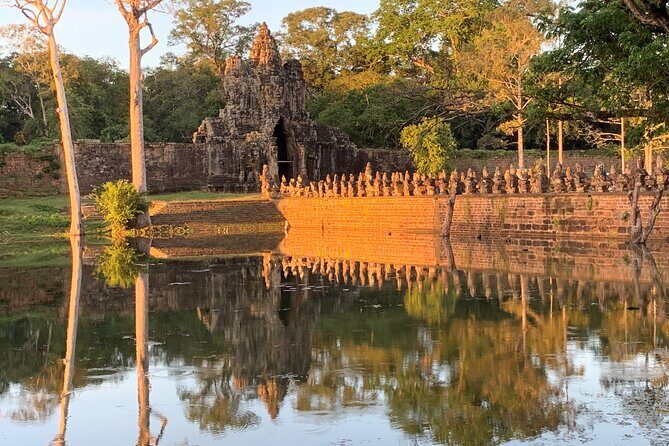
- Angkor Thom via Victory Gate: Where the Sunset Really Works
- Guides Matter: What Vanna and Pal Chen Add
- Timing, Lunch, and Heat: How to Make the Day Feel Smooth
- Who This Tour Fits Best (and Who Might Want Another Option)
- Should You Book This Angkor Small-Circuit Sunset Tour?
- FAQ
- What time does the tour start?
- How long is the Angkor Wat small-circuit and sunset tour?
- Is pickup offered?
- What’s included in the tour price?
- What entrance fees are not included?
- What should I wear to visit the temples?
- Is this tour private?
- How does cancellation work?
Key Things I’d Call Out Before You Go
- No-sunrise start at 9:00 am means you can sleep in and start after breakfast without rushing your body clock.
- AC transport + cold water keeps you moving through the heat with fewer energy crashes.
- Real temple variety in one day: Angkor Wat, the quiet Buddhist Banteay Kdei, the famously root-choked Ta Prohm, then Angkor Thom at sunset.
- A guide makes the carvings make sense (I’m watching for names like Vanna and Pal Chen because they’re tied to strong, story-first commentary).
- Climbing a temple for views at Ta Keo gives you a break from flat walking and helps you see the area from above.
- Sunset from Angkor Thom is the practical end goal, so your last hour feels like a reward, not a fade-out.
Why This Angkor Day Feels Easier Than Sunrise Tours
Starting at 9:00 am changes everything. You still get a full temple day, but you’re not waking up in the dark to chase a sunrise slot. That matters at Angkor, where the ground is uneven and the midday sun can turn your water bottle into a suggestion.
You also get a sensible rhythm: you begin with the big-name temples, then work your way through the park, and finish with sunset views from Angkor Thom. That ordering means you’re not scrambling at the end to find a place to stand—your day naturally funnels into the light and the crowds. You’ll likely end the tour feeling like you did Angkor without burning out halfway through.
Other Angkor Wat sunset tours we've reviewed in Siem Reap
Price and Value: What $54 Buys (and What You Still Pay)
The tour price is $54.00 per person for a full guided day with English-speaking guide, air-conditioned vehicle, and cold bottled water. In practical terms, you’re paying for three things that are hard to replicate on your own: organization, interpretation, and comfort.
Two costs you should plan for:
- Entrance fee: the one-day Angkor Pass is $37.00 per person, and it’s not included.
- Food and drinks: you’ll have time for a lunch break on your own (own expense).
If you’re comparing DIY versus a guided loop, here’s the useful angle: at Angkor, entrances and transport are only part of the expense. The guide time is what helps you “read” the temples instead of just taking pictures and walking away with vague impressions. With commentary about Khmer history and details on what you’re looking at, that $54 starts to feel more like paying for clarity than paying for a ride.
Getting Ready: The Dress Code and the Comfort Stuff That Matters
Temple access is not optional. You’ll need clothes that cover your shoulders and knees or you won’t be allowed inside the temples. This is one of those simple rules that can ruin your day fast if you ignore it.
For the rest, I’d treat this like an active day:
- Wear comfortable shoes for uneven stone and stairs (especially later near the climbing parts).
- Bring sun protection and plan for heat. Even with AC transport, you’ll still be outside for long stretches.
- Use the cold water you’re given. It’s there for a reason—don’t save it like it’s a museum artifact.
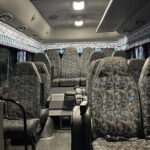
The tour format is also built around the idea that most people can participate, with transport done by AC car or minivan or minibus.
First Stop: Angkor Wat Without the Sunrise Rush
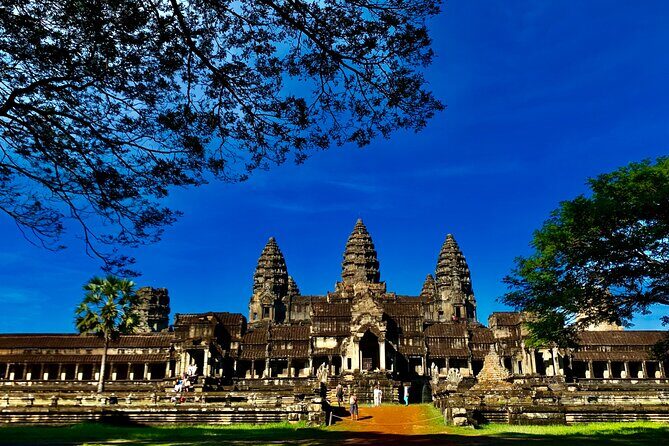
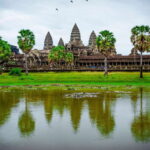
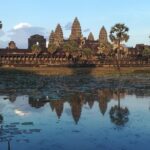
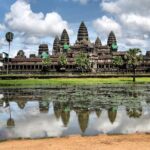
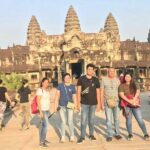
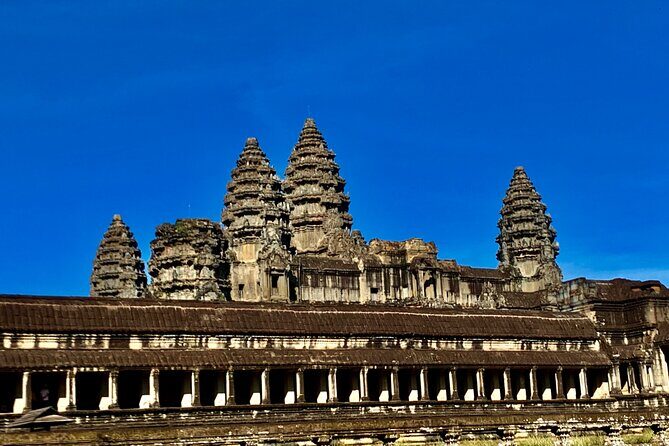
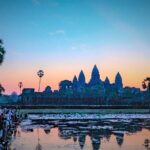
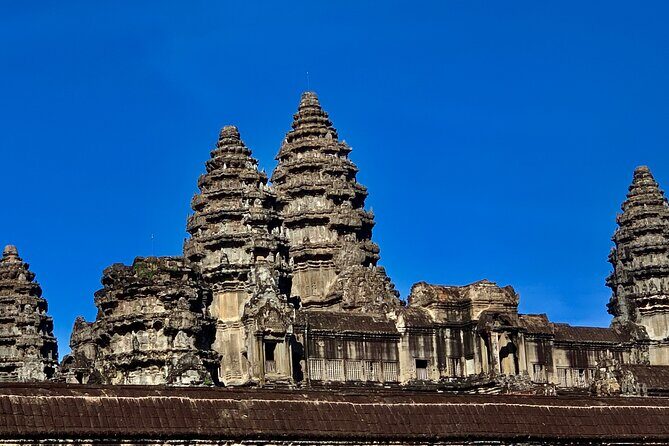
You start with Angkor Wat, and you’ll spend about 2 hours on site. This is the part that makes Angkor feel instantly special. The temple complex is vast, and that first visit is where you get your bearings: the layout, the scale, the way the space pulls you forward.
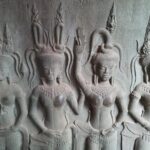
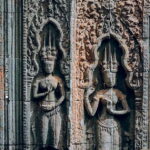
What I like about having a guide here is not just where to walk. It’s the why. With Khmer history context and explanations of carvings, you’re more likely to notice details like how figures and patterns repeat and what those scenes suggest. Without guidance, many people focus only on the main structures. With guidance, your eyes start to connect the whole place.
If you come in expecting a quick photo stop, plan to slow down. Two hours is enough to see the big moments without turning it into a sprint.
Banteay Kdei: The Peaceful Break from the Main Hype
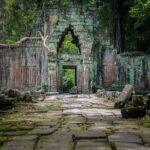
Next comes Banteay Kdei, for about 30 minutes. This is the kind of temple stop that can be easy to under-appreciate if you want only the biggest names. The payoff here is atmosphere.
Banteay Kdei is described as a Buddhist temple built at the end of the 12th century during the reign of King Jayavarman VII, and the “feel” is part of the point. It’s often quieter than the most famous complexes, so you get a breather and a chance to look at stonework without the same level of constant movement around you.
In a day packed with major sites, this half-hour matters. It helps reset your eyes and makes the later stops hit harder.
Other Angkor Wat temple tours we've reviewed in Siem Reap
Ta Prohm: Trees Growing Through Stone (and Why You’ll Want Time)
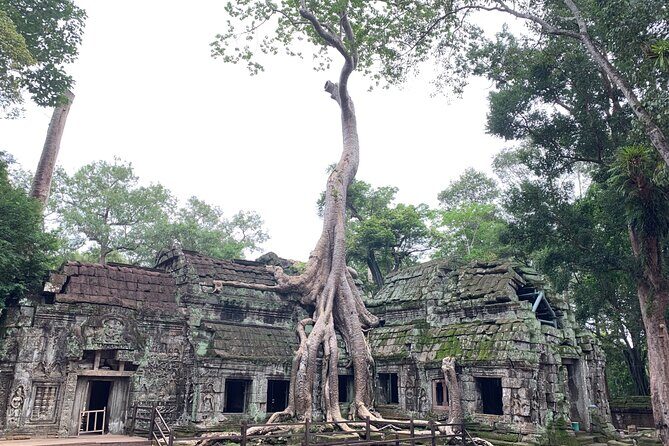
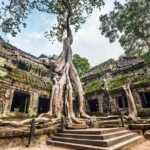
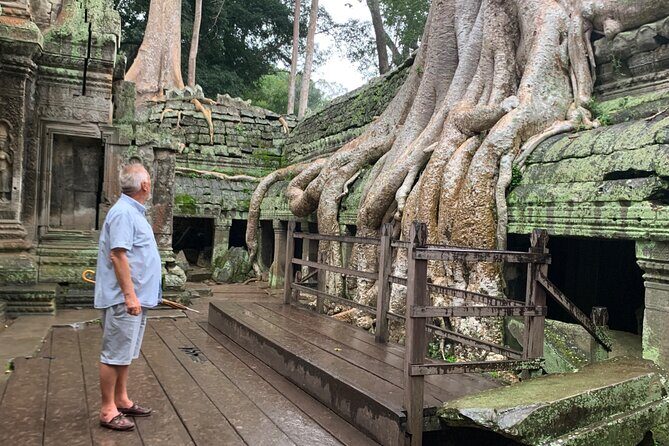
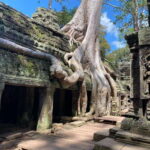
After that, you head to Ta Prohm for about 2 hours. This is the famous Tomb Raider temple, the one people recognize instantly. But the real reason it works on a guided day is that you can focus on both the drama and the structure.
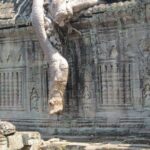
You’ll see trees growing through the ancient temple structures, plus that contrast between human design and plant takeover. It’s easy to stare at the roots and forget to look at carvings, but a good guide nudges your attention back and helps you connect what you’re seeing to the broader story of the site.
This stop is also where I’d be the most strategic with your time:
- Look around first for the main framing.
- Then slow down for details.
- If you care about photos, plan your stops so you don’t get stuck waiting for the perfect shot while the rest of your group moves on.
Two hours gives you enough time to do both: wonder and observation.
Ta Keo: A Short Climb With Worthwhile Views
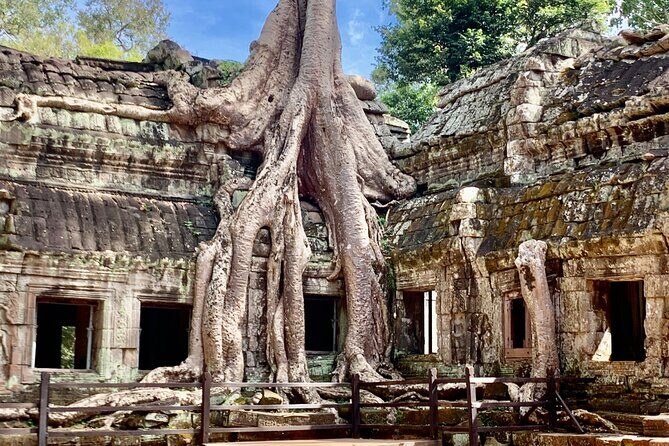
Then you make a quick move to Ta Keo for about 20 minutes. The key here is the climb. Even a short climb can change how a place feels, because suddenly you’re not only looking at temple walls—you’re seeing space and distance.
This is the part of the day that gives your legs a little challenge and gives your eyes a reward. It’s not long enough to feel like a workout marathon, but it’s enough to help you understand how the Angkor Archaeological Park spreads out.
If you dislike stairs, go steady and take your time. The value is in the views, not in rushing.
Angkor Thom via Victory Gate: Where the Sunset Really Works
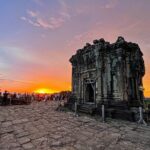
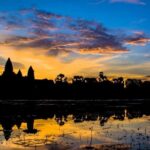
You finish at Angkor Thom for about 2 hours, entering via Victory Gate. This is a great place to save your energy because the final segment is built around what you actually came for: sunset views.
Inside the Angkor Thom compound, you’ll explore ruins with optional stops such as Spean Thmor, Chau Say Tevoda, and Thommanon. You may also see places like Sourprat and the Terrace of the Leper. The exact order and which side-stops you hit can depend on your guide’s flow, but you should expect a mix of major gateways and specific carved areas that help you understand the “city” aspect of Angkor Thom—not just one single temple.
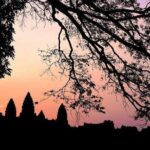
Why end here? The late light. As the sun drops, stone changes color and your shadows get longer. That makes the whole complex feel more dimensional. It also gives you a built-in reason to stay with your group instead of wandering off during the last hour.
Practical tip: start paying attention to where your group is positioning early. If you wait until the very end to find a standing spot, you’ll be squeezed into whatever gap is left.
Guides Matter: What Vanna and Pal Chen Add
A guided day lives or dies on the person talking for you. The strongest feedback tied to this tour highlights guide style: story-driven explanations, good English, and specific attention to carvings and meaning.
I’ve seen the difference this can make firsthand-style, even when I’m not doing the talking: when a guide connects what you’re seeing to Khmer history, carvings stop looking like random patterns. They start looking like communication across centuries.
Two guide names you’ll hear associated with this experience are Vanna and Pal Chen. In feedback, Vanna is praised for strong English, depth of knowledge about temples and ruins, and a mix of personal and historical stories. Pal Chen is noted as an ex-Buddhist monk, which helps explain religious context with a different kind of understanding than you get from a standard tour script.
That’s what you’re aiming for: not just facts, but context you can remember when you’re back in Siem Reap looking at your photos.
Timing, Lunch, and Heat: How to Make the Day Feel Smooth
Your day runs about 8 to 9 hours, and it includes time at each temple plus that key sunset window. Start time is 9:00 am, and there’s mention of an on-your-own lunch break after visiting Ta Prohm.
This matters because lunch decisions can either save your day or slow it down. Keep it simple:
- Eat somewhere easy to get back from.
- Don’t pick a place that requires a long detour.
- Bring a little water planning with you, even though the tour includes cold bottled water.
Also, don’t underestimate the physical rhythm. Even with transport, you’re walking through temple grounds, climbing stairs at Ta Keo, and moving between sites while the weather does its thing.
You’ll feel best if you treat it like a full-day hike with sights, not like a casual stroll.
Who This Tour Fits Best (and Who Might Want Another Option)
This small-circuit plus sunset format is a strong match if you:
- Want the big hits (Angkor Wat and Angkor Thom) without waking up early for sunrise.
- Care about understanding what you’re looking at, not just collecting photos.
- Like the idea of finishing with sunset instead of calling it a day mid-afternoon.
- Prefer an organized, AC-ride experience over trying to coordinate everything yourself.
It’s also a good fit for people who want to see multiple temples in one day but don’t want to spend energy figuring out the route.
You might consider another style if you:
- Want a totally flexible pacing with no guide structure.
- Are extremely sensitive to stairs or uneven ground (you can still participate for most people, but Ta Keo includes a climb).
- Don’t want to pay the additional Angkor Pass on top of the tour price.
Should You Book This Angkor Small-Circuit Sunset Tour?
Yes, if you want a well-paced Angkor day with interpretation and an actual finish line. The combination of AC transport, cold water, and a guide who helps you understand what you’re seeing makes this feel worth the money. Ending at Angkor Thom for sunset is also a smart move—your last moments have purpose.
Book it with eyes open: plan for the $37 one-day Angkor Pass, wear temple-appropriate clothing, and bring comfort gear for a full walking day. If you do that, you’ll come away with more than photos—you’ll have a clearer sense of how these temples fit together.
FAQ
What time does the tour start?
The tour start time is 9:00 am.
How long is the Angkor Wat small-circuit and sunset tour?
It runs about 8 to 9 hours.
Is pickup offered?
Yes, pickup is offered.
What’s included in the tour price?
The tour includes an English-speaking tour guide, air-conditioned transportation, and cold bottled drinking water.
What entrance fees are not included?
You’ll need to pay the one-day Angkor Pass ($37.00 per person) separately.
What should I wear to visit the temples?
You must wear clothes that cover your shoulders and knees, or you won’t be allowed access to the temples.
Is this tour private?
It’s listed as a private tour/activity, meaning only your group will participate.
How does cancellation work?
You can cancel for a full refund if you do so at least 24 hours before the experience start time, and free cancellation is available.