REVIEW · SIEM REAP
Angkor Wat Sunrise Tour & Archaeological Park Exploration
Book on Viator →Operated by Angkor Daily Trip · Bookable on Viator
Sunrise at Angkor Wat changes the whole day. The big draw is the Angkor Wat sunrise moment over the pond, plus the chance to keep moving while it’s still comfortable to walk the main temples. I also like that the tour uses an English-speaking guide, and one guest specifically praised a guide named Phyrom for bringing the stories to life.
The main thing to plan for is the extra money: the price you pay for the tour doesn’t include the temple entrance fee. Also, the schedule is very early, with a start around 4:30 AM, so it’s not a “sleep in and roll up later” kind of outing.
In This Review
- Key Highlights You’ll Care About
- Why Angkor Wat Sunrise Beats the Midday Option
- The 4:30 AM Schedule: What You’ll Actually Do
- Angkor Wat at First Light: The Pond Reflection Moment
- Bayon Temple: Khmer Faces and Jayavarman VII Context
- Ta Prohm: The “Jungle Temple” Stop You’ll Remember
- Price and Ticket Math: The Real Value Deal
- Hotel Pickup and the Mobile Ticket: Small Details That Save Time
- Group Size, Pacing, and Why Private Feels Easier at Dawn
- The Cooler Morning Strategy: When to Enjoy the Walk
- Who This Tour Suits Best (and Who Might Want Something Different)
- FAQ
- FAQ
- What time does the tour start?
- Where do I watch the sunrise at Angkor Wat?
- How long is the tour?
- Is pickup from my hotel included?
- Are temple entrance fees included in the $19 price?
- What temples are visited?
- Is there a cancellation window for a full refund?
- Should You Book This Sunrise + Small Circuit Morning?
Key Highlights You’ll Care About

- Front-entrance pond reflection views are the classic sunrise target, so arrive early (aim for before 5:00 AM).
- A fast, practical route that hits Angkor Wat first, then Bayon and Ta Prohm before the midday crush.
- English-speaking guiding that focuses on what you’re seeing in the temples while the light is still good.
- Hotel pickup and drop-off in an air-conditioned vehicle, plus free mineral water.
- Private tour feel: it’s just your group, which helps with pacing during the hectic dawn hours.
Why Angkor Wat Sunrise Beats the Midday Option
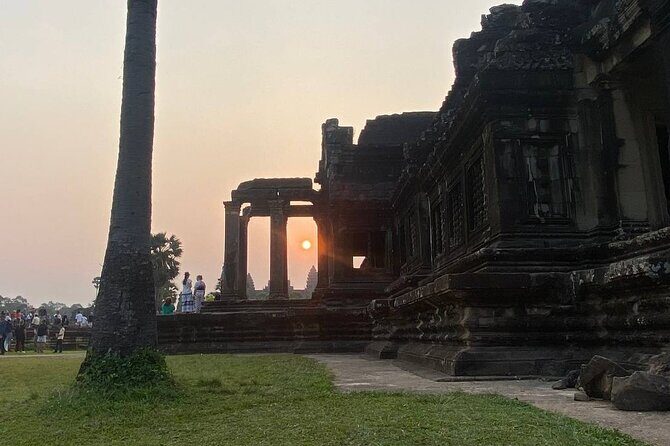
Angkor Wat is stunning any time you go. But sunrise has a quieter magic that midday can’t replicate. Early morning light softens the massive stone surfaces, and the air feels calmer around the temple grounds. If you’re only going to see one “moment” at Angkor, this is the one.
This tour is built for that logic: you start the day in the dark, watch the first light at Angkor Wat, then shift into temple exploration while the heat hasn’t taken over yet. That combo matters. You get both the emotion of sunrise and the practical benefit of cooler temperatures afterward.
And the best part for many people is that this doesn’t ask you to spend half your day wandering randomly. You follow a clear order—Angkor Wat first, then Bayon and Ta Prohm—so your time stays productive, not chaotic.
Other Angkor Wat sunrise tours we've reviewed in Siem Reap
The 4:30 AM Schedule: What You’ll Actually Do
The day runs on early momentum. Plan on being picked up and on the way so you can reach Angkor Wat in time for sunrise viewing. The setup is designed around sunrise happening roughly between 5:30 and 6:00 AM, depending on the season.
From there, the itinerary is straightforward:
- Angkor Wat first, including sunrise viewing
- Bayon Temple next
- Ta Prohm after that, with enough time to take in the “jungle temple” vibe
The total duration is about 5 hours (approx.). It’s not a long, slow tour. It’s a focused morning run that prioritizes your best chance for great light at Angkor Wat, then keeps moving before it gets hot.
Angkor Wat at First Light: The Pond Reflection Moment
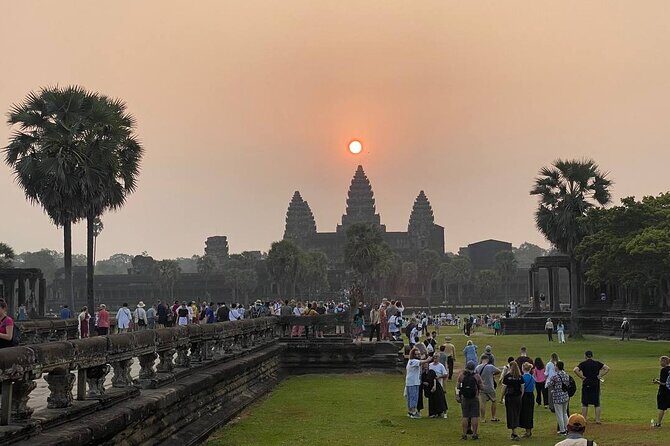
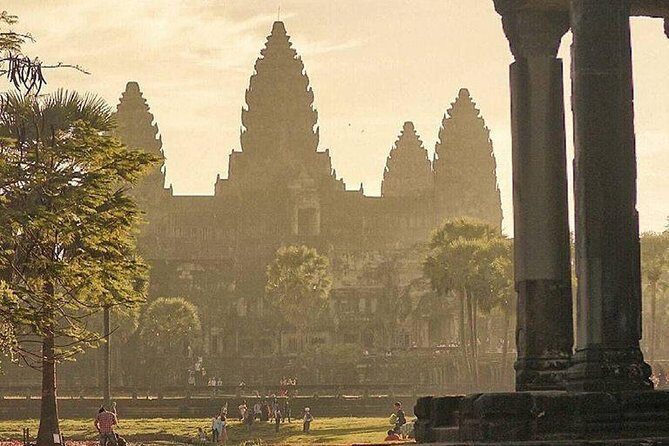
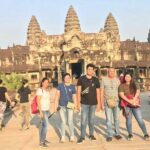
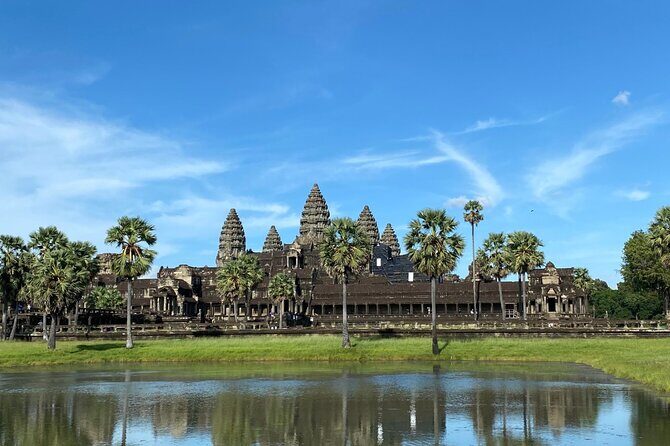
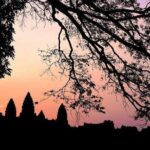
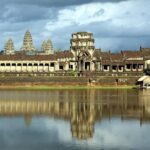
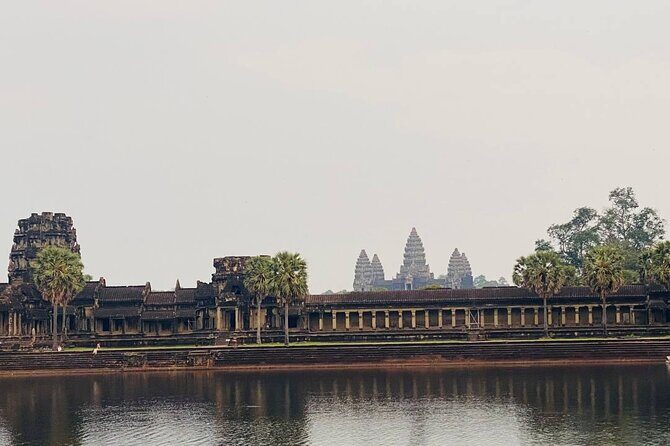
Angkor Wat at sunrise is the headline for a reason. The tour focuses on a viewing area near the main entrance where you can catch the temple reflection in the water—one of the most photographed (and most memorable) angles on the whole site.
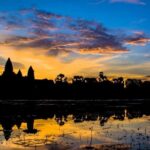
Timing is everything here. You’re encouraged to arrive early, ideally by 5:00 AM, so you’re not stuck farther back once people start filling the area. Sunrise itself typically lands around 5:30 to 6:00 AM, seasonally dependent. That’s the window when the sky shifts and the temple silhouette becomes the main character.
After sunrise, you shift from waiting and watching to walking and exploring. You get about 2 hours at Angkor Wat following the sunrise moment. That’s a nice balance: enough time to see the big layout, but not so long that you burn your day before the other temples.
One of the strongest themes in the tour’s praise is how breathtaking guests found this part—especially the silhouette and the calm dawn atmosphere. If you’re coming to Siem Reap with a sunrise priority, this is exactly aligned with that goal.
Bayon Temple: Khmer Faces and Jayavarman VII Context
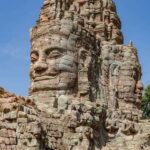
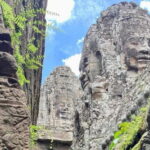
Next comes Bayon Temple, centered on the face towers that make Bayon instantly recognizable. This temple is closely tied to Buddhism and is associated with King Jayavarman VII, built in the late 12th or early 13th century as the king’s state temple.
You’ll spend around 1 hour here. That hour usually hits the sweet spot: enough time to notice the detailed stone decoration and the face towers from multiple angles, without feeling like you’re rushing through it.
Why Bayon works after Angkor Wat: you’ve already built your sense of scale and stonework at Angkor Wat, so Bayon’s distinct look lands harder. Also, the morning light tends to make the carved surfaces easier to read—details look clearer when the sun isn’t blasting from above.
In the tour’s standout feedback, the strongest praise includes guides who explain the site in a way that makes it feel more than stone. If you get a good guide, Bayon becomes more than a quick stop; it becomes a story you can point to with your eyes.
Ta Prohm: The “Jungle Temple” Stop You’ll Remember
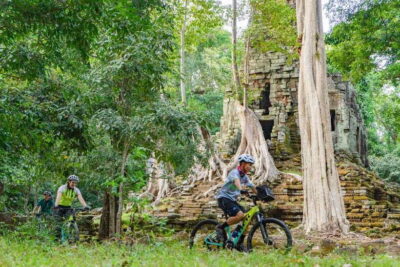
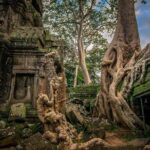
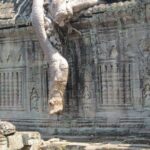
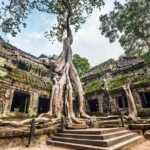
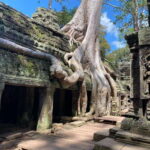
Then you roll to Ta Prohm, about a kilometer east of Angkor Thom on the southern edge of the East Baray. It’s famous as a temple near Siem Reap with a distinctive Bayon style influence, and it’s commonly called the jungle temple because of how nature and architecture interact here.
The allotted time is about 1 hour. With Ta Prohm, you don’t want to over-plan your route in your head. The best experience is letting the setting guide you—moving slowly through the spaces where tree roots and stone architecture feel locked together.
This stop also benefits from the morning schedule. Ta Prohm can feel intense when it’s too hot and the crowds are heavier. Early timing helps you take it in at a more human pace, even if you still feel that “everyone wants a photo in the same spots” energy.
If sunrise is the emotional hook of the tour, Ta Prohm is often the visual aftershock—big trees, dramatic ruins, and that eerie-in-a-good-way sense of time folding over itself.
Other Angkor Wat temple tours we've reviewed in Siem Reap

Price and Ticket Math: The Real Value Deal
The tour price is $19 per person, for about 5 hours. That includes several practical things that add up when you’re paying in a tourist city:
- Air-conditioned vehicle
- English-speaking guide
- Free pick up and drop off at your hotel
- Free mineral water
- Mobile ticket
Then there’s the big line item you must budget for: the temple entrance fee. It’s not included, and the tour data lists an 01 Day Ticket to temples for $37.00 per person.
So the realistic per-person total is roughly $19 + $37 = $56, assuming you buy the listed day pass. Is that expensive? Not really, especially because what you’re getting is not just entry—it’s transport, early sunrise positioning, and guiding during the core Angkor stops.
The reason this feels like solid value: the cost you pay for the day pass is pretty much unavoidable once you’re at Angkor. The tour price then covers the experience wrapper around those tickets—early timing, comfort, and a guide to connect the dots while you’re there.
Hotel Pickup and the Mobile Ticket: Small Details That Save Time
This tour is set up to remove friction. You get hotel pickup and drop-off, and you’ll ride in an air-conditioned vehicle. In Siem Reap, those little comfort wins matter, because you’re starting before normal daily routines even begin.
You also use a mobile ticket, which can be easier than juggling paper around a busy morning. It’s one less thing to worry about while you’re trying to get to Angkor Wat in time for sunrise.
And since the tour is described as private, only your group participates. Practically, that often means less crowd-jockeying and a pacing style that can feel more natural than big-group herding.
One thing to note: it’s listed as near public transportation, but the tour itself is built around hotel pickup. If you’re staying somewhere out of the most convenient areas, pickup is usually a major plus.
Group Size, Pacing, and Why Private Feels Easier at Dawn
You’re going to be up early, and the temples are popular. This is where private tours can help without being dramatic about it.
Because the activity is private, the guide can manage your timing through the key moments: sunrise viewing, then enough time at each temple to absorb what you’re seeing. That’s important at Angkor, where “we’ll figure it out later” plans often turn into rushed photos and missed details.
Also, the route is tight and efficient. Angkor Wat comes first, then Bayon, then Ta Prohm. That’s the kind of order that works well when you’re dealing with changing light and changing crowds.
One guest highlighted the guide Phyrom as great for the tour, which fits the idea of what you need most at Angkor: someone who can connect the architecture and religious context to what you’re looking at while the morning is moving fast.
The Cooler Morning Strategy: When to Enjoy the Walk
A sneaky advantage here is the schedule itself. After sunrise, the itinerary continues through the temples during the cooler morning hours. That matters more than it sounds. You’ll walk, stand, and look around a lot, and comfort affects how much you take in.
You won’t be sitting on a bus all day. You’re using the morning for the stops that are most rewarding in good conditions: Angkor Wat for sunrise and silhouette, Bayon for face towers and carved details, Ta Prohm for the ruin-and-nature atmosphere.
If you try to do these stops later in the day, you can still enjoy them. But for the best chance of seeing more calmly, this timing is smart.
Who This Tour Suits Best (and Who Might Want Something Different)
This is a great fit if you:
- Want sunrise at Angkor Wat as a priority
- Prefer an organized early route over figuring out transport and timing alone
- Like guided context while you’re walking through major temple sites
- Are traveling in a group where you’d value a private experience
It may be less ideal if you:
- Hate early starts and struggle with waking before sunrise
- Don’t want to plan for additional temple entrance costs
- Want a slower, longer exploration with more flexibility to linger in one place
Also, because it’s a half-day style outing, it’s not designed for deep study of every corner. You’ll get the major hits and good timing, but it’s still a morning circuit.
FAQ
FAQ
What time does the tour start?
The tour starts very early, around 4:30 AM, so you can catch sunrise at Angkor Wat (often 5:30 to 6:00 AM, depending on the season).
Where do I watch the sunrise at Angkor Wat?
The most popular spot is near the main entrance, in front of the reflecting pool, where you can often see the temple’s reflection.
How long is the tour?
The duration is about 5 hours (approx.).
Is pickup from my hotel included?
Yes. The tour includes free pick up and drop off at your hotel.
Are temple entrance fees included in the $19 price?
No. The 01 Day Ticket to temples is listed separately at $37.00 per person.
What temples are visited?
You’ll visit Angkor Wat, Bayon Temple, and Ta Prohm.
Is there a cancellation window for a full refund?
Yes. You can cancel up to 24 hours in advance of the experience for a full refund.
Should You Book This Sunrise + Small Circuit Morning?
If you’re serious about seeing Angkor Wat at sunrise, this is the kind of tour that makes sense. The whole plan is built around early timing, a practical temple order, and guided context while the morning is still calm enough to enjoy.
Book it if you want comfort (air-conditioned transport, hotel pickup), a clear route (Angkor Wat → Bayon → Ta Prohm), and the sunrise moment that people remember when they talk about Angkor.
Skip or reconsider if the early start sounds miserable, or if you’d rather pay for a longer, more flexible itinerary instead of a focused half-day run that prioritizes dawn and key temple stops.