REVIEW · SIEM REAP
Private guided Full -day Angkor tour with sun set
Book on Viator →Operated by Angkor Wat Shared Tours · Bookable on Viator
Angkor at sunset is hard to beat. This private full-day route from Siem Reap blends the famous highlights—Angkor Wat, Ta Prohm, Angkor Thom—with the quieter, root-choked ruins you’ll remember long after photos, plus a sunset stop at Phnom Bakheng. I love that you travel in comfort with A/C and chilled water while the guide keeps the day moving.
What really makes it click is the human touch: a Khmer guide who explains what you’re actually seeing, and helps you pace breaks so you can focus on the temples, not just the logistics. One consideration: the Angkor Pass is not included, so you’ll need to buy that separately before you go.
In This Review
- Key things I’d prioritize on this tour
- How the private full-day format keeps Angkor from feeling chaotic
- Price and what $55 actually means for your day
- Pickup, transfers, and the little comforts that matter
- Stop-by-stop: what each temple stop gives you
- Angkor Wat: the big starting point that sets the tone
- Banteay Kdei: monk cells and the famous roots-in-stone look
- Ta Prohm: the jungle-reclaimed temple that frames your photos
- Ta Keo: the never-finished pyramid that changes the vibe
- Angkor Thom: the South Gate and the Bayon focus
- Phnom Bakheng sunset: the payoff viewpoint
- What makes the guiding style worth paying for
- Timing and energy: what an 8–9 hour day feels like
- Who this tour is best for
- Should you book this Angkor Wat full-day with sunset?
- FAQ
- What time does the tour start?
- How long is the full-day tour?
- Is hotel pickup and drop-off included?
- Is the Angkor Pass included in the price?
- Are tickets for each temple included?
- Is this tour private or shared?
- What is the cancellation policy?
Key things I’d prioritize on this tour
- A/C car and bottled water keep the heat manageable across a long day
- A Khmer guide helps you make sense of what feels overwhelming at first
- A balanced temple mix: grand Angkor Wat plus jungle reclaiming at Ta Prohm
- Phnom Bakheng sunset gives you a hilltop view over Angkor Wat’s silhouette
- A private schedule means you can start when you prefer (within the tour’s structure)
How the private full-day format keeps Angkor from feeling chaotic
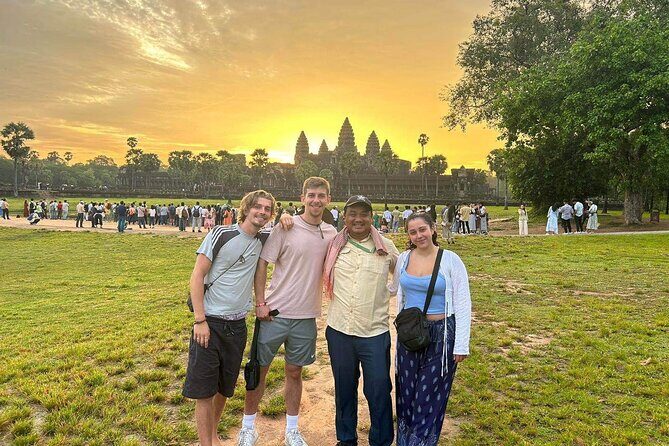
Angkor can be one of those places where the scale hits you first, then the details trail after. A private format solves that. You’re not stuck waiting on other people. You can ask questions. And the guide can slow down when a temple detail matters—or speed up if you’re trying to beat crowds for photos.
The day is built to feel like a story rather than a checklist. You start with Angkor Wat, move through several temples that show different styles and states of restoration, then end with a sunset viewpoint. With 8 to 9 hours total, the pacing is long enough to feel satisfying, but not so long that you’re exhausted before the best light.
Other Angkor Wat sunset tours we've reviewed in Siem Reap
Price and what $55 actually means for your day
At $55 per person, the value is strong for what you’re getting: private guide time, hotel pickup/drop-off if selected, round-trip transfer, and a car with A/C. That matters in Siem Reap, because getting from temple to temple is part of the experience—and part of the cost if you do it yourself.
Two practical notes about value:
- The Angkor Pass isn’t included, so your final spend depends on what pass you buy. This is common across Angkor tours, but it’s the one extra cost you should plan for.
- Each stop is about an hour. That’s not rushing every corner, but it also avoids the classic problem where one temple eats the entire day.
If you’re traveling in a small group, ask about any group discount option, since the tour summary lists it as a feature. Even if you’re booking private, it’s worth checking.
Pickup, transfers, and the little comforts that matter
I’m a fan of tours that treat heat like a real factor, not a background detail. Here you get:
- hotel pickup/drop-off (if you choose that option)
- a round-trip private transfer
- chilled water
- a car with A/C
These sound small, but over a full day they change how you enjoy the temples. When your body stays cooler and hydrated, you’ll stand longer at the viewpoints, climb the stairways without feeling wrecked, and spend more time looking closely instead of hunting shade.
Your mobile ticket is another helpful touch. It reduces the hassle of scrambling for printed copies during a day that already has enough moving parts.
Stop-by-stop: what each temple stop gives you
Angkor Wat: the big starting point that sets the tone
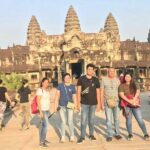
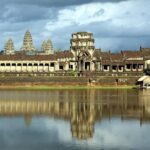
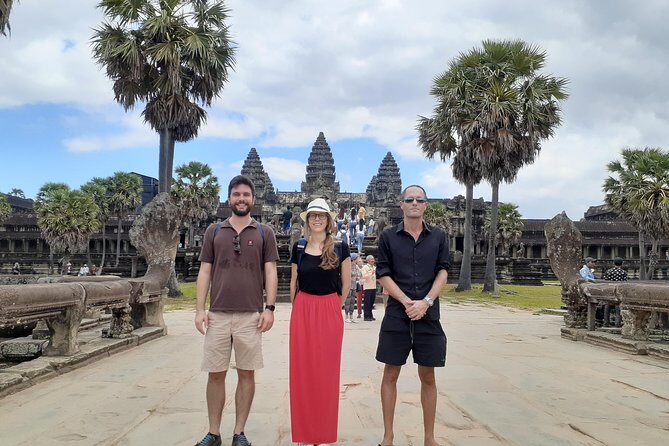
You begin at Angkor Wat, and that’s a smart opener. It’s the largest religious monument in the world and the most famous centerpiece of the Angkor civilization. Even if you’ve seen images, the scale is what lands first in person.
What you’ll like about the stop:
- The monument design is built to be read in layers—causeways, courtyards, towers.
- With a guide, you’re not just looking at beauty; you’re learning why the layout is so powerful.
A consideration: Angkor Wat can feel like a lot all at once. If you’re prone to sensory overload, ask the guide to point out the key visual axes early—then you can relax into exploring the rest.
Admission for Angkor Wat isn’t included, since you’ll need your Angkor Pass.
Other guided tours in Siem Reap

Banteay Kdei: monk cells and the famous roots-in-stone look
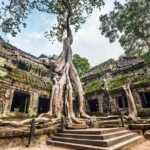
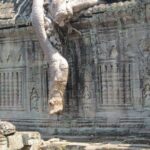
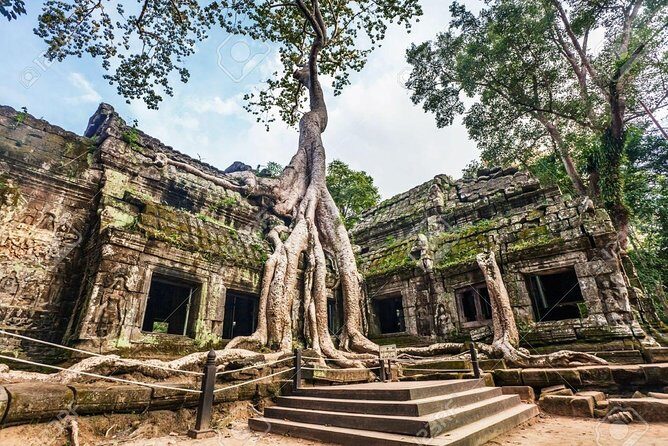
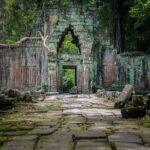
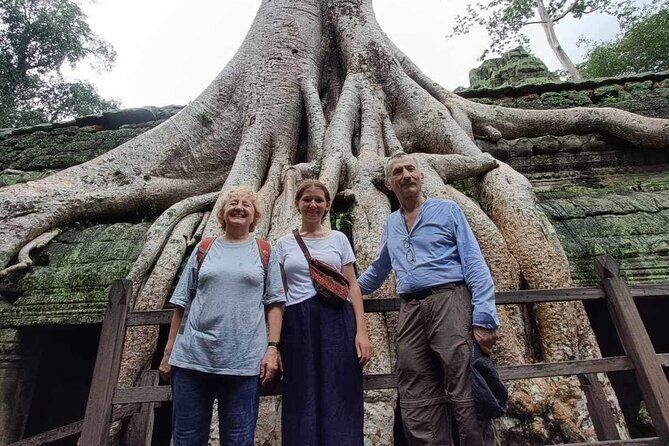
Next comes Banteay Kdei, often described as the citadel of monk’s cells. This is the kind of temple where the ruins feel intimate even when the structure is substantial. It’s partially overgrown, and that’s the point: tall, sinuous trees and roots weave through ruined walls and stone surfaces.
If you like photos, this stop gives you texture. If you like atmosphere, this is calmer than you’d expect for such a major complex. The one-hour window is enough to notice the root patterns and still have time to move on without feeling stuck.
Practical tip: wear shoes with grip. Stone can be slick, especially where moss or shaded moisture builds up.
Ta Prohm: the jungle-reclaimed temple that frames your photos
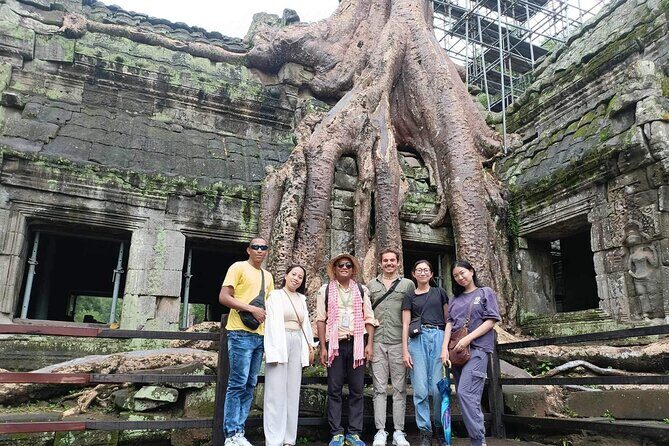
Then you hit Ta Prohm, the “Tomb Raider” style temple most people recognize instantly. What works here isn’t just the jungle. It’s the way the ruins and nature create a single visual story—collapsed blocks and root systems that look both chaotic and intentional.
This stop tends to make people slow down. That’s good. Let the guide explain what’s being protected and what’s been left to the jungle. The result is a temple that feels quieter than you’d expect, even with other visitors around.
Possible drawback: if you’re expecting a fully restored, pristine monument, this one won’t match that mood. It’s about the tension between human craftsmanship and the jungle’s takeover.
Ta Keo: the never-finished pyramid that changes the vibe
Ta Keo shifts the feel of the day. It was never finished, so you get a dramatic, unfinished look instead of the polished completeness you might expect at other temples. It’s a square, layered pyramid form, and you’ll have the chance to climb the terraces.
This stop is great if you like architectural “logic.” You can see how the structure was meant to rise, and you can sense what would have come next.
One consideration: stairways and heat combine fast. If you’re not into climbing, you may want to pace the ascent—go slowly, stop often for photos, and let the guide judge how long you need at each level.
Angkor Thom: the South Gate and the Bayon focus
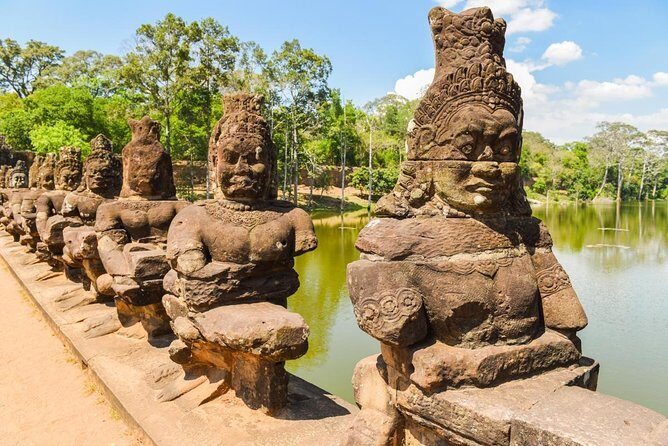
Next is Angkor Thom, the later capital of the Angkor Empire. The approach through the South Gate is famous: gods and demons appear locked in a tug-of-war line at the entrance. It’s theatrical, and it also works as an orientation tool—this is where the Angkor world feels like a city, not just a set of monuments.
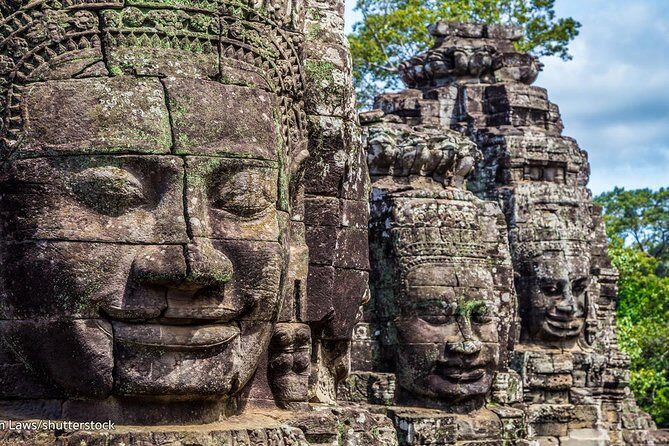
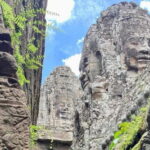
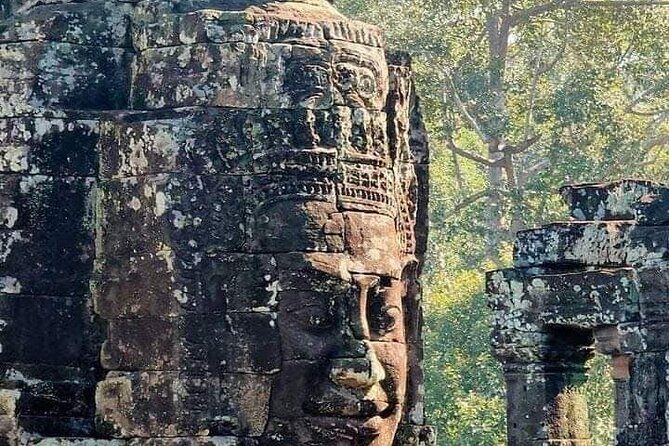
At the center, you’ll reach the temple of Bayon, known for its faces and symbolic intensity. This stop is often less about quiet exploration and more about soaking in the visual density. A good guide helps you understand what you’re seeing so the number of details doesn’t overwhelm you.
Practical note: if you’re tired, this is the place to rely on your guide’s pacing. You can still get the key views without sprinting across courtyards.
Phnom Bakheng sunset: the payoff viewpoint
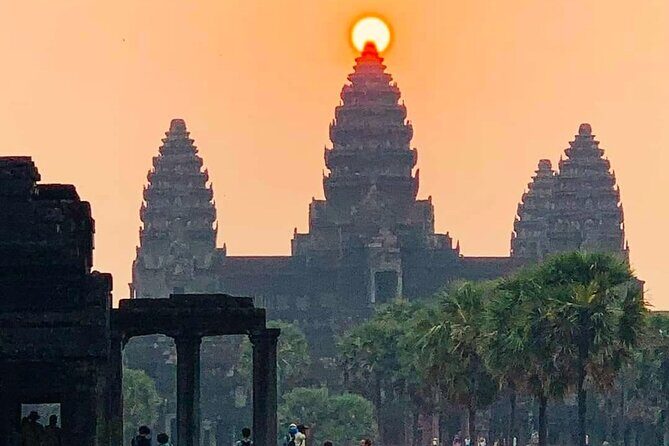
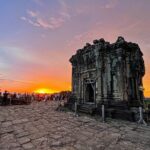
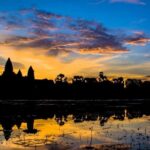
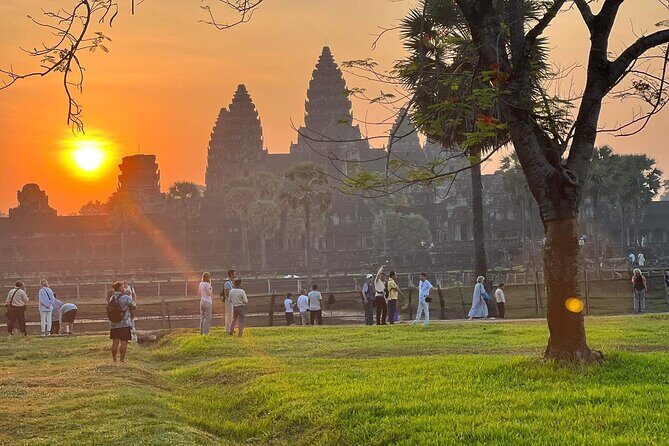
The sunset portion makes the whole tour feel like one complete arc. Phnom Bakheng is a hilltop temple, built centuries before Angkor Wat, and it’s also one of the best places to watch the sunset. It overlooks Angkor Wat, so you get that rare moment when the city’s biggest monument becomes a silhouette rather than a daytime structure.
For a sunset stop, one hour is a sensible plan: you arrive, you find your vantage point, you watch the color shift, and you have time to descend without feeling panicked.
One consideration: hilltop viewpoints involve steps and changing light. If you’re sensitive to crowds during peak sunset time, come ready to move with your guide’s timing.
What makes the guiding style worth paying for
This tour succeeds because the guide isn’t only there to escort you. In the strongest examples from the guide team, you’ll see a pattern:
- English that’s clear enough for real questions
- a balance between teaching and giving you time to look
- attention to comfort, including hydration at stops
In guides like Narith, Keng Samuth, Sari, Bong Sim, John, Jack, and Sayon (names you might see offered on this route), the common thread is confidence. They’ll explain the temples’ meaning and history in a way that helps you understand what you’re seeing on-site—not just facts delivered like a script.
If you like having someone who can answer follow-up questions, this private setup is a big advantage over hopping between spots on your own.
Timing and energy: what an 8–9 hour day feels like
Expect roughly an hour at each temple stop, plus driving time and the sunset window. Starting around 9:30 am gives you the advantage of getting to early light and avoiding the hottest part of the day too quickly.
The practical challenge is simple: Angkor is active travel. You’ll stand a lot, walk across uneven surfaces, and climb at at least one temple (Ta Keo, and potentially steps at Phnom Bakheng). If you dress for comfort—light layers, grippy shoes, sun protection—you’ll enjoy the day more than you think.
Also, don’t underestimate how long temples are on the inside of your head. One hour feels short until you start noticing details. This route gives you enough time to feel the place without turning it into a marathon.
Who this tour is best for
This is a great fit if you want:
- a private guided day that keeps your schedule tight and your questions answered
- the top temples plus the “in-between” spots that make the day feel less cookie-cutter
- a sunset experience that doesn’t leave you scrambling for timing
It also works well for couples and solo travelers who want structure. If you’re traveling with kids, it depends on how they handle walking and stairs, but the itinerary is built around manageable one-hour blocks.
If you hate any climbing at all, the mix might be a concern because Ta Keo includes terraces to climb, and the sunset viewpoint is on a hill.
Should you book this Angkor Wat full-day with sunset?
I’d book it if you want a one-day plan that covers the core temples without turning your trip into a transportation puzzle. The combination of private guiding, A/C comfort, and Phnom Bakheng sunset makes the price feel fair, especially if you value learning as much as photographing.
I’d think twice if you’re trying to do Angkor on a shoestring and can’t handle the extra Angkor Pass cost, or if you strongly prefer fully restored temples over jungle-claimed ruins. Otherwise, this is a solid “best of Angkor” day done in a way that respects your time and energy.
FAQ
What time does the tour start?
The tour start time is listed as 9:30 am.
How long is the full-day tour?
It runs about 8 to 9 hours.
Is hotel pickup and drop-off included?
Hotel pickup and drop-off are included if you select the option, and the tour includes round-trip private transfer.
Is the Angkor Pass included in the price?
No. The Angkor Pass must be purchased separately from the ticket office.
Are tickets for each temple included?
Admission tickets are listed as not included for the temple stops, so you should plan around your Angkor Pass.
Is this tour private or shared?
This is a private tour/activity, so only your group participates.
What is the cancellation policy?
Free cancellation is available up to 24 hours in advance for a full refund. If you cancel less than 24 hours before the start time, the amount paid is not refunded.