REVIEW · SIEM REAP
Siem Reap Shared Full-Day Guided Tour of Angkor Temples
Book on Viator →Operated by Vamos Camboja Turismo · Bookable on Viator
Angkor in a shared tour can still feel personal. This full-day circuit in Siem Reap pairs small-group limits with a professional guide so you spend less time stuck, more time seeing.
I especially like how the day is built around the big visual hits: Angkor Wat and Ta Prohm get proper time, not a rushed drive-by. The other plus is the steady pacing through Angkor Thom, so you get the story behind the South Gate, Bayon, and the terraces. One thing to watch: the Angkor Archaeological Park entrance ticket and lunch cost extra.
In This Review
- Key things I’d plan around before you go
- Morning Start in Siem Reap: Ticket Timing and a Smooth Departure
- Angkor Thom South Gate and Bayon: Smiling Faces, Perfect Orientation
- Baphuon and the Terraces: Understanding the City’s Power
- Ta Prohm: The Jungle Temple That Feels Like Movie-Set Reality
- Lunch at a Nearby Restaurant: Fueling the Second Half of the Day
- Angkor Wat: The Main Event, With Time That Lets You See More Than One Angle
- Price and Logistics: Does the $25 Per Person Hold Its Value?
- What You Actually See on This Route (Stop-by-Stop Expectations)
- Who Should Book This, and When to Choose a Private Tour Instead
- Should You Book This Angkor Temples Tour?
- FAQ
- Is the Angkor Archaeological Park entrance ticket included in the tour price?
- How long is the tour, and when do you get back?
- What temples are included in the full-day itinerary?
- What transport do you use for the day?
- Is lunch included?
- What is the dress code for the temples?
- Can I cancel for a full refund?
Key things I’d plan around before you go
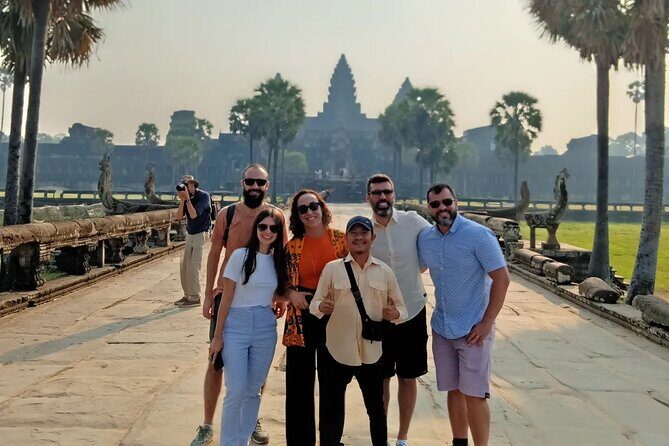
- Small-group options (up to 6) keep the day moving with less crowding and less waiting.
- A focused Angkor Thom run (South Gate → Bayon → Baphuon → terraces) helps the complex feel understandable.
- Ta Prohm is timed for real viewing (about an hour) so you can slow down and actually look at the tree roots.
- Angkor Wat gets longer time (around two hours), which matters for photos and details.
- You pay for the temple pass separately (USD 37 per person for a 1-day pass), so budget accordingly.
Morning Start in Siem Reap: Ticket Timing and a Smooth Departure
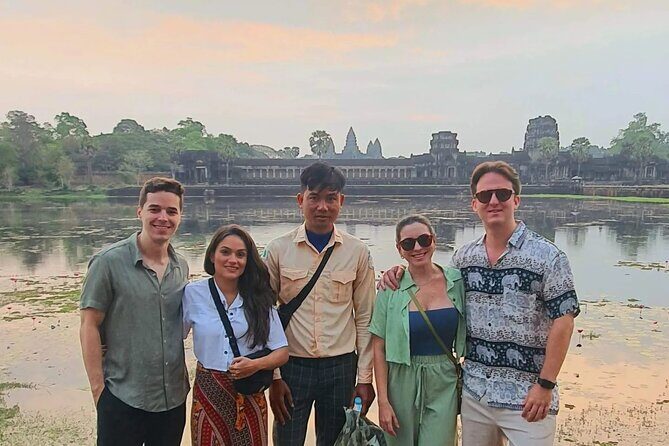
The day starts with a hotel pickup. Plan on the guide meeting you in the hotel lobby between 8:30 and 9:00 AM, then heading to the ticket office to handle the Angkor Archaeological Park entrance pass. If you prefer, you can buy the pass online in advance to save that time at the start.
Why this matters: Angkor is famous, but logistics can be annoying. Having a guide who coordinates the ticket moment means you are less likely to waste part of your temple day hunting down the pass or scrambling through entry lines. The tour also includes cold water, which is a small detail that becomes a big deal in the Cambodian heat.
One more timing note: this same experience can be offered with an earlier sunrise option, where pickup is listed between 4:30 and 5:00 AM. Sunrise changes the tone of Angkor—cooler air, fewer crowds—but it is also a bigger early-morning commitment.
Other multi-temple archeological tours we've reviewed in Siem Reap



Angkor Thom South Gate and Bayon: Smiling Faces, Perfect Orientation

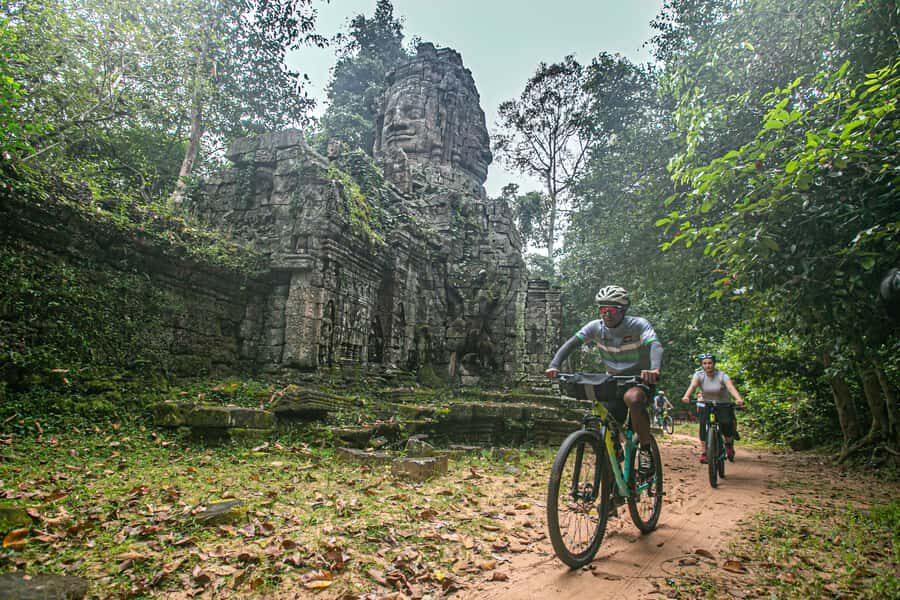
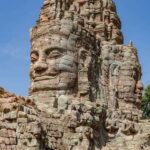
After the pass, the tour begins at Angkor Thom South Gate. This is your first big “wow” moment of the day: gigantic stone faces set into the gate structure. If you have ever wondered why Angkor looks both grand and strange at the same time, you start to get it here. It is an entrance meant to funnel you into the city’s sacred geography.
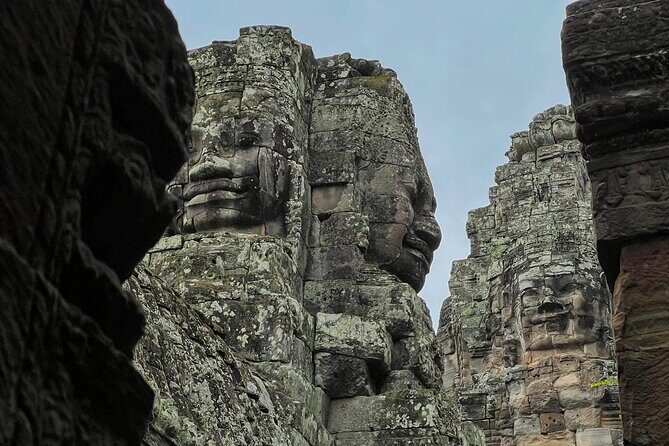
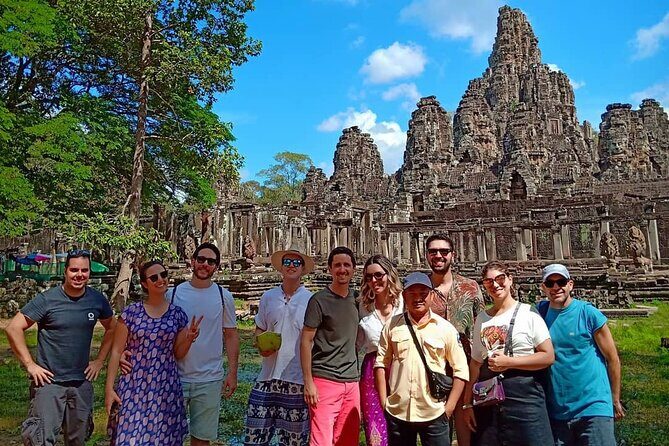
Next comes Bayon Temple, often called the Temple of Smiling Faces. Bayon sits in the heart of Angkor Thom, so it works as an anchor point. You get around 45 minutes here in the schedule, which is enough time to walk, look up, and notice how the faces appear from different angles.
This is also where a good guide earns their keep. In the reviews tied to this experience, guides like Buth and Vannah are praised for explaining the temple story in a way that makes the stones feel less random. You do not need to be a scholar. You just need a map in your head, and these stops help build one.
Practical tip: Bayon and the surrounding areas include lots of steps and uneven stone. Wear shoes you trust. You will do better physically, and you’ll spend more of your energy looking up rather than watching where you step.
Baphuon and the Terraces: Understanding the City’s Power
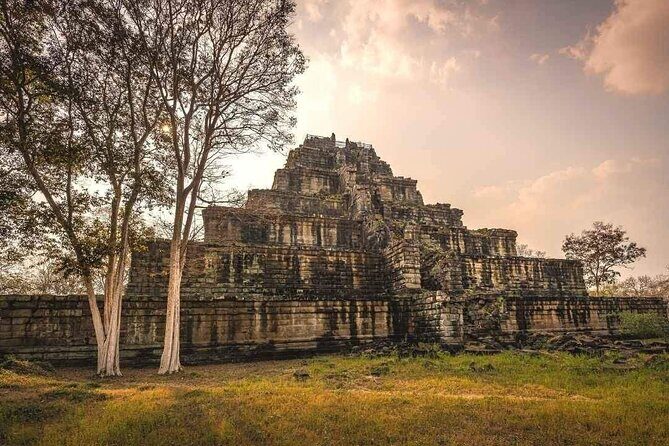
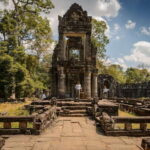
From Bayon you move to Baphuon Temple, a pyramid-shaped monument built in the 11th century and once dedicated to Shiva. The schedule gives you around 45 minutes here. That length matters because Baphuon rewards slow attention: you can see how the structure looks different from changing viewpoints and how the design fits into the broader Angkor Thom layout.
Then you get two quick-but-meaningful stops:
- Terrace of the Elephants: a long ceremonial platform used by King Jayavarman VII for observing royal processions and public ceremonies. You have about 15 minutes.
- Terrace of the Leper King: a shorter stop nearby, named after a moss-covered statue. It has a spooky legend attached in the way the name sounds, and the tour includes a brief explanation tied to that symbolism. You have about 15 minutes.
These terraces are easy to rush past because the time looks short. Still, they are worth the quick stop because they show Angkor was not only about temples. It was also about governance, theater-like public life, and ritual space.
One consideration: those short terrace windows are best if you keep your expectations realistic. In this format, you are not staying for hours. You’re getting orientation and key details, then moving on.
Ta Prohm: The Jungle Temple That Feels Like Movie-Set Reality
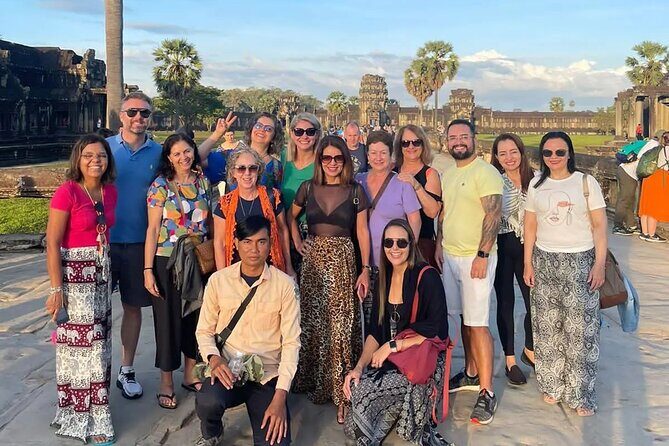
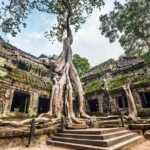
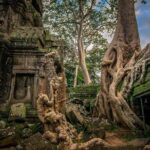
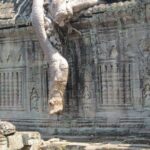
Ta Prohm is one of the most cinematic stops in Angkor. It is also one of the most enjoyable when you know how to approach it. The tour schedules about one hour here, which gives you time to walk the paths and watch the way roots and stone interact.
This is the temple people connect with right away—famous for that jungle-growth look associated with pop culture. But beyond the visual fame, Ta Prohm is a lesson in scale. You can stand in one spot and feel the place change as you look left, right, and up. A guide’s storytelling helps too, because you get context for why this site looks the way it does and what it represents.
Practical tip: bring a light layer. You may start the day warm, then later feel cooler under temple shade. Also, plan for slower footing on roots and uneven ground.
Lunch at a Nearby Restaurant: Fueling the Second Half of the Day
Lunch is not included, but the tour includes a one-hour lunch stop at a nearby restaurant recommended by your guide. That structure is actually useful. In Siem Reap, it is easy to get lured into tourist menus at tourist prices. With a guided recommendation, you have a better chance of finding something simple that works for an eight-hour day.
What to do: if you are sensitive to spice or heat, keep it direct with the server. Also, think about what you will want later for Angkor Wat. Heavy meals can slow you down in the afternoon sun.
One small note: because lunch is not part of the package cost, you should expect to pay for your own meal. The upside is choice. You can eat vegetarian, keep it light, or go for a Khmer-style set depending on what you feel like that day.
Other guided tours in Siem Reap


Angkor Wat: The Main Event, With Time That Lets You See More Than One Angle
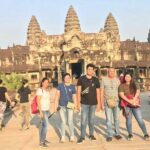
After lunch, the tour’s centerpiece comes next: Angkor Wat. You get about two hours here, and that is the right amount for a place this big. Two hours lets you do more than “take a quick picture and move on.”
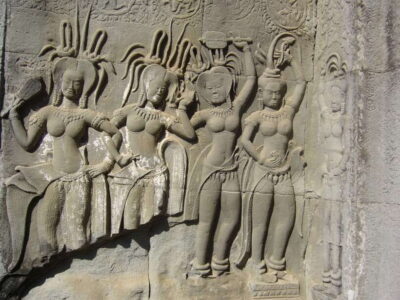
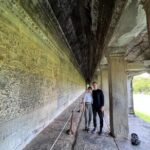
Angkor Wat is described as the largest religious monument in the world and the iconic jewel of the Angkor complex. Built in the early 12th century, it is a site where symmetry and detail matter. You’ll want time to look at the main elements, then circle to catch different views from different paths.
Here’s the key practical point: dress code is mandatory at Angkor Wat. You need pants or a skirt that covers the knees, and a shirt that covers the shoulders. Miniskirts, shorts, tank tops, and other revealing clothing are not allowed.
If you do not pack the right clothes, you can sometimes manage other temples with a scarf to cover knees and shoulders, but for Angkor Wat the rules are stricter. This is one place where you do not want to play guesswork.
Photo tip: try to plan your walking route so you don’t backtrack too much. With limited time, being efficient makes the difference between feeling rushed and feeling satisfied.
Price and Logistics: Does the $25 Per Person Hold Its Value?

The headline price is $25.00 per person, which is low compared with many full-day guided tours. But here is the math you should do before you book:
- Angkor Archaeological Park entrance ticket: USD 37 per person (1 day, not included)
- Lunch: not included
- The tour includes: guide, hotel pickup/drop-off, transport, and cold water
So the real entry baseline is closer to $62 per person before lunch. Even then, it can still be good value because you are paying for a guide, coordinated temple routing, and transport across sites. If you were to do this on your own, you might save on guiding, but you would spend time figuring out routes, ticket timing, and temple logistics in a heat-heavy setting.
Transport is also part of why this format works. Depending on your group size:
- 1–2 people ride by tuk-tuk
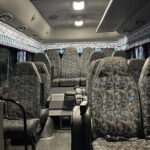
- 3+ people go by air-conditioned van/minibus
That means comfort is handled. You are not stuck baking in an open vehicle all day if your group is large enough.
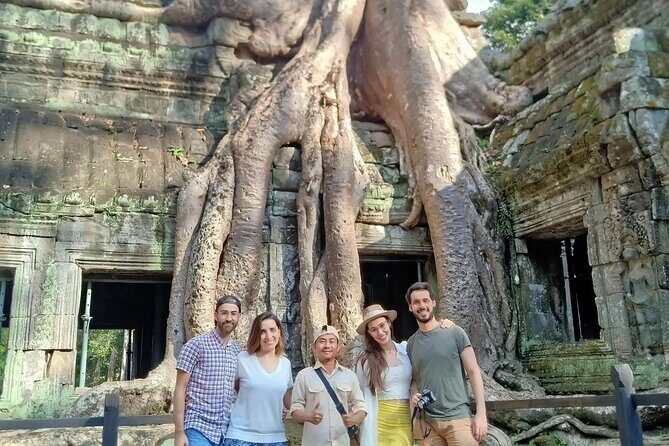
Group size matters too. This experience is framed as a premium small-group option (maximum 6 people) with a more personalized feel. The standard group option expands to up to 15 people. In practice, smaller groups usually mean less waiting and more attention from the guide, especially at the tight spots where people pile up.
One more practical detail: this tour mentions a mobile ticket feature. Even if you use it, still be ready to show what the entry process requires when you arrive.
What You Actually See on This Route (Stop-by-Stop Expectations)

If you like a clear mental picture, here is what the day feels like as you move through the sites:
- Siem Reap pickup and ticket handling: you’re getting your bearings and pass ready so the temple time is the focus.
- Angkor Thom South Gate: big faces, big symbolism, fast orientation.
- Bayon Temple: “read” the architecture by circling and looking up.
- Baphuon Temple: a structure that makes you slow down just enough.
- Terrace of the Elephants + Terrace of the Leper King: quick stops that explain ceremonial and myth layers.
- Ta Prohm: the jungle character of Angkor at full strength, with enough time to take your eyes off your phone.
- Lunch: a break designed for an 8-hour run, with guidance on where to eat.
- Angkor Wat: the main show, with enough time to catch multiple angles and not feel trapped by a tight schedule.
- Return to your hotel: you get back to Siem Reap after the day, listed as around 5:00 PM.
That shape is why this tour works: it hits the famous sites, but it also uses Angkor Thom as a narrative backbone so you start to connect the dots.
Who Should Book This, and When to Choose a Private Tour Instead
This shared guided day is a good fit if:
- you want a guide’s explanations without paying for full private transport
- you like the idea of a more premium feel (especially the max-6 small-group option)
- you are comfortable walking temple paths and handling warm weather
It may be less ideal if:
- you need maximum flexibility on timing at each site (this schedule is fixed around set stops)
- you are traveling with kids under 12, since children under 12 are not eligible for this shared tour (the data notes they can join free on private tours only)
Language-wise, the tour is described as English-speaking. Still, the reviews include examples of other language formats too (like a German tour with guide Vannah), so it may depend on what is operating that day.
If you want zero compromises—like staying longer at fewer spots, customizing the route, or moving at your exact pace—then a private option is the better match. But for most people, the small-group design here is what makes it feel close to private without going full price.
Should You Book This Angkor Temples Tour?
I’d book it if you want a full Angkor day that feels structured, with enough time at Ta Prohm and Angkor Wat to actually enjoy them, and a group size that helps you stay un-rushed. The value is strongest when you accept the basics: you’ll pay the $37 entrance ticket separately, and lunch is on you.
Skip it (or switch formats) if you dislike fixed itineraries or you want a child-friendly shared option for someone under 12.
If you do book, do two things that make the biggest difference: pack for the Angkor Wat dress code and consider buying your pass in advance online so you start the temple circuit with momentum. That turns this from a good day into a satisfying one.
FAQ
Is the Angkor Archaeological Park entrance ticket included in the tour price?
No. The Angkor Archaeological Park entrance ticket is not included and costs USD 37 per person for a 1-day pass.
How long is the tour, and when do you get back?
The duration is about 8 hours. Hotel pickup is between 8:30 and 9:00 AM, and the approximate return is around 5:00 PM.
What temples are included in the full-day itinerary?
The tour includes Angkor Thom South Gate, Bayon Temple, Baphuon Temple, Terrace of the Elephants, Terrace of the Leper King, Ta Prohm, and Angkor Wat.
What transport do you use for the day?
Transport depends on group size: 1–2 people ride by tuk-tuk, and groups of 3 or more use an air-conditioned van/minibus.
Is lunch included?
Lunch is not included. You get about an hour for lunch at a nearby restaurant recommended by the guide.
What is the dress code for the temples?
You can use a scarf to cover knees and shoulders for most temples, but for Angkor Wat it is mandatory to wear pants or a skirt that covers the knees and a shirt that covers the shoulders.
Can I cancel for a full refund?
Yes. You can cancel up to 24 hours in advance for a full refund. If you cancel less than 24 hours before the start time, the amount paid is not refunded.