REVIEW · SIEM REAP
2 Day Cambodia Private Guided Tour in Angkor Temples
Book on Viator →Operated by About Cambodia Travel & Tours · Bookable on Viator
Two days, and Angkor still feels endless. This private tour in Siem Reap mixes the headline monuments with quieter temple stops, guided by an English-speaking pro, and finishes with the sunset viewpoints from Phnom Bakheng. You’ll move in comfort with hotel pickup and private transport, yet still have time to slow down and look closely.
I like two things a lot. First, you get big names like Angkor Wat and Bayon, plus hands-on temple variety that keeps the day from turning into a checklist. Second, the practical comfort items help: cool drinks, fresh tissue, and the kind of pacing that matters when the sun is strong.
One consideration: entrance fees are not included in the base price. You’ll buy the Angkor Pass with your guide at the park entrance, and lunches are at your own expense, so budget a bit beyond the listed tour total.
In This Review
- Key points worth knowing
- Getting from your hotel to the first temple gates
- Day 1: Angkor Thom South Gate to Phnom Bakheng at sunset
- Angkor Thom South Gate and the story of entering the city
- Bayon Temple: the faces that make everyone stop walking
- Baphuon, Phimeanakas, and the royal-palace edges
- Terrace of the Elephants and the Terrace of the Leper King
- Ta Nei and Ta Prohm: two very different moods
- Angkor Wat: the big masterpiece, and why timing helps
- Phnom Bakheng: the sunset payoff
- Day 2: Pink carvings, outer-circuit temples, and a snack stop
- Banteay Srei: pink sandstone and fine carving work
- Banteay Samre and Pre Rup: restored highlights and bold geometry
- Ta Som and Neak Pean: calmer stops for slower moments
- Preah Khan and Banteay Prei: bigger complex energy, then a smaller, off-the-beaten-path mood
- Om Pich steamed toddy palm cake and Prashdak Village: a simple local break
- Price and what you’re really paying for
- How the guide changes everything (especially at Angkor)
- Comfort, heat, and walking tips that actually help
- Who this private tour is best for
- Should you book it?
- FAQ
- What is the duration of this tour?
- Does the tour include hotel pickup and drop-off?
- Is the Angkor Pass entrance fee included?
- What temples are visited during the tour?
- Does the tour include sunset at Phnom Bakheng?
- Are meals included in the tour price?
- What comfort items are provided during the tour?
- Is this tour private or shared?
- Can I cancel for a full refund?
Key points worth knowing
- Private, licensed English guide: You’re not just driven around; you get commentary that explains what you’re seeing.
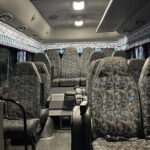
- Hotel pickup + private air-conditioned vehicle: Less hassle, fewer transfers, and quicker reset between temple clusters.
- A strong mix of sights over 2 days: Angkor Thom, Ta Prohm, Angkor Wat, then a second day focused on temples outside the busiest ring.
- Phnom Bakheng sunset: A very different view than the daytime temples, with a chance to photograph the whole area.
- Angkor Pass is arranged on-site: Your guide assists you in purchasing it before you start temple visits.
- Includes a food/snack stop: A chance to try a local palm-cake style snack and pick up small souvenirs.
Getting from your hotel to the first temple gates
Your day starts with pickup from your Siem Reap hotel. That alone is a big deal at Angkor because it reduces the usual stress of syncing transport, finding meeting points, and wasting time before you even see stone. Once everyone’s in, you’ll ride in a private air-conditioned vehicle and keep moving between temple zones without public-transport juggling.
This is a private tour, meaning it’s just your group. That matters because your guide can shape the pace around what you like—more photos, longer pauses at carvings, or faster progress when you’re ready to keep going. It also usually means fewer bottlenecks in the more popular spots.
Bring your patience for the basics. You’ll be outside for long stretches, and Angkor is built on uneven ground with stairs and walkways that can feel endless in heat.
Other multi-temple archeological tours we've reviewed in Siem Reap
Day 1: Angkor Thom South Gate to Phnom Bakheng at sunset
Day 1 focuses on the classic core of Angkor: Angkor Thom and its surrounding temples, then a shift toward the most famous view.
Angkor Thom South Gate and the story of entering the city
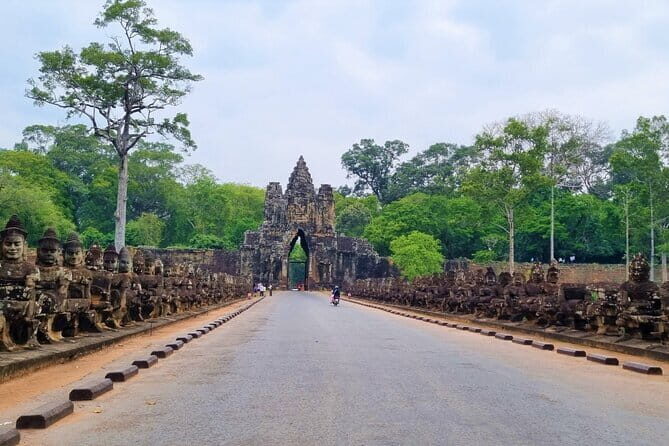
You’ll start at the Angkor Thom South Gate, a restored gateway on the main route into Angkor Thom. It’s one of those places that makes you understand scale fast. Even if you’ve seen photos, the gate hits harder in person because you’re walking through a real architectural boundary, not just looking at it from afar.
From there, your guide moves you into the center of Jayavarman VII’s reign.
Bayon Temple: the faces that make everyone stop walking
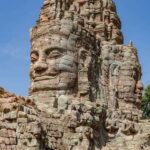
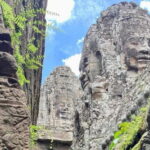
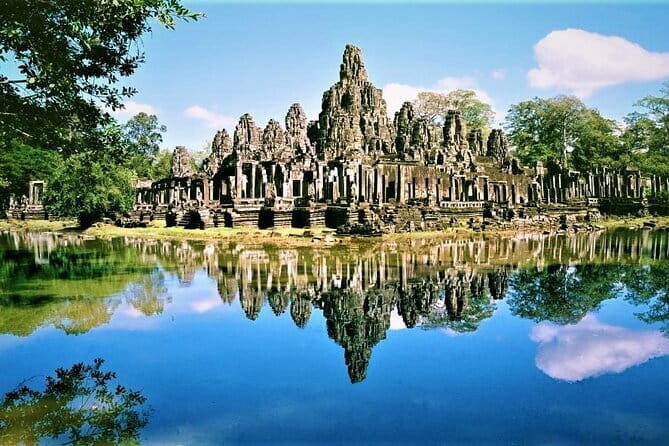
Next comes Bayon Temple, known for being the only Buddhist state temple and for its iconic stone faces. The design is clever: you’re not just viewing a single angle. Your position changes what you see, and the faces keep appearing from different corners as you walk.
This is also where a good guide earns their keep. You’ll get a better sense of what the temple represented and why Jayavarman VII’s program of construction looked the way it did.
Baphuon, Phimeanakas, and the royal-palace edges
After Bayon, you’ll pass through several key Angkor Thom elements, including Baphuon Temple (a five-level temple base design that’s not the usual step pattern), then Phimeanakas, near the Royal Palace area. These stops are shorter than Angkor Wat, which is useful. You get variety without burning the full day on just one monument.
If you enjoy architecture details, the terraces in this section are also worth your time.
Other guided tours in Siem Reap
Terrace of the Elephants and the Terrace of the Leper King
Two stops you should not rush are the Terrace of the Elephants and the Terrace of the Leper King. The Elephant Terrace is tied to royal processions and the way people moved through ceremonial spaces. The Leper King Terrace is known for dramatic bas-reliefs on interior and exterior walls.
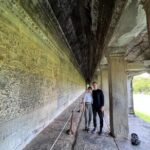
Even if you can’t translate everything, bas-reliefs reward slow looking. Try to pause at one panel and let your eyes adjust. That’s when it stops being random decoration and starts reading like a whole scene.
Ta Nei and Ta Prohm: two very different moods
Then the route shifts outward. You’ll visit Ta Nei, a late 12th-century temple dedicated to the Buddha and located near the East Baray area. It feels quieter than the main city temples, which makes it a nice reset.
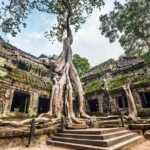
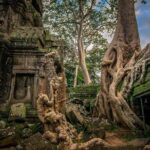
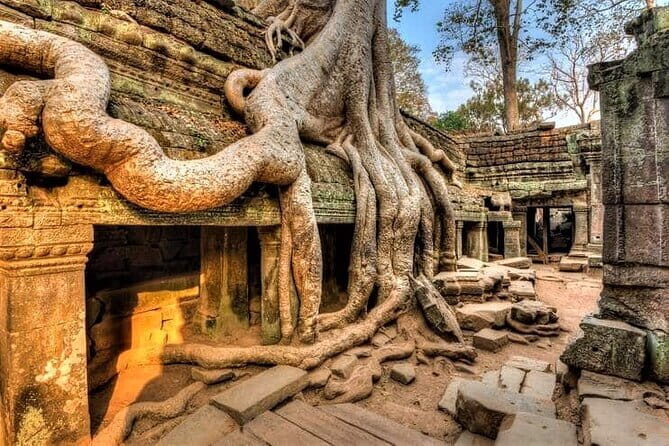
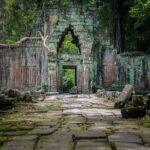
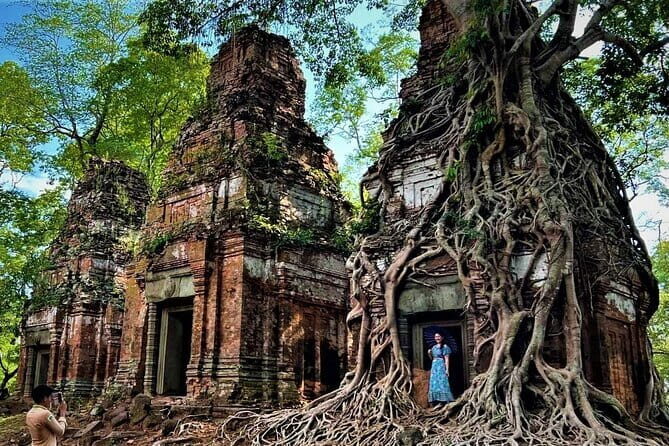
After that comes Ta Prohm, famous for its jungle setting and the way big trees wrap around stone. It’s also one of those temples where you’ll want to manage expectations: your route is shaped by what archaeologists cleared for visitors and what was reinforced to slow further damage. Still, it’s an unforgettable atmosphere, especially when you find the angles where roots meet doorways.
Angkor Wat: the big masterpiece, and why timing helps
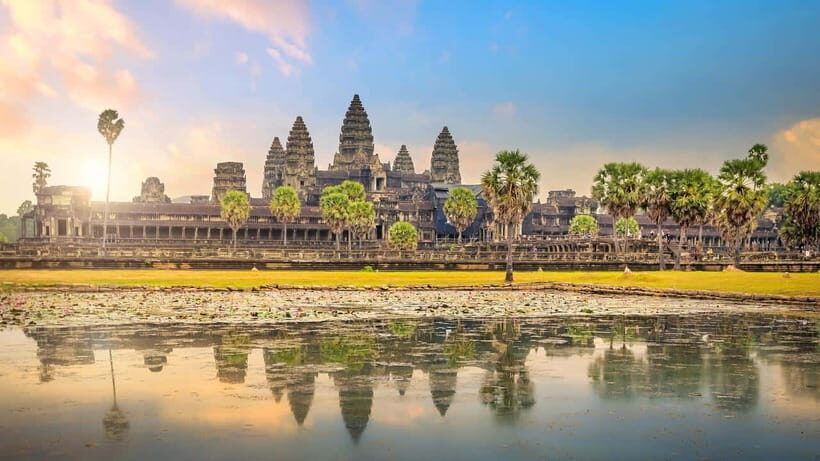
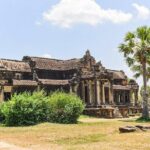
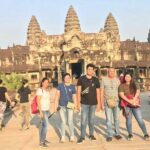
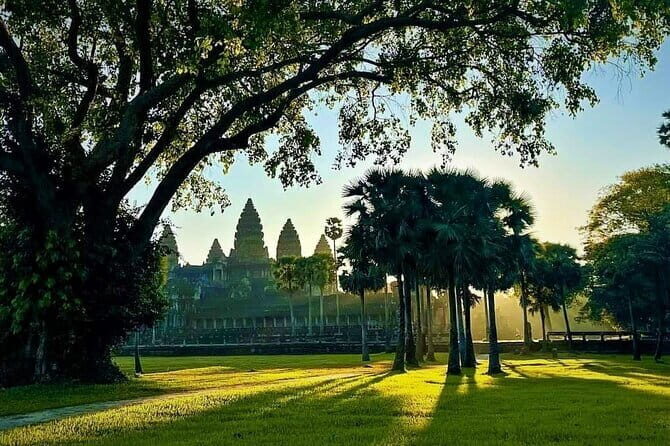
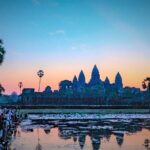
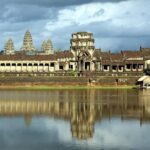
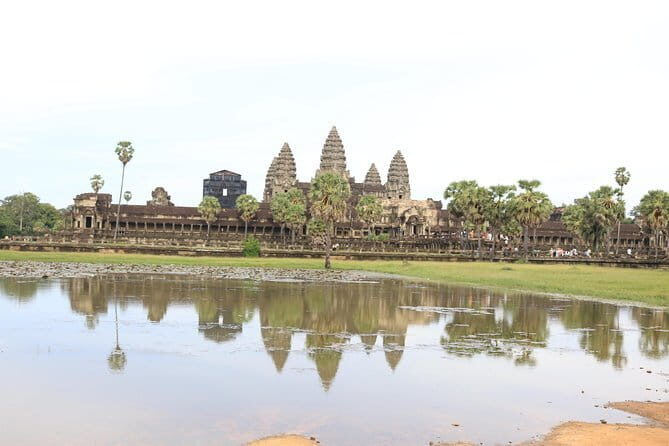
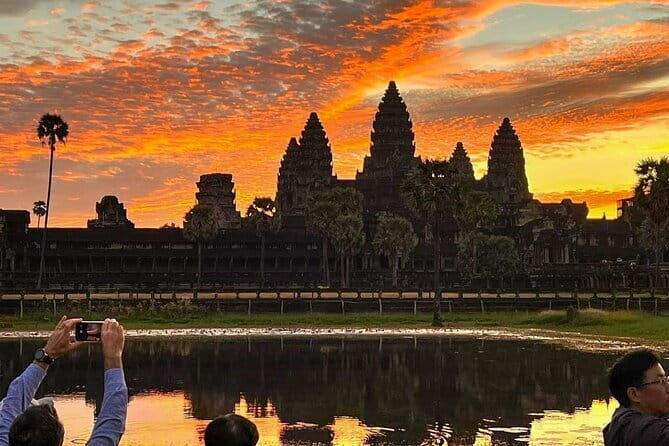
Later, you’ll see Angkor Wat, the world-famous anchor of the Angkor complex. It’s described as the best preserved and the largest religious monument of the Angkor group. More than size, what matters is composition—balance, proportions, and the bas-reliefs that reward close viewing.
If your feet are starting to feel cooked, this is a good moment to lean into your guide’s pacing and photo planning. In the heat, a “perfect photo” often costs time. A guide who helps you time viewpoints can save you from missing the best light or the cleanest angles.
Phnom Bakheng: the sunset payoff
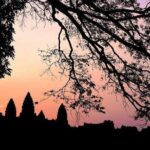
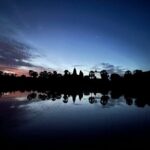
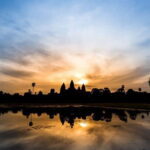
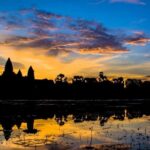
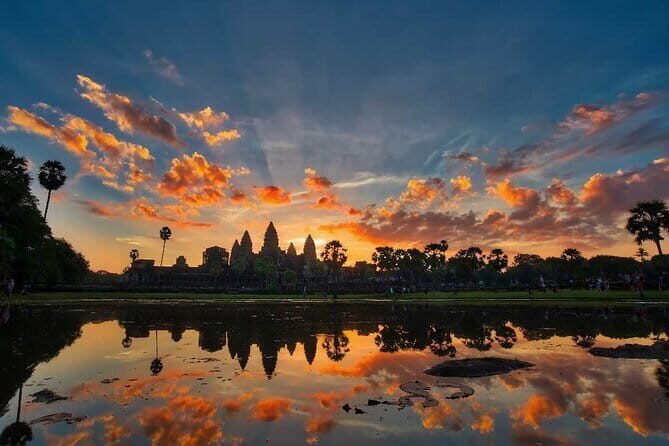
Finally on Day 1 you’ll reach Phnom Bakheng, the highest temple in the Angkor Archaeological Park and a well-known panoramic viewpoint. The tour highlights the mystical sunset element, which is the right idea. Angkor Wat in daylight is one experience; watching the ruins and surrounding area shift as the sun drops is another.
This part is especially worth doing with a guide, because temple routes and crowd flow can be tricky at sunset. You want to be in the right place without stressing.
Day 2: Pink carvings, outer-circuit temples, and a snack stop
Day 2 leans into temples that feel less like crowd magnets and more like “serious looking” sites.
Banteay Srei: pink sandstone and fine carving work
The day begins with Banteay Srei, often praised as a precious work of Khmer art. It’s the pink sandstone carvings that people talk about. And when you’re standing there, you can see why. The details are intricate and the stone color makes the carvings feel crisp.
This stop is a great choice if you love fine details more than huge scale. You’ll likely find yourself stepping back to see the whole facade, then moving in closer to pick out smaller features.
Banteay Samre and Pre Rup: restored highlights and bold geometry
After Banteay Srei, you’ll visit Banteay Samre, known for restoration work using anastylosis. That means parts are reconstructed in a way that helps you understand the original layout. Then comes Pre Rup, valued for bold architectural design, balance, and proportion.
Pre Rup is one of those temples that tends to “read” well even when you’re tired. It has clear structure and shape. It also helps break up the day so you don’t just keep moving through stone doorways and walls.
Ta Som and Neak Pean: calmer stops for slower moments
Next is Ta Som, which hasn’t been restored. It can feel like a quiet pause compared to the more polished temples nearby. You can also appreciate how nature and stone coexist when restoration isn’t trying to make everything look brand new.
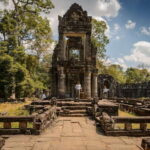
Then comes Neak Pean, with a man-made square pond and steps bordered by four smaller structures. This is a more relaxed, almost reflective stop. If you’re looking for a break from stair-climbing, Neak Pean is a welcome change of pace.
Preah Khan and Banteay Prei: bigger complex energy, then a smaller, off-the-beaten-path mood
You’ll also see Preah Khan, located 2 kilometers northeast of Angkor Thom, built in the late 12th century and dedicated to the father of King Jayavarman VII. Preah Khan can feel more expansive and active in layout, especially if you keep walking and let your guide point out the key features.
Then you’ll stop at Banteay Prei, a rarely visited temple near Prasat Prei. It’s more of a time-saver for the curious. If you’re the type who loves deeper Angkor knowledge and you want a couple of quieter stops, this one fits.
Om Pich steamed toddy palm cake and Prashdak Village: a simple local break
Day 2 ends with Om Pich steamed toddy palm cake in Prashdak Village. It’s a food stop that keeps the day human. You also get a market element nearby—pre-dinner souvenir shopping is possible at the local market area listed on the route, and that’s where small gifts usually come from.
Price and what you’re really paying for

The tour price is $113.05 per person for a 2-day private guided experience. That sounds low for two full days of private transport and an English-speaking licensed guide, especially in a place where most costs add up fast.
Here’s the honest math: the base price covers hotel pickup and drop-off, private air-conditioned vehicle, and the guide service, plus cool drinks and fresh tissue during the tour. What’s not included is the big-ticket item for Angkor: the entrance fees through the Angkor Pass, which your guide helps you buy at the entrance of the park.
Meals are also extra. Lunches are available at local restaurants with vegetarian and non-vegetarian options, and menu prices are listed roughly at $3–$10 per dish. That range is helpful because you can keep costs under control if you’re not trying to eat at high-end spots every day.
Finally, tipping is not included. Plan for it. This kind of tour runs on guides and drivers who keep you on schedule and comfortable, and the service is built around their hands-on effort.
How the guide changes everything (especially at Angkor)
At Angkor, the stones are the headline. But your experience depends on the guide’s explanations and pacing.
The names that come up for this tour include guides such as Mr Lorn Leap, Sara, Leap, and also Leam and La. Drivers mentioned include Sophal and Ry. The common thread is not just friendliness. It’s the way they guide photo opportunities and explain what you’re seeing without drowning you in facts.
One practical point I appreciate: in hot months like April, the tour includes water and cold towels between temple stops. That kind of care matters because you don’t want to feel miserable while trying to appreciate carvings.
Also, being private means your guide can help you set a rhythm. If you’re the type who walks slowly to see bas-reliefs, you can do that. If you prefer moving briskly and saving longer looks for the most important structures, you can do that too.
Comfort, heat, and walking tips that actually help
Angkor can wear you down. This tour helps with the basics: private a/c transport, cool drinks, and fresh tissue. Still, you’ll spend a lot of time outside, climbing stairs, and walking on uneven temple surfaces.
Here’s how I’d plan for it:
- Wear comfortable, grippy shoes. Temple steps can be sharp and slippery if you hit humidity.
- Use sun protection. Even when you’re stopping for water, you’ll still want a hat and sunscreen.
- Keep your camera ready but don’t trip over your own shot. Some spots require you to pause and step around other visitors.
- Use the guide’s timing for sunset at Phnom Bakheng. It’s one of the best “wow” moments of the whole trip, so treat it like a schedule milestone.
If you come in expecting a fast museum run, you’ll likely feel rushed. If you come in ready to slow down, Angkor rewards you fast.
Who this private tour is best for
This is a strong fit if you want:
- A private experience with a guide who explains what you’re seeing in English.
- A two-day route that hits the main temples and still includes several additional stops for variety.
- Comfortable transport and fewer logistics headaches from your hotel.
It’s also a good choice for couples and small groups who prefer control over pacing. Because the tour is set up as private, you’re not stuck with a big bus schedule.
If you only want the bare minimum of Angkor highlights and you hate walking, you might feel this is more temple time than you want. But if you’re willing to pace yourself, the mix across Day 1 and Day 2 keeps things interesting.
Should you book it?
Book this tour if you want a balanced Angkor experience with real guiding, not just transport. The best value isn’t just the $113.05 per person price tag. It’s the combination of private air-conditioned vehicle, hotel pickup, and a licensed English guide who helps you understand what you’re seeing at Bayon, Angkor Thom, Ta Prohm, Angkor Wat, and Phnom Bakheng.
Skip it if you only care about one or two famous monuments and you’d rather DIY the rest. You’d still need the Angkor Pass, and you’d be spending energy on route planning that a guide already handles here.
FAQ
What is the duration of this tour?
It’s a 2-day private tour, listed as approximately 2 days.
Does the tour include hotel pickup and drop-off?
Yes. Hotel pickup and drop-off in Siem Reap are included.
Is the Angkor Pass entrance fee included?
No. Entrance fees are not included. Your guide assists you with purchasing the Angkor Pass at the park entrance.
What temples are visited during the tour?
Across the two days, the itinerary includes Angkor Thom South Gate, Bayon Temple, Baphuon Temple, Phimeanakas, Terrace of the Elephants, Terrace of the Leper King, Ta Nei, Ta Prohm, Angkor Wat, Phnom Bakheng, Banteay Srei, Banteay Samre, Pre Rup, Ta Som, Neak Pean, Preah Khan, and Banteay Prei.
Does the tour include sunset at Phnom Bakheng?
Yes. The tour overview specifically highlights a sunset at Phnom Bakheng with panoramic views.
Are meals included in the tour price?
Meals are not included. Lunches are available for purchase during the tour, with prices listed around $3–$10 per dish.
What comfort items are provided during the tour?
The tour includes cool drink water and fresh tissue during the tour.
Is this tour private or shared?
It’s a private tour. Only your group participates.
Can I cancel for a full refund?
Yes. Free cancellation is available up to 24 hours in advance for a full refund.