REVIEW · SIEM REAP
Kbal Spean, Banteay Srei & Banteay Samre temple
Book on Viator →Operated by Angkor Doors · Bookable on Viator
Three temples, one satisfying countryside morning. This private day takes you out from Siem Reap to places most people skip, starting with a hill hike at Kbal Spean and then shifting into two temple stops with very different vibes. You’ll see why these sites matter in Khmer history, not just how they look on a postcard.
I love how the plan blends a bit of effort with big payoff, especially the hike up to Kbal Spean and its famed river carvings. I also like that your day runs with an English-speaking guide (and yes, you can be in good hands with Chen, who people specifically thank for making the route feel special).
One consideration before you book: temple and site fees are not included, and you’ll need a one-day Angkor Pass for each visitor, plus an extra fee if you add the Landmine Museum.
In This Review
- Key things to know before you go
- A private 8am start that actually gets you out of the Angkor crowd
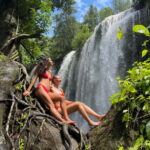
- Kbal Spean: hike-friendly countryside and the River of 1000 Lingas
- Banteay Srei, the Citadel of Women: where fine carving takes center stage
- Banteay Samre: a quieter Angkor-style Hindu temple from the 12th century
- Optional Cambodia Landmine Museum for a modern history pause
- Price and value: $64.11 for a private day, plus the Angkor Pass
- Dress code and walking comfort: the two things that decide how pleasant the day feels
- Who should book this Siem Reap countryside route
- Should you book it?
Key things to know before you go
- Kbal Spean is a hike: hill walking is part of the day, so bring solid shoes.
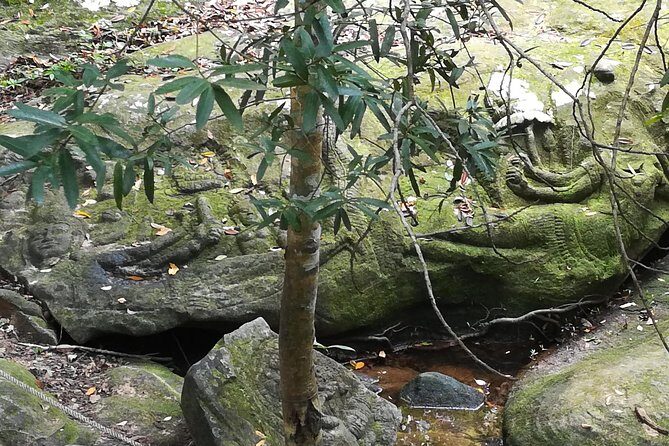
- River of 1000 Lingas stop: you’re going for one of Cambodia’s most recognizable carving themes.
- Banteay Srei is the Citadel of Women: expect delicate, intricate carving work.
- Banteay Samre is off the main circuit: it’s a 12th-century Hindu temple built in the style of Angkor Wat.
- Optional Landmine Museum: a 30-minute add-on gives context on Cambodia’s modern war era.
- Dress code matters: cover thighs and shoulders, or you may be refused entry.
A private 8am start that actually gets you out of the Angkor crowd
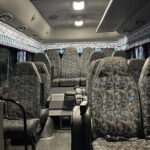
This tour begins at 8:00am and is designed as a full countryside shift, not a quick hit between temples. Pickup is included, and you’ll ride in an AC car, minivan, or minibus—nice when Siem Reap mornings start warm and stay that way.
Because it’s private, your schedule is easier to manage than with a bus full of people. It also tends to help with one of the most frustrating parts of temple days: feeling rushed just as you start to notice details. With a dedicated guide, you can ask questions, slow down for photos, and keep your pace on the hike.
The total day runs about 7 to 8 hours, which is long enough to feel like a real experience, but not so long you lose the rest of your evening. If you’re planning your trip around a tight window, this timing can fit neatly between other Siem Reap highlights.
One more practical note: this tour uses a mobile ticket, so you won’t be scrambling with paper receipts on the road. And if you’re traveling with others, check whether any group discount applies to your booking.
Other Banteay Srei tours we've reviewed in Siem Reap
Kbal Spean: hike-friendly countryside and the River of 1000 Lingas
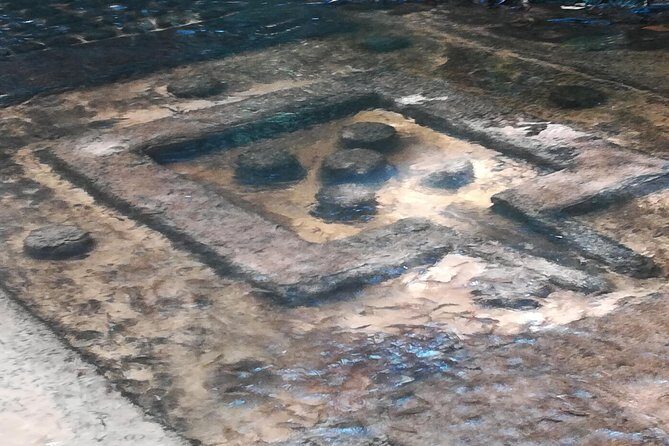
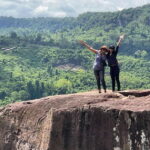
Kbal Spean is about 45 km from Siem Reap city, and that distance is part of the appeal. You’re not just moving from one temple to another; you’re leaving the most tour-heavy area and getting into a more countryside pace.
Plan on around 2 hours at Kbal Spean, and expect a hill hike. The tour is recommended to visitors who are fit, and good walking shoes are a must. If you show up in sandals or slick soles, you’ll feel it. Bring shoes you trust on uneven ground, and you’ll have a much calmer experience.
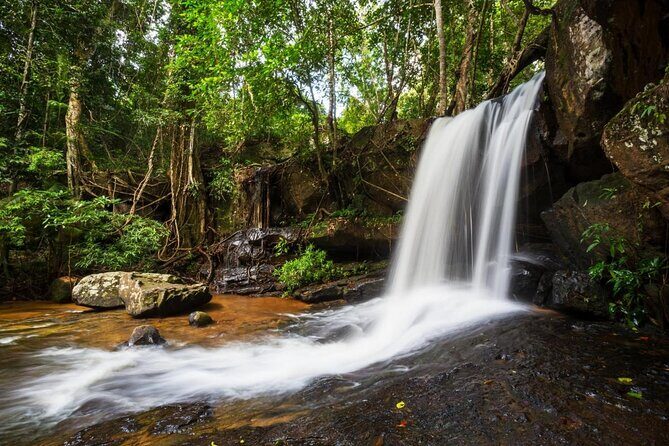
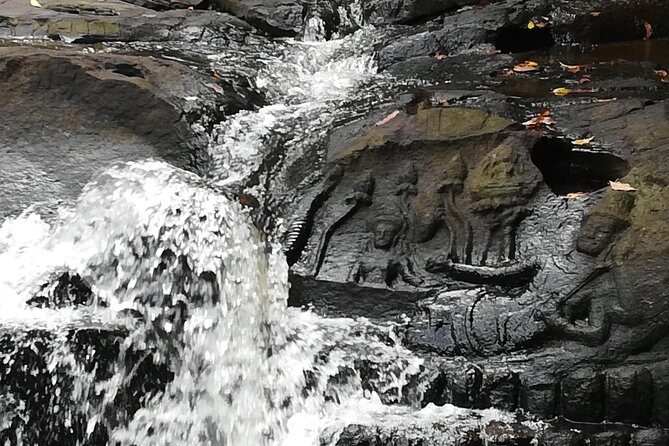
What makes Kbal Spean special is the focus on the river carvings—often referred to as the River of 1000 Lingas. You’ll be looking at a theme that’s central to Hindu symbolism, but expressed in a landscape setting. It’s the kind of stop that helps you understand Khmer artistry as something connected to place, not just stone architecture.
A guide’s value here is underrated. Without explanation, it can be easy to treat it as “cool carvings.” With a guide, you can see the pattern of what you’re looking at and why it mattered.
Best approach: treat this as your morning effort. Once you’ve done the climb, the rest of the day is more about soaking up temple detail than getting your heart rate up.
Banteay Srei, the Citadel of Women: where fine carving takes center stage
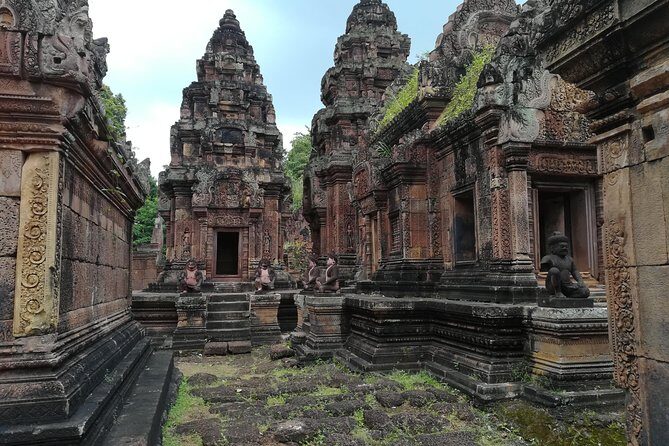
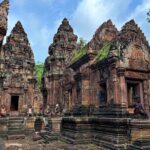
After Kbal Spean, you’ll head to Banteay Srei, nicknamed the Citadel of Women. The story behind the nickname is that the carvings are so intricate people believed they could only be made by delicate hands.
You’ll spend about 3 hours here, which is a good amount of time if your goal is to actually look. This is not a temple you want to rush through. The value isn’t only the structure—it’s the surface detail, the crispness of the carving work, and the way the temple rewards a slower scan rather than a speed-walk photo routine.
Because your guide is with you for the day, you can connect what you see at Banteay Srei to the broader Khmer context you’re hearing throughout the route. That connection is what turns a collection of stops into a coherent experience.
One practical tip: this is also a “dress code” zone. Temples are strict, so if you don’t already know your fit, check before you go—cover thighs and shoulders and you’ll save yourself the stress of last-minute clothing fixes.
If you like craftsmanship and can spend time studying stone details, Banteay Srei is the kind of stop that makes your day feel richer.
Banteay Samre: a quieter Angkor-style Hindu temple from the 12th century
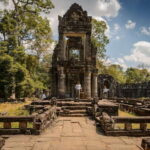
The next move is Banteay Samre, a 12th-century Hindu temple built in a style similar to Angkor Wat. If Angkor Wat is your “big wow,” Banteay Samre can be your “I get it now” moment—same architectural DNA, but different mood and a calmer setting.
You’ll have about 2 hours at this site. A big draw here is that it’s described as being well off the tourist trail. That matters more than you’d think. When crowds thin out, you can notice how the temple sits in its surroundings and how the carvings and layout feel less like a performance and more like a working place of devotion.
This is also the part of the day where your understanding starts to click. After Kbal Spean’s symbolic river carvings and Banteay Srei’s attention to detail, Banteay Samre gives you a broader architectural view of Khmer spirituality and design choices.
If you enjoy temples that feel less crowded and more contemplative, Banteay Samre is a strong third act. It’s the stop that often makes people realize they didn’t come just to tick boxes—they came to see variety within Khmer temple design.
Optional Cambodia Landmine Museum for a modern history pause
If you want a breather from temple stone, there’s an optional stop at the Cambodia Landmine Museum. It runs for about 30 minutes, and the admission fee is $6.00 per person.
This short visit focuses on the history of the recent war period in Cambodia from 1970 to 1998. Even if you’re mostly in Siem Reap for Khmer temples, this museum gives useful context. It’s a reminder that Cambodia’s story has chapters beyond the ancient sites you came to see.
Because the museum is optional and timed fairly tightly, you can choose based on your energy level. If your day already feels packed, skip it and keep your day focused on the archaeological side. If you want context with your sightseeing, it’s a quick and direct add-on.
Other multi-temple archeological tours we've reviewed in Siem Reap

Price and value: $64.11 for a private day, plus the Angkor Pass
At $64.11 per person, this tour prices itself as a practical way to see three major stops in one day with pickup, transportation, and an English-speaking guide. That’s the baseline value: you’re paying for convenience and for having someone manage the route and help you make sense of what you’re seeing.
But you should plan for the main extra costs:
- One-Day Angkor Pass: $37.00 per person
- Temple/site entrance fees: not included, so budget for the pass you need
- Landmine Museum (optional): $6.00 per person
- Food and drinks: not included
Here’s how I think about the money: if you were to attempt this route on your own, you’d still need transport between distant sites and you’d likely spend more time coordinating. Paying for a guide and a private schedule can be worth it, especially for Kbal Spean and the temple pair, where timing and interpretation matter.
Also, because you’re required to have the one-day Angkor Pass, the “true total” for your day will depend on whether you add the museum and how many people you’re booking. If you’re traveling as a pair or small group, it can work out very efficiently compared to separate hires for each stop.
One small planning advantage: the tour is commonly booked about 19 days in advance on average, so if you’re traveling during busy dates, it’s smart to lock in earlier rather than waiting.
Dress code and walking comfort: the two things that decide how pleasant the day feels
This tour includes temple entry rules you should take seriously. The dress code is strict: you must cover your thighs and shoulders when entering temple complexes. If your clothing doesn’t meet the requirement, you may be refused entrance.
So plan your outfit like you’re going to a place of worship, not just a photo session:
- Wear lightweight, long enough bottoms.
- Use a light layer for shoulders.
- Avoid clothing that leaves you halfway dressed and hoping for a workaround.
For comfort, bring good walking shoes, especially because Kbal Spean involves hill hiking. The tour is marked as suitable for most travelers, but “most” still needs sensible footwear. You’ll enjoy the day more when you’re not spending mental energy thinking about footing.
You’ll also get bottles of cold drinking water, which is a real value in Siem Reap heat. Hydration helps you stay focused on the sites instead of feeling drained on the road.
Who should book this Siem Reap countryside route
Book this tour if you want a day that goes beyond the most famous Angkor route and still includes well-known, meaningful Khmer sites. It’s especially good for you if:
- you like a structured plan with an English-speaking guide
- you’re comfortable with some walking and want the Kbal Spean hike payoff
- you want temple variety: Banteay Srei’s carving focus plus Banteay Samre’s Angkor-style layout
- you want optional context for modern Cambodian history at the Landmine Museum
You might skip it if you don’t want any hiking at all, or if you’re trying to keep your budget strictly limited to what’s included in the base price.
Also consider your schedule. With a 7 to 8 hour day, it’s a strong candidate for your main “out of town” day, not something you cram between late-night plans.
Should you book it?
If you’re in Siem Reap and you can handle a hill hike, I think this is a smart booking. It’s built for variety: a river-symbol stop at Kbal Spean, a detail-driven temple at Banteay Srei, and a quieter, Angkor-style Hindu temple at Banteay Samre, with an optional history pause at the Landmine Museum.
Do the math on the extra fees up front—especially the $37 one-day Angkor Pass—and you’ll feel in control of the cost. And take the dress code seriously so the temples welcome you without drama.
If your dream day is temples plus countryside, with a guide who can help you make sense of what you’re seeing, this private route is worth your time.