REVIEW · SIEM REAP
Siem Reap Private Tour: Angkor Wat Sunrise And Banteay Srei
Book on GetYourGuide →Operated by Siem Reap Tour Guide · Bookable on GetYourGuide
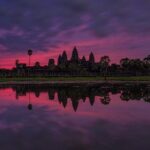
Angkor at sunrise changes the whole day. I love the Angkor Wat moat sunrise moment and the fact you get a private English guide who can explain temple history and religion at the pace that fits you. It’s a big UNESCO site, but this plan keeps it focused without feeling rushed.
One thing to plan for: the temple admission pass costs $37 per person (it covers the temples on the agenda), and that’s separate from the tour price.
In This Review
- Key things you’ll notice on this tour
- Why this sunrise-and-temples plan works (especially for first-timers)
- Pickup, hotel drop-off, and the AC comfort you’ll thank yourself for
- Angkor Wat: sunrise focus, then guided walking with photo time
- Angkor Thom and Bayon Temple: 200-plus faces and a different kind of energy
- Ta Prohm: tree roots, photo stops, and why timing changes everything
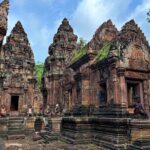
- Banteay Srei: pink sandstone carvings that feel like detail work
- Temple pass reality: the $37 you should budget for
- What’s included (and what’s not) so you can plan meals and pacing
- How to dress and pack for Angkor temple rules (no guesswork needed)
- Getting the most out of your guide: stories, religion, and the right level
- Who this tour fits best (and who should reconsider)
- Should you book this Siem Reap private tour?
- FAQ
- What is the duration of this Siem Reap private tour?
- Is hotel pickup and drop-off included?
- Are temple admission tickets included in the price?
- Does the tour include a private guide and transportation?
- What language is the live tour guide?
- Is admission-line time avoided?
Key things you’ll notice on this tour
- Angkor Wat at first light, including the famous sunrise reflections in the moat
- A private guide who uses stories and explanations at the level you want
- Built-in photo stops and breaks, so you’re not just walking nonstop
- Time on Angkor Thom and Bayon, where the over-200 faces shape the experience
- Banteay Srei’s pink sandstone carvings, a standout change of pace
- Hotel pickup and drop-off in Siem Reap town, usually from major resorts and hotels
Why this sunrise-and-temples plan works (especially for first-timers)

If you’ve only got one day, the biggest risk at Angkor is wandering around and still feeling like you missed the point. This format solves that by chaining together the “essentials” in a logical order, with the day anchored by an early start for Angkor Wat sunrise.
I also like that it’s private. That matters here because some parts of the temples are best seen slowly, and some are better when you’re moving. A private guide can shape the pace based on your comfort level, your photo style, and how much explanation you actually want.
The tour is built around a 9-hour day, with a chauffeur-guide and an AC SUV/minivan. That’s a real quality-of-life upgrade compared with haphazard tuk-tuk logistics, especially in the heat.
Other Angkor Wat sunrise tours we've reviewed in Siem Reap
Pickup, hotel drop-off, and the AC comfort you’ll thank yourself for
This is set up as a true door-to-door day in Siem Reap town. Your driver and guide pick you up from your hotel lobby (they hold a sign with your name), and you end back at one of the listed drop-off locations.
The included vehicle setup is also practical: cold drinking water, cold towels, gasoline, parking, and toll roads. Those sound like “small stuff,” but at Angkor they quickly become the difference between a fun day and a sore, cranky one.
You’ll also be on an AC SUV/minivan, which matters when you’re bouncing between temple zones and you want your group to stay fresh. If you’ve ever done Angkor in a hot, open vehicle for too long, you already know why this detail matters.
Angkor Wat: sunrise focus, then guided walking with photo time
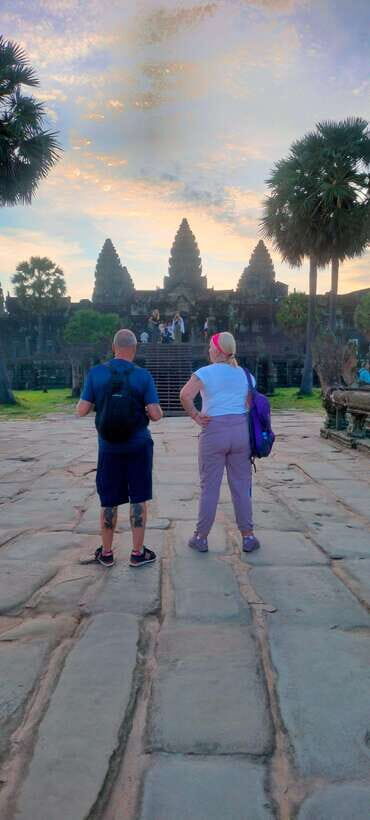
Angkor Wat is the headline. What I like about this plan is it doesn’t treat sunrise as a quick checkbox—it gives it time to actually sink in.
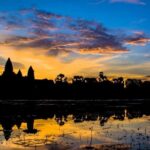
You’ll spend about 3.5 hours around Angkor Wat, built around sunrise viewing, a guided visit, walking, and photo stops plus a break. That flow matters because Angkor Wat isn’t just a viewpoint. The temple is designed to be approached, viewed, and read like a story, and your guide can help you notice what you might otherwise miss.
Here’s what the sunrise emphasis changes for your day:
- It sets the light. The golden glow is what turns stone geometry into something almost alive.
- It sets the mood. Early hours make the complex feel less chaotic, so you can move with intention.
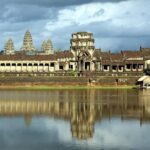
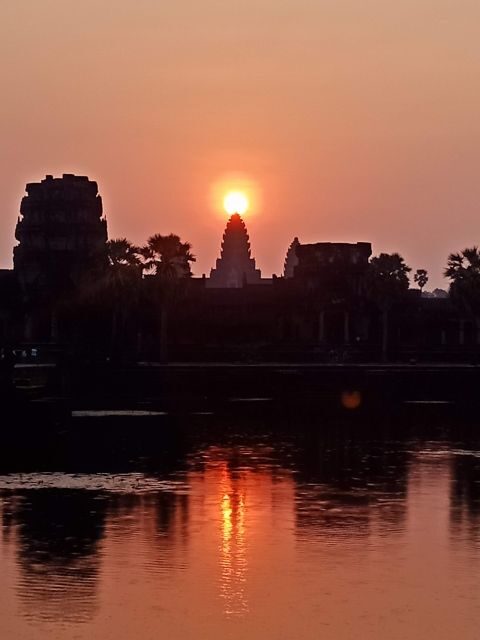
- It gives you time to watch the reflections. The tour specifically calls out the sunrise reflection in the moat, which is one of the most distinctive visual moments at Angkor Wat.
As you walk, your guide can frame the temple’s symbolism and religious meaning in a way that fits you. If you get a guide like Sam (known for amusing anecdotes and careful driving), you’ll likely get explanations that feel human rather than like a textbook. If you get Han (recognized for stories about the temples and Cambodia’s history), you’ll probably enjoy the history-and-religion links that make the carvings feel less random.
Practical note: bring your charged smartphone and camera. You’ll have enough time for photos, but the early light rewards preparation.
Angkor Thom and Bayon Temple: 200-plus faces and a different kind of energy
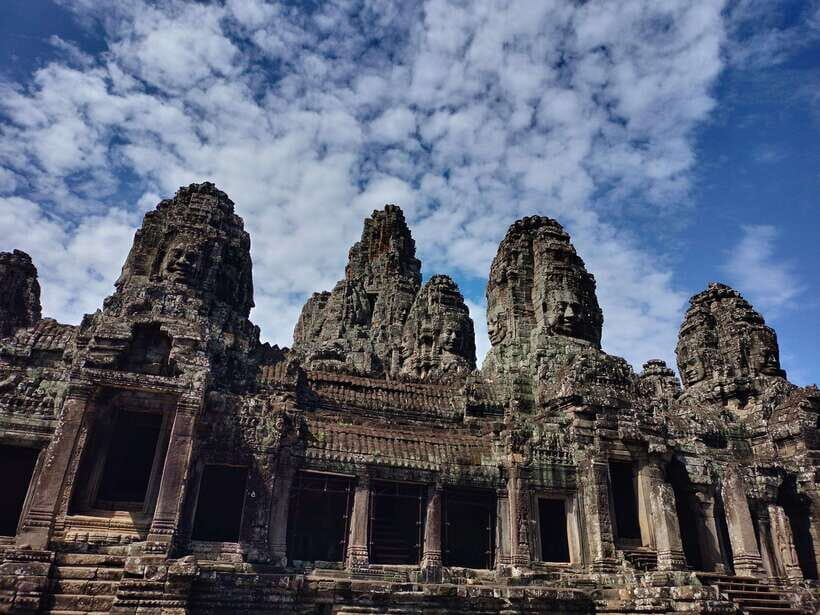
After Angkor Wat, the day turns toward Angkor Thom and the Bayon Temple. This stop lasts about 1.5 hours, with guided touring, walking, and photo breaks.
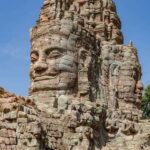
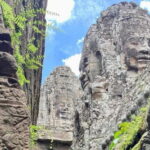
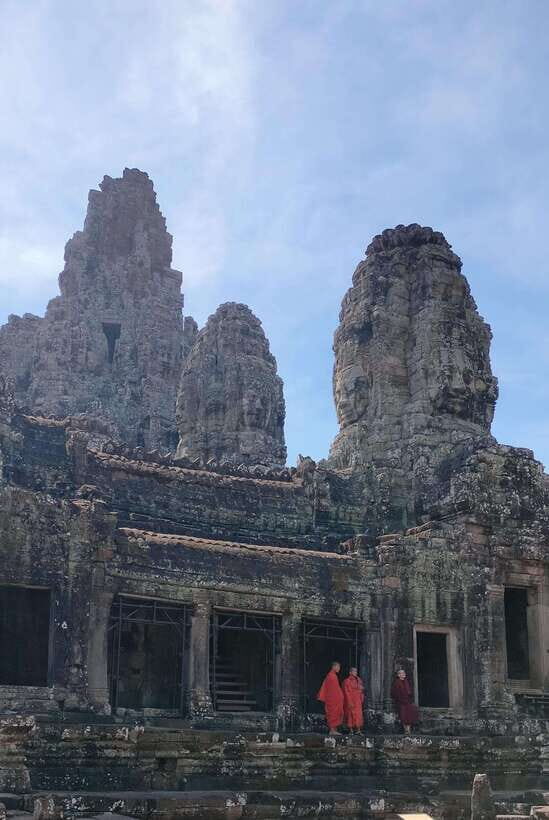
Bayon is unforgettable because the faces dominate everything. You’re looking at temple walls shaped into expressions—over 200 faces—and your guide can help you understand why those faces matter in the temple’s world.
This is also a good moment to slow your thinking down. At Bayon, you’re not just searching for “the big shot.” The place encourages you to notice how the face towers sit with the layout of the corridors and courtyards. With a private guide, you can ask questions without feeling like you’re holding up a group.
The downside? Bayon involves a fair amount of walking and standing in place for views. If your legs tire easily, you’ll want to lean on the guide to pace you during the walk portions.
Ta Prohm: tree roots, photo stops, and why timing changes everything
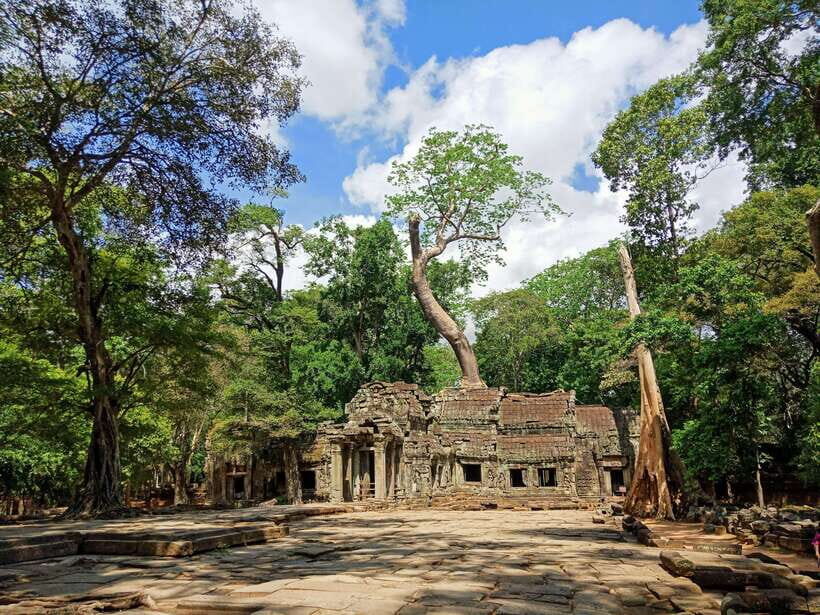
Then you’ll head to Ta Prohm, about 1.5 hours with a mix of photo stop time, guided explanation, sightseeing, and walking.
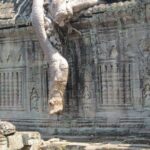
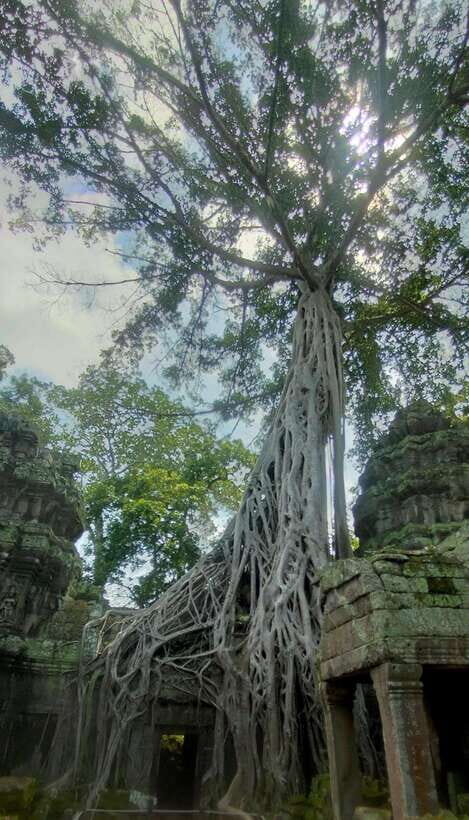
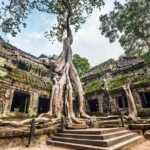
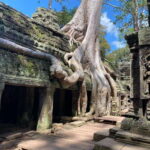
Ta Prohm is famous for its roots gripping the stone. That look isn’t just scenic—it’s part of the site’s story about time, nature, and preservation. Your guide can help you interpret what you’re seeing, so it doesn’t become only a “Hollywood set” moment.
Here’s the value of doing Ta Prohm in this sequence:
- You’ve already got the big sunrise impact from Angkor Wat, so Ta Prohm feels like a shift rather than another repeat.
- You go after Bayon, so you’re not burning out before the stop that many people remember most for atmosphere.
What to watch for: the light can change quickly as you move between shaded corridors and open pockets. Use your guide’s timing for photo spots so you’re not spending all your energy hunting angles.
Other Angkor Wat temple tours we've reviewed in Siem Reap
Banteay Srei: pink sandstone carvings that feel like detail work
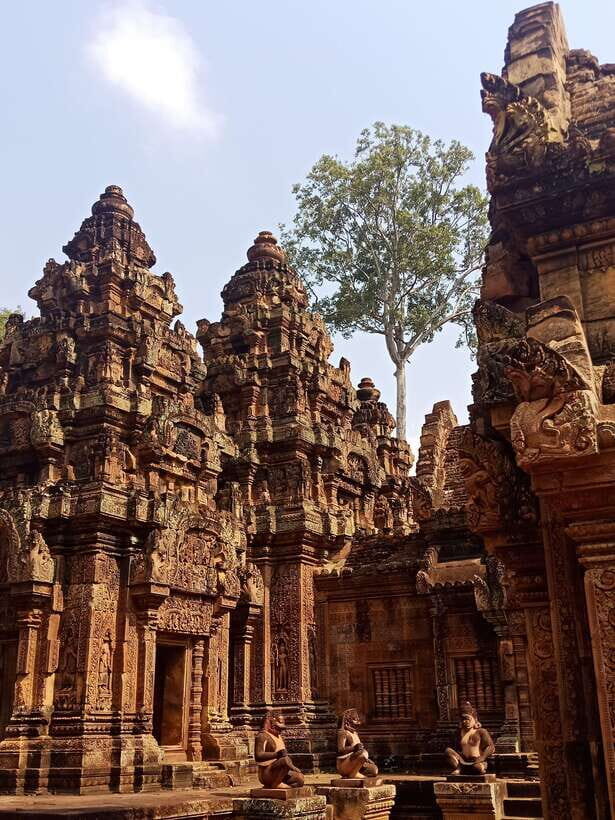
Banteay Srei comes next, with about 2 hours for sightseeing, a guided tour, and walking plus a photo stop.
If Angkor Wat feels grand and Bayon feels intense, Banteay Srei is more delicate. The tour calls out the rosy intricate carvings, and that’s the main draw: this temple is about fine detail, ornament, and the sense that the craft mattered as much as the building.
This stop is also a nice break from the “big face / big tower” visuals. It helps you understand that the Angkor temples weren’t all built to shout. Some were built to reward close attention.
One consideration: detail temples often make you want to look down and around for patterns, which means you’ll be standing longer in a smaller space. Comfortable shoes help here more than fancy footwear.
Temple pass reality: the $37 you should budget for
The tour price covers your guide, driver, vehicle, waters, and the logistics of getting you between sites. What’s not included is the temple admission pass ($37 per person), which covers all temples on the agenda.
So is the math worth it? In my view, the value depends on two things:
- You’re doing four major sites in one controlled day (Angkor Wat, Bayon/Angkor Thom, Ta Prohm, Banteay Srei).
- You’re getting private guiding plus the sunrise timing and hotel transfers included.
If you were to try to manage admissions and transport yourself, you’d likely spend more time figuring things out—and you might lose the advantage of a guide who helps you interpret the site while you’re there.
If you want a simple rule: budget the base tour price plus the $37 per person pass, and you’ll avoid any day-of surprises.
What’s included (and what’s not) so you can plan meals and pacing
Included:
- Hotel pick up and drop off
- Private professional tour guide at each site
- Safe driver in an AC SUV/minivan
- Cold drinking waters and cold towels
- Gasoline, toll roads, and parking
- Temple line skipping is noted as part of the experience
- Live English guide
- Wheelchair accessible is listed
- Private group setup
Not included:
- Temple sites admission pass ($37 per person)
- Breakfast/lunch/dinner
- Soft-drinks/beers
- Anything related to airport pick up/drop off
The meal part is important. Since lunch isn’t included, you’ll want to plan either a stop you’re comfortable with or some kind of quick bite based on your guide’s timing. In a temple day, food time can quietly shape your mood, so it’s smart to think about it before you go.
How to dress and pack for Angkor temple rules (no guesswork needed)
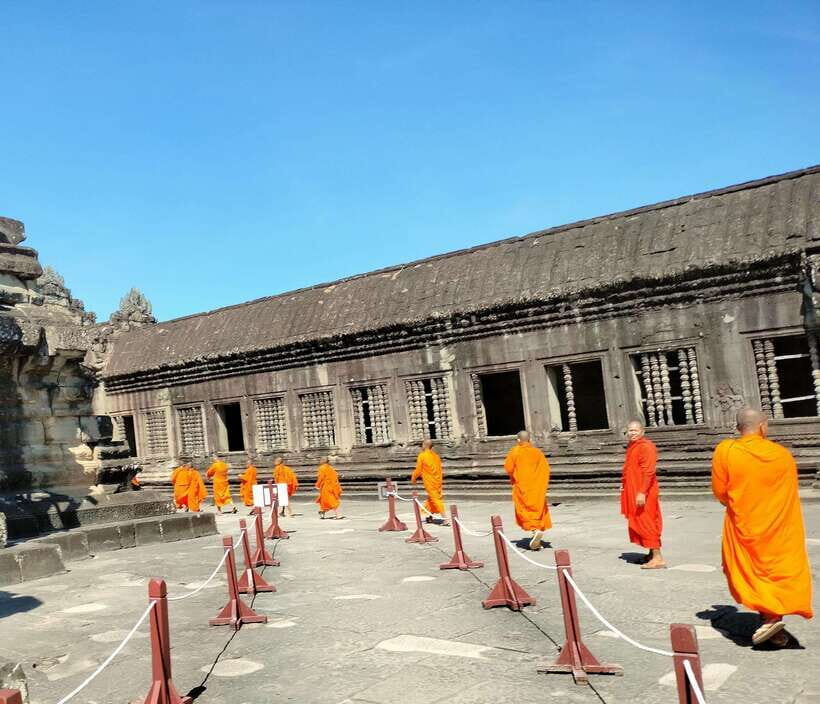
For a comfortable day, bring the essentials the tour explicitly points out:
- Camera
- Cash and credit card
- Charged smartphone
- Passport or ID card
- Sports shoes
Also plan for the climate and temple expectations:
- Hats and sunblock
- Mosquito repellent
- Light clothing that covers your knees and shoulders for temple visits
I’d treat shoes as non-negotiable. Even when the walking seems short on paper, temple surfaces and uneven steps add up fast.
And about what you can’t bring: pets, drones, alcohol/drugs, explosive substances, and weapons/sharp objects aren’t allowed. That’s the kind of rule that can cause real friction if you’re not ready.
Getting the most out of your guide: stories, religion, and the right level
One of the best things here is that your guide isn’t just reciting dates. The tour highlights that your guide explains history and religion at a level that’s right for you.
That’s not a marketing line you should ignore. At Angkor, it’s easy to walk around and think you’re seeing pretty stone. A good guide helps you see what the symbols mean, why certain features repeat, and how the site functioned in its own cultural world.
The guide names that have been mentioned for past bookings—Sam and Han—show two styles: one that leans into amusing anecdotes and careful driving, and another that strings stories together across Cambodia’s history and the temples’ meaning. Either approach is useful if you’re open to asking questions.
Tip for you: decide ahead of time whether you want more explanation during walks or more explanation while you’re stopped for photos. A private setup means you can steer that.
Who this tour fits best (and who should reconsider)
This is a strong choice if you want a focused one-day Angkor tour without the stress of navigation and ticket logistics.
It’s also a good match for:
- First-timers who want the “must-see” temples
- People who value a private guide and a driver
- Anyone who wants sunrise at Angkor Wat, not just daytime sightseeing
- Couples or small groups who want flexibility at stops
It may be less suitable if you have:
- Back problems
- Heart problems
- Or if you’re over 95 years old
Even with a private pace, temple walking and uneven surfaces are part of the deal. If you’re unsure, ask your guide about where you’ll spend more time and where you can take breaks.
Should you book this Siem Reap private tour?
I’d book this when you want a smooth, guided day that hits the Angkor essentials in one go—especially if you care about sunrise timing and want help reading what you’re seeing. The combination of private guide + AC vehicle + hotel transfers + cold water/towels makes the logistics feel handled, so you can focus on the temples.
Skip it if you’re traveling super budget-only and don’t want to pay for guided private transport, or if you know you can’t do the walking involved at the major sites.
If you book, do two things to make it feel even better: wear comfortable shoes and budget for the $37 temple pass per person. Then you’ll walk into a day that’s actually built for your time in Siem Reap.
FAQ
What is the duration of this Siem Reap private tour?
The tour duration is 9 hours.
Is hotel pickup and drop-off included?
Yes. Pickup and drop-off are included from hotels in Siem Reap town, and the driver and tour guide pick you up from your hotel lobby with your name on a sign.
Are temple admission tickets included in the price?
No. The temple admission pass is $37 per person and covers the temples listed on the agenda.
Does the tour include a private guide and transportation?
Yes. You get a private professional tour guide and a safe driver in an AC SUV/minivan.
What language is the live tour guide?
The live tour guide is English.
Is admission-line time avoided?
Yes. Skip-the-ticket-line is listed as part of the experience.