REVIEW · SIEM REAP
Wildlife Expedition: Elephant Sanctuary, Kbal Spean Banteay Srei
Book on Viator →Operated by Marvel Angkor Tours · Bookable on Viator
Angkor Wat is big enough to feel unreal, and this route is built to make it manageable. You’ll hit the top sights in a smart order, with time at Bayon and Ta Prohm (the Tomb Raider temple), then end at the quieter Ta Nei deep in the trees. The best part is the attention: you get a guide focused on your questions and a photographer who helps you leave with real keepsake photos.
I especially like the private, off-peak approach. The pacing means you spend less time wrestling crowds, and more time actually looking at details like the faces at Bayon and the doorways at Ta Prohm. I also love the photo support. Instead of hoping you’ll get one decent snapshot, you’re guided into better angles during the day.
One consideration: the Angkor Temple Pass is not included. At $37 per person, you’ll want to add that to your budget up front so the total cost doesn’t surprise you later.
In This Review
- Key highlights to know before you go
- Why this Angkor route feels worth the time
- Price and value: what $64 really buys you
- The guide experience: why names keep showing up
- Stop 1: Angkor Wat with a calm, first-sights strategy
- Stop 2: Bayon Temple and the faces you can’t stop looking at
- Stop 3: Ta Prohm, the Tomb Raider temple that still surprises
- Stop 4: Ta Nei Temple, the forest finish that feels like a reward
- The professional photographer: how to get photos that don’t look forced
- Comfort details that matter in Siem Reap heat
- Timing: off-peak hours and the early-start reality
- What to wear: smart casual that still works for temple walking
- Who this tour fits best
- Should you book this Angkor Wat and movie-temple combo?
- FAQ
- How long is the Angkor Wat, Bayon, Ta Prohm, and Ta Nei tour?
- Where does the tour start and end?
- Is hotel pickup included?
- What’s included in the tour price?
- Do I need an Angkor Temple Pass?
- Which temples are visited?
- Is there a photographer during the tour?
- Is the timing designed to avoid crowds?
- What should I wear?
- What is the cancellation policy?
Key highlights to know before you go
- Private tour with undivided guide attention, so you can ask questions and move at a human pace
- Professional photographer included, focused on getting usable photos rather than luck
- Air-conditioned private car/van + pick-up offered, helpful in Siem Reap heat
- Angkor Wat, Bayon, Ta Prohm, and Ta Nei in a tight 5–6 hour route
- Off-peak timing and a forest temple finish to help you escape the densest crowds
- Small comfort extras like mineral water, tissue, and natural fruit during the tour
Why this Angkor route feels worth the time
Siem Reap tours often boil down to a bus stop and a sprint. This one is different because it’s organized around your experience, not just checkboxes. You’ll start at Angkor Wat, then move through Bayon and Ta Prohm, finishing with Ta Nei, a temple tucked into the forest and away from the heavier foot traffic.
The movie connection is also practical, not gimmicky. Ta Prohm is famous from Tomb Raider, but it’s also an incredible temple visually on its own. If you’re the type who likes to see why a place became a film set, you’ll get that satisfaction here.
And because it’s private, you’re not stuck following someone else’s pace. The guide can slow down when you want more context, or speed up when you just want to photograph the carvings and move on.
Other Banteay Srei tours we've reviewed in Siem Reap
Price and value: what $64 really buys you
On paper, $64 for a 5–6 hour private Angkor tour sounds like a decent deal. Here’s the more useful way to think about it: you’re paying for (1) an English-speaking guide, (2) a photographer, and (3) private air-conditioned transportation, plus basic comfort items like mineral water, tissue, and natural fruit.
The Angkor Temple Pass is the big add-on, and it’s not small: $37 per person. So your realistic total becomes $64 + $37, before tips and personal expenses. Still, that’s often less than you’d spend if you tried to piece together everything yourself with multiple vendors.
Where this tour earns its value is the time-saving. Off-peak timing and a smart route mean you spend less time standing around waiting for the next crowd wave. In Angkor, time is money, and it’s also sweat. That’s why the AC car and hydration bits matter more than you’d think.
The guide experience: why names keep showing up
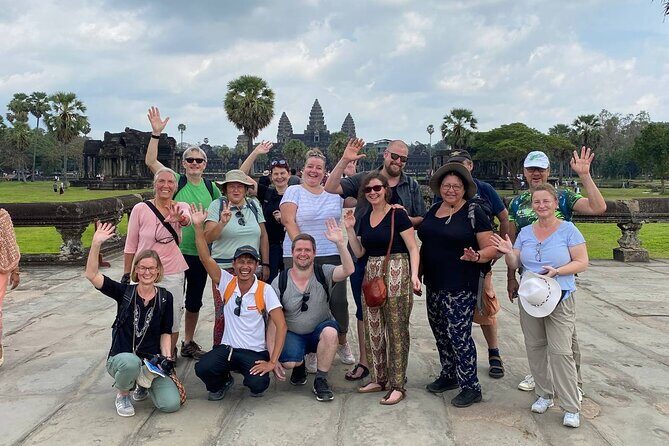
One reason this tour scores so high is the human element. In the feedback, guides like Suon Davann (John) and Davann Suo get singled out for professionalism and warmth. Other guides mentioned include Mr Pich and Mr Diamond, with praise for both temple explanations and practical guidance on how to see sites well.
What you should take from that: you’re not just buying someone to drive you from A to B. You’re hiring a translator of Khmer temple life. You’ll get help connecting what you’re seeing to who built it and what it meant.
Also, be ready for tours that talk more than just architecture. One review notes an interest in topics like history and astrology-style interpretations alongside temple details. If that’s your thing, you’ll probably enjoy the extra layer. If you prefer straight facts only, just tell your guide early and keep the conversation grounded in what you want.
Stop 1: Angkor Wat with a calm, first-sights strategy
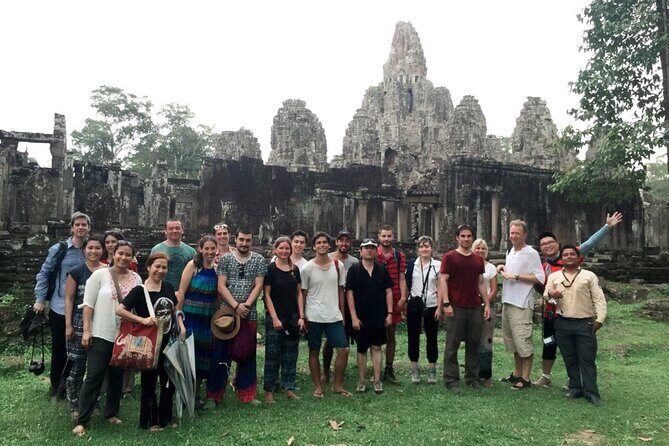
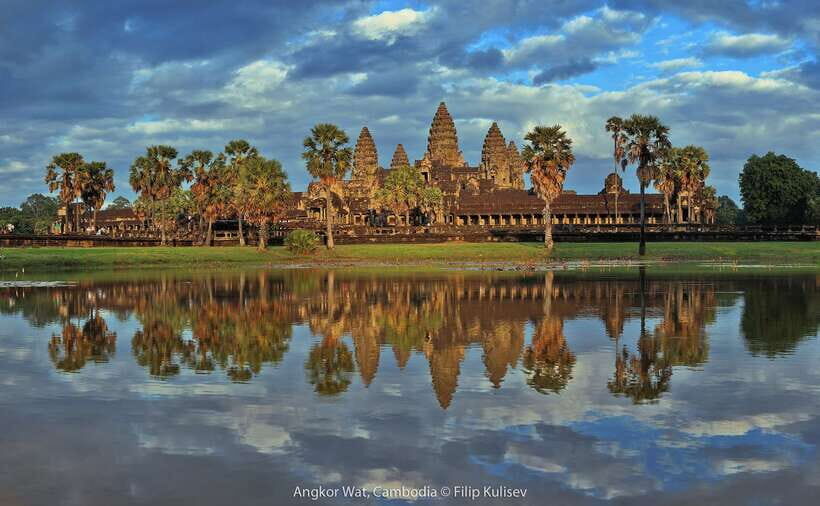
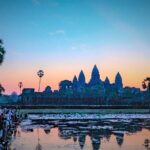
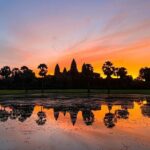
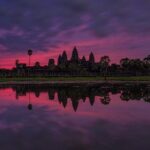
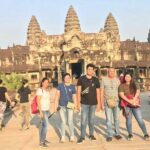
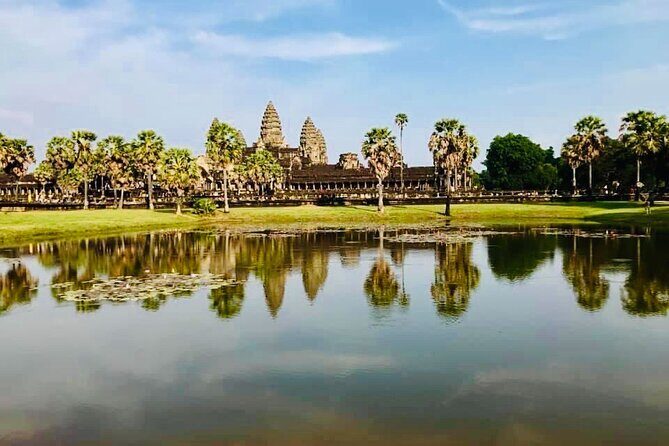
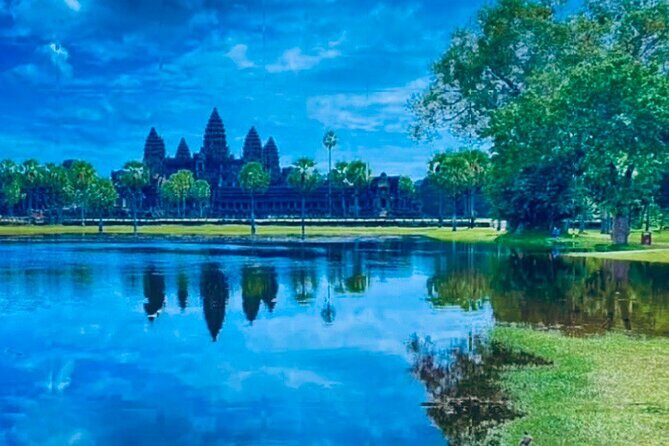
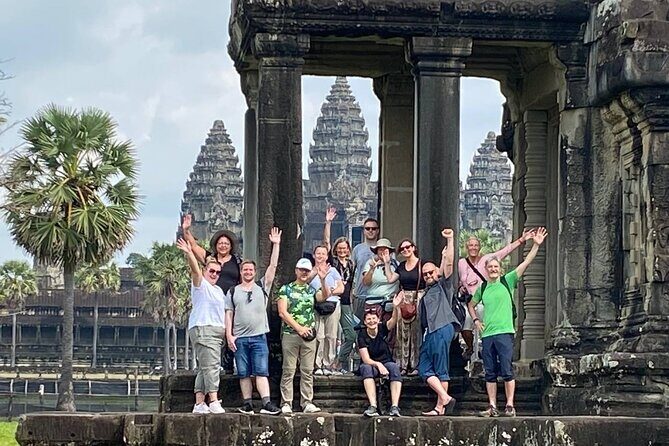
You start at Angkor Wat, the huge mountain temple built in the early 12th century under Khmer King Suryavaraman II. Even for people who think they know Angkor Wat, the scale hits different in person. This is the biggest religious monument ever built, and you feel that size immediately.
You get about 2 hours here. That length is important because Angkor Wat isn’t just one photo. It’s a sequence: views from different levels, the way corridors frame the skyline, and the carved details that don’t make sense until you’re standing close enough to see the craftsmanship.
Best part: starting with Angkor Wat gives you your mental baseline. After you’ve seen the main temple properly, the later sites feel clearer instead of random ruins in a forest.
Possible drawback: Angkor Wat can still be busy, even with off-peak planning. If crowds are your biggest stress trigger, go into it expecting some people, then lean on your guide’s timing and your own ability to step aside for photos.
Stop 2: Bayon Temple and the faces you can’t stop looking at

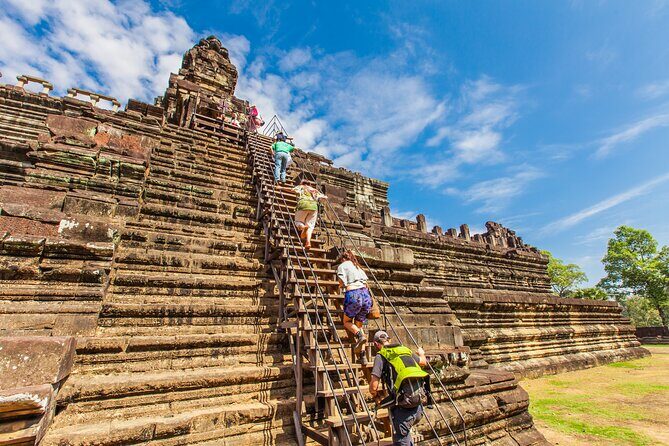
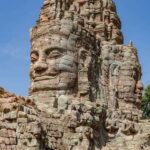
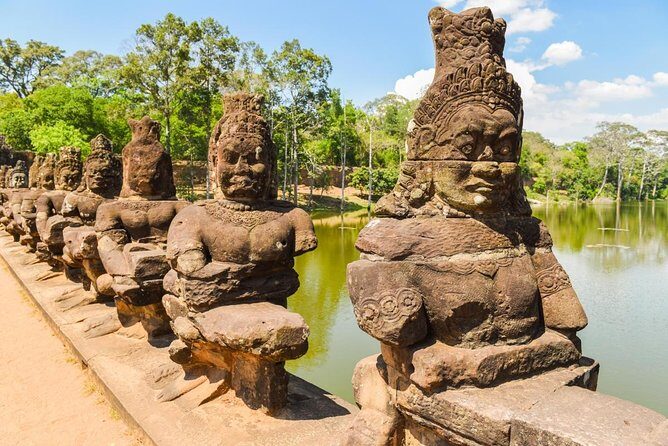
Next is Bayon, built in the late 12th or early 13th century by Khmer King Jayavarman VII for Mahayana Buddhism. This is the temple where the famous faces appear, and once you start spotting them, you’ll notice how they repeat across the structure.
You get about 1 hour at Bayon, which is enough time to take in the main areas without feeling rushed through everything. The guide’s job here is key: Bayon can feel like a wall of faces if you don’t know what to focus on. With guidance, you learn how to look at the carvings and where to stand for the best perspective.
One practical tip for this stop: keep your pace steady. Bayon’s details reward slow looking, but the temple is also crowded. If you move in calm bursts, you’ll get the photos you want without spending half the hour stuck waiting for space to open.
Other wildlife and aquarium tours we've reviewed in Siem Reap
Stop 3: Ta Prohm, the Tomb Raider temple that still surprises
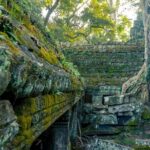
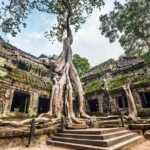
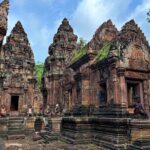
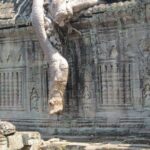
Then you head to Ta Prohm, widely called the Tomb Raider temple because it was used for filming. More importantly, Ta Prohm is fascinating even if you never saw the movie. The architecture has that dramatic look where the roots and stone feel tangled together like the jungle took the place hostage.
You’ll have about 1 hour here. That’s a sweet spot: long enough to appreciate the mix of ancient carvings and overgrowth, but short enough to keep the heat from draining you.
Where this stop really pays off is timing. The tour is described as designed to escape the heaviest crowds. In reality, that means you’ll have more breathing room to compose shots and actually walk the spaces rather than shuffle behind other groups.
The trade-off: because Ta Prohm is popular, it’s still never fully empty. If you want wide-open views, your best defense is your guide’s positioning and your willingness to step a bit off the main paths for photos.
Stop 4: Ta Nei Temple, the forest finish that feels like a reward
The final stop is Ta Nei Temple, described as hidden in the forest far from the other temples. It was built by Jayavarman VII at the end of the 12th century, dedicated to Buddha.
You get about 1 hour, and that matters because Ta Nei feels different from the showpiece temples. At Angkor Wat and Bayon, you’re looking at grand, central statements. At Ta Nei, you get a quieter mood: more shade, more atmosphere, and less of the rush.
This is the stop that turns the tour from sightseeing into a small journey. It’s also where you’ll appreciate the idea behind the route: off-peak timing plus a tucked-away temple finish gives you a sense of contrast.
Practical note: forest shade can fool you into thinking it’s cooler than it is. Angkor heat can still sneak up while you’re walking slowly. Stick close to the water rhythm your guide sets.
The professional photographer: how to get photos that don’t look forced
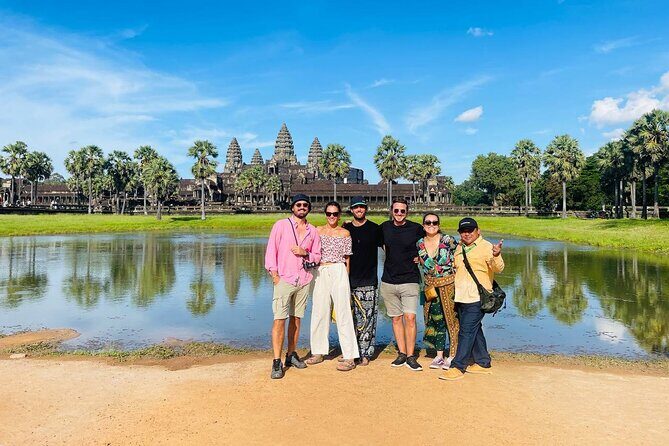
A pro photographer sounds great in theory. The value here is that the photographer is part of the plan, not an afterthought. During your visits, they help you with timing and angles so your photos don’t come out like a generic tourist stamp.
From the feedback, multiple people praised guide-photo skills so much that the photographer credit shows up repeatedly. People described guides who were almost professional photographers, and others specifically called out the photographer as excellent. Translation: you’re likely to get more than random clicks.
How you can help the process:
- Wear something comfortable and easy to move in. Smart casual is the stated dress code, so think breathable tops and simple footwear.
- Keep an eye on your guide for the moment you should pause. A lot of the best photos in temples come from when you’re not rushing.
- Ask for one or two specific photo styles early, like close-up carvings or a clean full-temple shot.
Comfort details that matter in Siem Reap heat
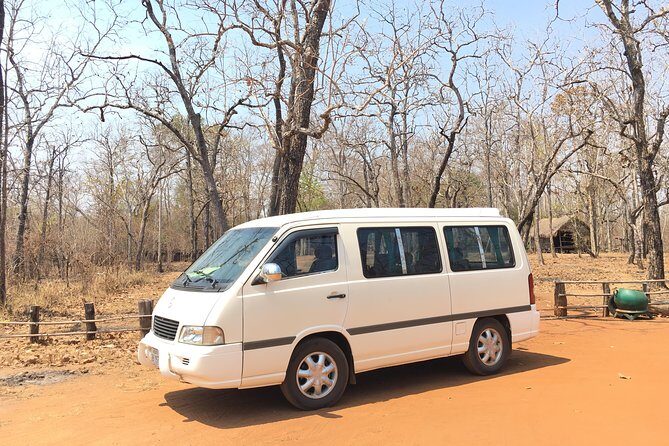
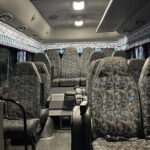
This tour includes the small stuff that keeps your day from going sideways: mineral water, tissue, and natural fruit. You also get an air-conditioned private car/van, plus pick-up is offered.
Why does that matter? Angkor days are physical. Even if you only walk moderate distances, the sun and humidity take time out of your attention. When you’re hydrated and not fiddling with supplies, you actually look at what you came for.
One more point: the tour uses mobile tickets, which makes it easier if you prefer less paper. You’ll still need to handle the Angkor Temple Pass separately since that’s not included.
Timing: off-peak hours and the early-start reality
The description emphasizes off-peak exploration, especially at Angkor Wat. That’s the difference between a day that feels relaxed and a day that feels like a queue simulator.
Some departures may be very early. One review mentions a 4:30am pickup for sunrise temples. Even if your exact start time differs, expect a schedule that takes advantage of cooler morning light and thinner crowds.
If you hate early starts, you can still manage it. Go to bed on time the night before, set an alarm you trust, and plan to stay flexible. Angkor rewards the people who show up before the day heats up.
What to wear: smart casual that still works for temple walking
The stated dress code is smart casual. In practice, that means you should dress like you’re going out for dinner after a day outdoors: comfortable, neat, and easy to adjust as temperatures change.
Temple basics still apply: you’ll be walking around multiple sites, so choose footwear you don’t mind getting dusty. If you wear something too delicate, you’ll regret it fast.
Also, bring a light layer if you run cold in the AC car. It sounds minor, but nothing ruins a temple visit like a jacket you can’t find when you need it.
Who this tour fits best
I think this tour is a strong fit if:
- You want a private Angkor Wat day without the stress of arranging everything yourself
- You care about better photos and don’t want to rely on random phone timing
- You like seeing the major temples in a focused order, then finishing somewhere quieter like Ta Nei
- You’d rather have a guide who answers questions than just provide directions
It may not be ideal if you:
- Have a super tight budget and want to avoid the Angkor Temple Pass cost
- Want to spend half your day wandering with no structure
- Prefer large group energy or want to meet lots of strangers (this is private for your group)
Should you book this Angkor Wat and movie-temple combo?
If your goal is a high-value Angkor day that feels smooth, I’d book it. The combination of private transportation, a professional guide, and a professional photographer makes the day feel intentionally planned, not cobbled together. Add in the off-peak approach and the Ta Nei forest finish, and you get more than the standard temple circuit.
Before you decide, do two quick checks:
1) Add the $37 per person Angkor Temple Pass to your total budget.
2) Be honest about your morning stamina. If you can handle an early start, you’ll likely get the best experience with fewer crowds.
If that checks out, this is a very practical way to see Angkor Wat, Bayon, Ta Prohm, and Ta Nei in one day without turning your vacation into a frantic photo hunt.
FAQ
How long is the Angkor Wat, Bayon, Ta Prohm, and Ta Nei tour?
The tour lasts about 5 to 6 hours.
Where does the tour start and end?
It starts in Krong Siem Reap, Cambodia, and ends back at the meeting point.
Is hotel pickup included?
Pickup is offered, and the tour includes an air-conditioned private car or van.
What’s included in the tour price?
Included are a professional English-speaking guide, a professional photographer, luxury private car/van transport, mineral waters and tissue, natural fruit, and sun light.
Do I need an Angkor Temple Pass?
Yes. A 1-Day Angkor Temple Pass is not included and costs $37 per person.
Which temples are visited?
You’ll visit Angkor Wat, Bayon Temple, Ta Prohm, and Ta Nei Temple.
Is there a photographer during the tour?
Yes. A professional photographer is included.
Is the timing designed to avoid crowds?
The tour description says it explores Angkor Wat during off-peak hours.
What should I wear?
The dress code is smart casual.
What is the cancellation policy?
Free cancellation is available up to 24 hours in advance for a full refund.