REVIEW · SIEM REAP
Angkor Wat Sunset TUK TUK Tour
Book on Viator →Operated by Angkor Doors · Bookable on Viator
Angkor Wat at sunset is the goal, but the ride between stops is half the fun—especially on a tuk tuk. This Angkor Wat Sunset tour strings together the key sights in a sensible order, from Ta Prohm’s tree roots to Angkor Thom’s major landmarks, with a sunset decision at the end.
What I like most is the clear touring plan: you’ll get guided temple context while still having time to look, walk, and take photos. Second, the trip includes English guidance plus the practical basics like cold drinking water, and the tuk tuks are set up for moving efficiently between sites.
One thing to consider: temple admission is not included (you need a one-day Angkor Pass at $37 per person), and the day still requires correct temple clothing or you can be refused entry.
In This Review
- Key points before you go
- Tuk tuk touring in Siem Reap: why this route makes sense
- Ramorks instead of bikes and buses: what the transport changes
- Temple clothing rules: the fastest way to ruin your day
- Your day, stop by stop: Ta Prohm, Banteay Kdei, Ta Keo
- Stop 1: Ta Prohm (tree roots, Tomb Raider fame)
- Stop 2: Banteay Kdei (short and atmospheric)
- Stop 3: Ta Keo (quick photo window)
- Angkor Wat (main morning anchor): where your timing matters
- Angkor Thom circuit: gates, Bayon, terraces, and the Royal Palace area
- Sunset decision at the end: South Gate or Phnom Bakheng
- Price and value: $32 tour vs. the $37 Angkor Pass
- Who this tour fits best (and who should look elsewhere)
- FAQ
- FAQ
- What does the tour cost?
- How long is the tour?
- What time does the tour start?
- Is pickup included?
- What is included in the price?
- Is the Angkor Pass included?
- What temples and areas are visited?
- Are food and drinks included?
- What’s the dress code for the temples?
- Is this tour private?
- Should you book this Angkor Wat Sunset Tuk TUK Tour?
Key points before you go
- Ramorks (tuk tuks) make short hops between temple zones feel faster and more flexible
- English-speaking guide helps you understand what you’re seeing beyond the stone surfaces
- Mobile ticket included, so you’re not stuck juggling paperwork
- Sunset choice near Angkor Thom South Gate or Phnom Bakheng, guided in the moment
- $32 price is mainly for guide + tuk tuk, while meals and temple pass are separate
Tuk tuk touring in Siem Reap: why this route makes sense
This tour is built around a simple idea: see more than one temple without turning the day into a logistics headache. You start in the Siem Reap area and then spend the day moving through the Angkor complex in a set pattern that keeps you from backtracking too much. The result is that you can actually enjoy the temples instead of spending mental energy on timing and routes.
I also like that the stops are a mix of famous and story-rich. Ta Prohm is the crowd magnet, but then you shift to other major structures—Banteay Kdei and Ta Keo for variety, and Angkor Thom for the big “city of temples” feeling. By the time you reach the sunset options, you’ve already built a mental map of the site.
The tour is priced at $32 per person, which is low enough that it feels like good value for what’s included. But be clear about what that $32 covers: it’s the guide, the tuk tuk transportation, and bottled water. The temple pass and food are on you.
Other Angkor Wat sunset tours we've reviewed in Siem Reap
Ramorks instead of bikes and buses: what the transport changes
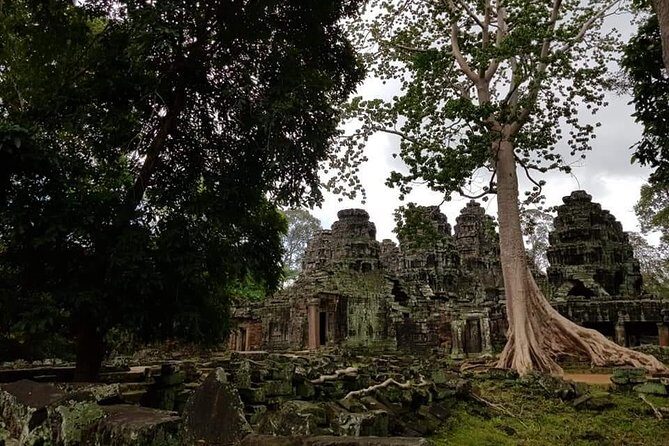
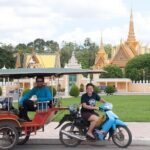
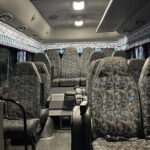
In Khmer, tuk tuks are called Ramorks, and this tour uses them end-to-end. That matters because it changes the pace. You’re not waiting around for a larger vehicle to load and unload, and you can get dropped closer to where you want to walk next.
Also, the tour offers pickup, and it’s described as punctual and well organized. In real terms, that means you’re less likely to start your day stressed and late, which is a big deal when you’re heading into hot, busy temple grounds.
One practical note: tuk tuks are comfortable, but the Angkor complex involves a lot of walking. Plan for temple paths, stair steps, and uneven stone surfaces.
Temple clothing rules: the fastest way to ruin your day
Angkor Wat and many other temple areas have strict dress rules. You must cover your thighs and shoulders when entering the temple complex. If your clothes don’t meet the standard, you may be refused entrance.
This is not the kind of thing you want to “fix later.” Pack or wear light, breathable clothing that covers both those areas—think a long, loose shirt and long pants or a sarong-style wrap that you can pull on quickly. If you’re wearing shorts or a tank top, assume you’ll need a change.
If you want the easiest day, aim for temple-ready clothes before you even leave your pickup point.
Your day, stop by stop: Ta Prohm, Banteay Kdei, Ta Keo
The itinerary is paced as a full day, roughly 7 to 8 hours total, with multiple focused temple visits. Here’s what each stop is for and what to expect.
Stop 1: Ta Prohm (tree roots, Tomb Raider fame)
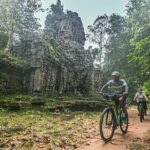
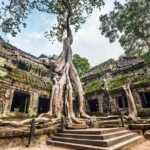
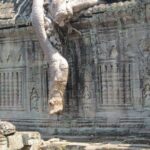
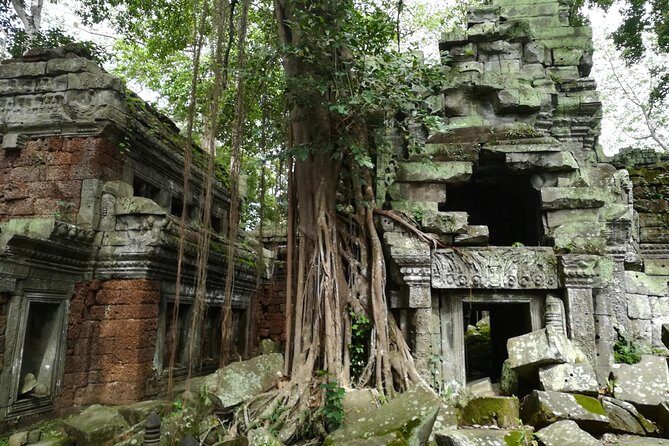
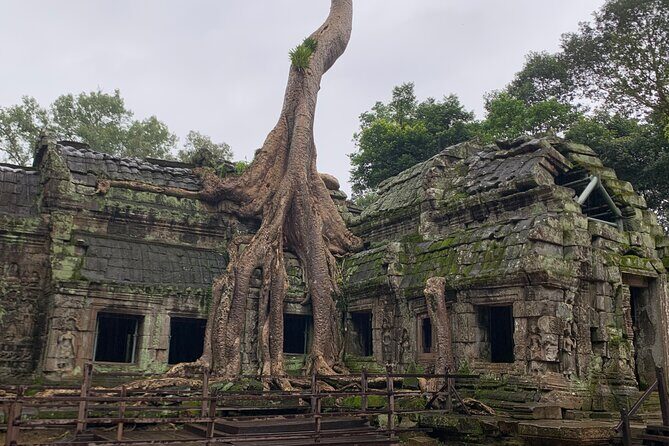
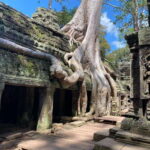
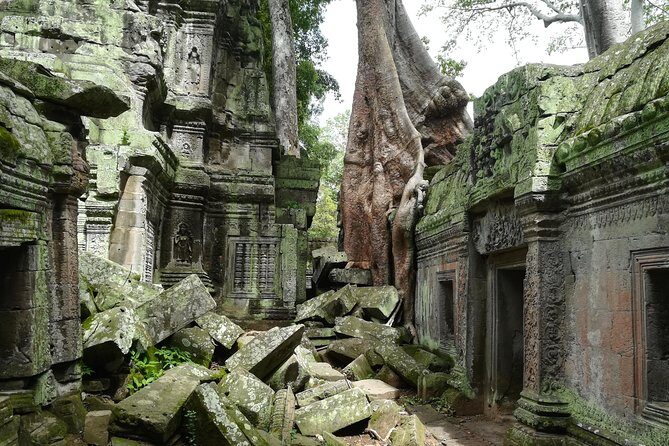
Ta Prohm is the opener, with about 1 hour 30 minutes here. This is the temple famous for giant rain forest trees taking over the ruins—those photos are exactly the vibe you’re going for. It’s also the filming location connection many people know from the Tomb Raider movies, which gives you a quick cultural hook as you walk the paths.
What to do with your time: don’t rush the main viewpoints. Give yourself a few minutes to look at how the roots and stonework interact, because the most interesting details are often in the mid-range views—where you can see how nature and architecture overlap.
Potential drawback: it can feel crowded depending on your timing. If you want less pressure, stay focused on your own walking loop and pick a few angles rather than trying to see every corner at once.
Other Angkor Wat temple tours we've reviewed in Siem Reap
Stop 2: Banteay Kdei (short and atmospheric)
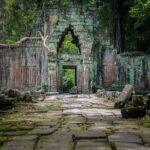
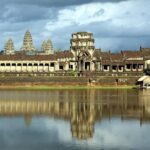
Banteay Kdei is scheduled for about 30 minutes, described as the last temple stop before heading back. This short visit is useful because it keeps the day balanced. You get a change of scenery without exhausting yourself before the bigger, later sites.
What I like about this stop in the schedule: it breaks up the heavy hits. After Ta Prohm’s dramatic takeover look, Banteay Kdei feels like a calmer follow-up.
Stop 3: Ta Keo (quick photo window)
Next is Ta Keo for around 30 minutes. This is positioned as a photo or quick visit, and time here is best spent doing one of two things: either grab a few key shots from the main areas, or focus on the details you can reach without feeling rushed.
If you’re the type who likes to climb and explore, keep in mind you may not have time for long wandering. This stop works best if you go in with a plan: one or two viewpoints you care about.
Angkor Wat (main morning anchor): where your timing matters
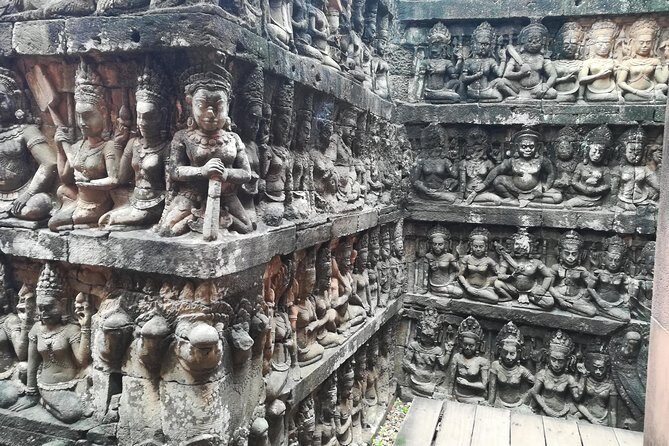
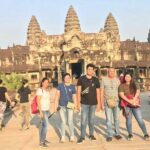
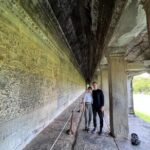
The tour then shifts to Angkor Wat, with about 2 hours allocated. This is the big one, and the schedule gives you enough time to see the major angles and still take photos without feeling like you’re sprinting.
Two things to aim for:
- Look beyond the iconic façade. Check how the pathways guide you through the complex.
- Use your guide’s context to connect what you’re seeing to how the temple was designed.
Angkor Wat also has strong visitor flow, so moving methodically helps. If you want better photos, don’t just face the most obvious direction—step slightly to find less chaotic backgrounds.
Admission is not included here, so plan your one-day Angkor Pass before the day, then keep the pass ready for entry.
Angkor Thom circuit: gates, Bayon, terraces, and the Royal Palace area
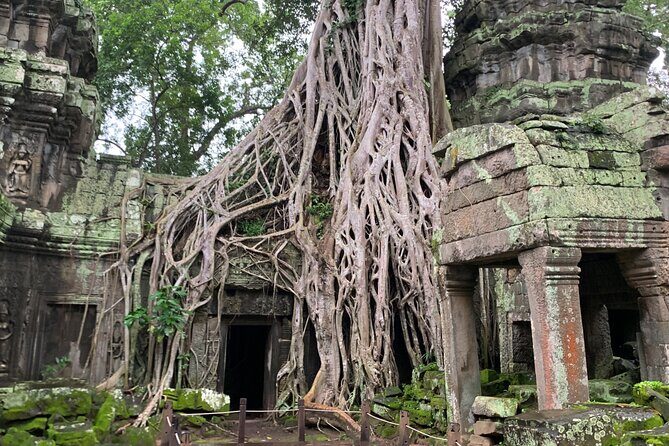
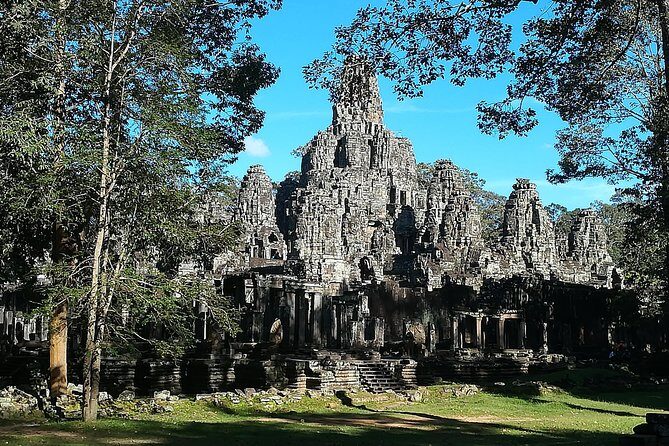
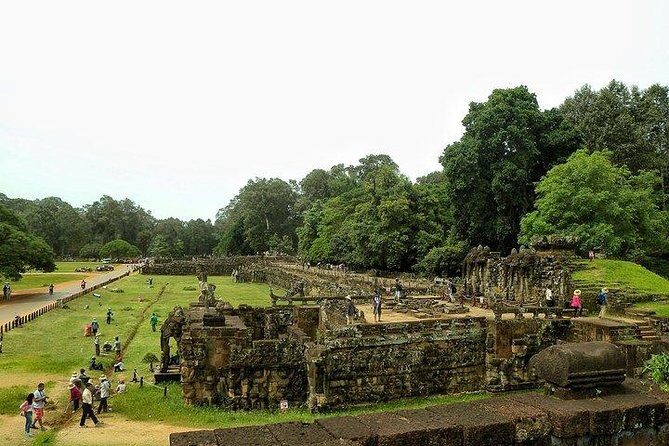
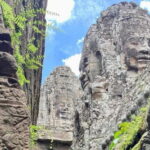
After Angkor Wat, the day moves into Angkor Thom with about 2 hours scheduled. This is where you get the broader “temple city” feeling. Your guide will show you major stops inside the complex, including the South Gate, Bayon, Baphuon, the Terrace of the Elephants, the Terrace of the Leper King, the Royal Palace, and Preah Palilay—plus you’ll see the Old Bridge as well.
This is a great section for people who like stories. The towers, the carved sections, and the gate entrances all make more sense once someone connects them to the purpose of the space. An English-speaking guide helps you follow along instead of just reading stone symbols you can’t interpret.
Here’s a practical way to pace yourself through Angkor Thom:
- Spend your first minutes orienting yourself to the gate layout.
- Then pick two “must-look” elements—like Bayon faces and one terrace—and give those extra attention.
- Let the rest be a slower walk rather than a checklist.
Time consideration: 2 hours sounds generous until you hit heat, stairs, and crowds. If you’re taking photos constantly, you might want to choose fewer angles and enjoy the sightlines instead.
Sunset decision at the end: South Gate or Phnom Bakheng
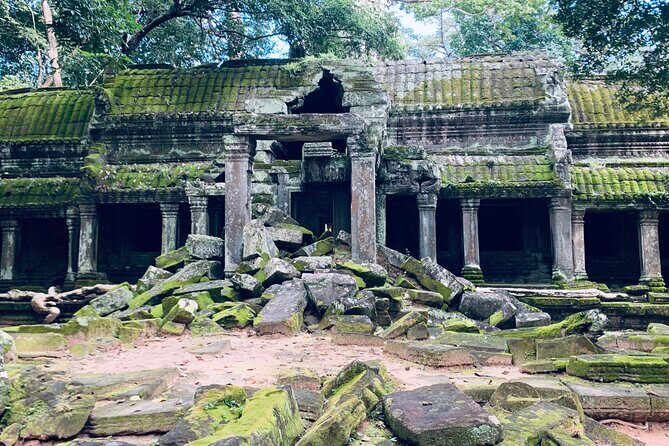
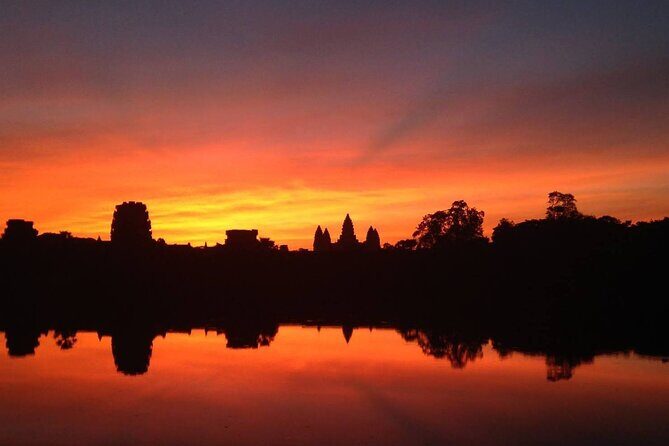
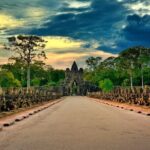
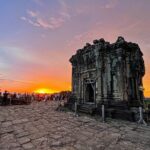
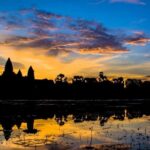
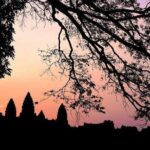
The name says sunset, and the plan supports that. Near the end, the guide explains your options for where to watch the sunset: the South Gate of Angkor Thom or Phnom Bakheng temple. This is listed as a 1 hour 30 minutes segment.
Why this matters: both spots offer different vibes. South Gate tends to feel like you’re watching from a dramatic urban edge, while Phnom Bakheng is more temple-focused. Your guide can talk through the best choice based on the day’s conditions.
Practical tip: if you want photos with fewer people, you should plan for an earlier arrival and be ready to adjust your position. Also, bring a light layer if you tend to get chilly late in the evening.
Price and value: $32 tour vs. the $37 Angkor Pass
Let’s break down the real cost so you can decide quickly.
- Tour price: $32 per person
- Angkor admission: $37 per person for a one-day Angkor Pass (not included)
- Food and drinks: not included
- Accommodation: not included
- Included items: English-speaking guide, tuk tuk transport, and cold drinking water
- Ticket delivery: mobile ticket is included
So, before meals, you’re looking at roughly $69 per person total (tour + pass), plus whatever you spend on lunch and drinks. For a day that covers Ta Prohm, Angkor Wat, Angkor Thom, and two temple zones near sunset, that’s a fair value. You’re paying for coordination and a guided route rather than just being dropped off at one place.
If you already have the pass, the value becomes even stronger, because $32 mainly covers guide + transport. If you’re traveling with family or friends and want a private setup for your group, the cost can feel especially reasonable compared to paying separately for guides and transport.
Who this tour fits best (and who should look elsewhere)
This works well if you want:
- Guided context so the carvings and structures mean something
- A structured day without building your own transport plan
- A sunset option at the end rather than guessing where to go
It may not be ideal if you prefer:
- Total freedom with no schedule at all
- A very slow pace with long free time at each temple
- A day that’s mostly Angkor Wat only (this one spreads attention across multiple major sites)
It’s also described as a private tour/activity, meaning only your group participates. That’s a big plus if you want fewer interruptions and you’re traveling with people who share interests.
FAQ
FAQ
What does the tour cost?
The tour costs $32.00 per person.
How long is the tour?
It runs about 7 to 8 hours.
What time does the tour start?
The start time is 9:00 am, and pickup is offered (the plan references being collected at around 8:00).
Is pickup included?
Yes, pickup is offered.
What is included in the price?
The tour includes an English-speaking tour guide, tuk tuk transportation, and bottled cold drinking water.
Is the Angkor Pass included?
No. The one-day Angkor Pass is $37.00 per person and is not included.
What temples and areas are visited?
You’ll visit Ta Prohm, Banteay Kdei, Ta Keo, Angkor Wat, Angkor Thom (including multiple key sights), and then sunset options at Angkor Thom South Gate or Phnom Bakheng.
Are food and drinks included?
No. Food and drinks are not included.
What’s the dress code for the temples?
You must cover your thighs and shoulders. If you’re not dressed correctly, you may be refused entrance.
Is this tour private?
Yes. It’s listed as private, and only your group participates.
Should you book this Angkor Wat Sunset Tuk TUK Tour?
I’d book it if you want a guided, organized Angkor day that moves efficiently between the top sights and ends with a real sunset decision. The tuk tuk (Ramorks) style of touring is a practical match for temple hopping, and the route covers the kinds of places people remember long after they’ve left.
Skip it (or look for a different option) if you dislike any schedule and want huge blocks of free time at a single temple. Also, don’t forget the Angkor Pass and the dress code—those two details control whether your day feels smooth or frustrating.